words and photos by Melissa McMasters
It’s really been coming down out there, huh? The past two months have brought some spectacular storms, and I’ve been curious to see what effect all that rain would have on the Old Forest. Answer #1: the mosquitoes have become a thick curtain that only parts so that it can bite the daylights out of me. Answer #2: mushrooms. Soooo many mushrooms. And slime molds (but those are a subject for another day).
When we walk in the forest, we’re treading on a huge network of fungal organisms. Like tree roots, the mycelium of any particular fungus spreads out beneath the soil, and there it releases chemicals that break down decaying matter in order to absorb their nutrients. All this happens underground, and a mycelium can live for hundreds of years without ever being visible on the surface. But when conditions are right (and especially after rain), the fungus produces an above-ground fruiting body containing reproductive units called spores. These are what we think of when we think about mushrooms. Fruiting bodies are like the blooms on a flower, and spores are the mushroom’s version of seeds.
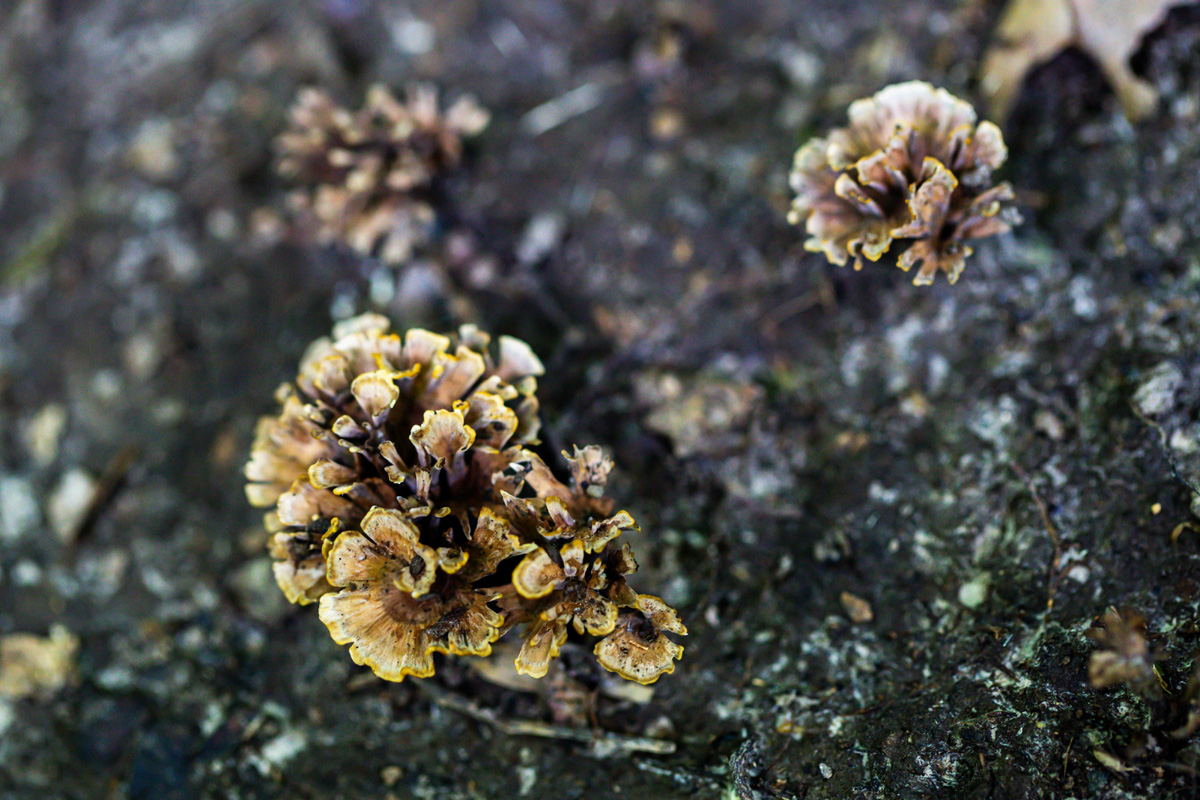
Rain is a trigger for rapid growth of fruiting bodies because mushrooms are like sponges–they inflate rapidly depending on the amount of water they absorb. The fluctuating temperatures we’ve had this spring may also play a role in the variety of mushrooms that have been on view. Different species prefer different ground temperatures, and between the rainfall and the hot-one-day, cool-the-next weather, a lot of species have had the chance to thrive this spring.
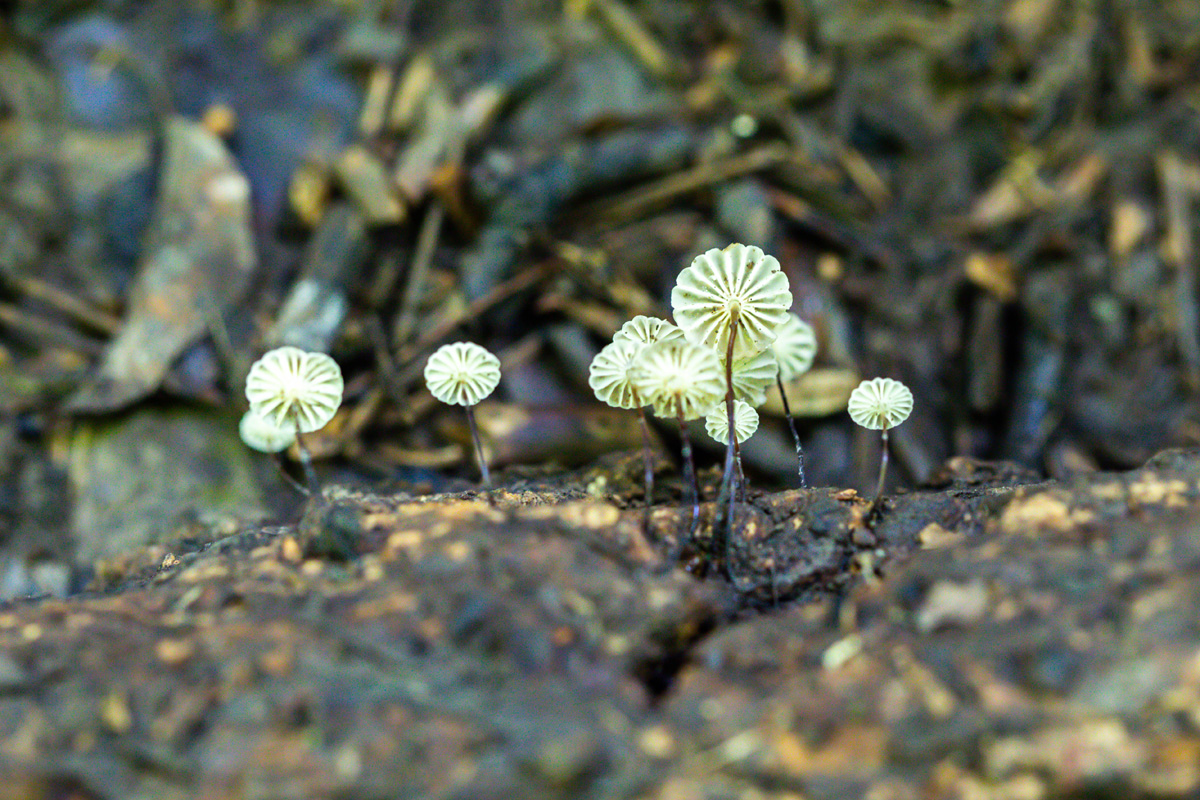
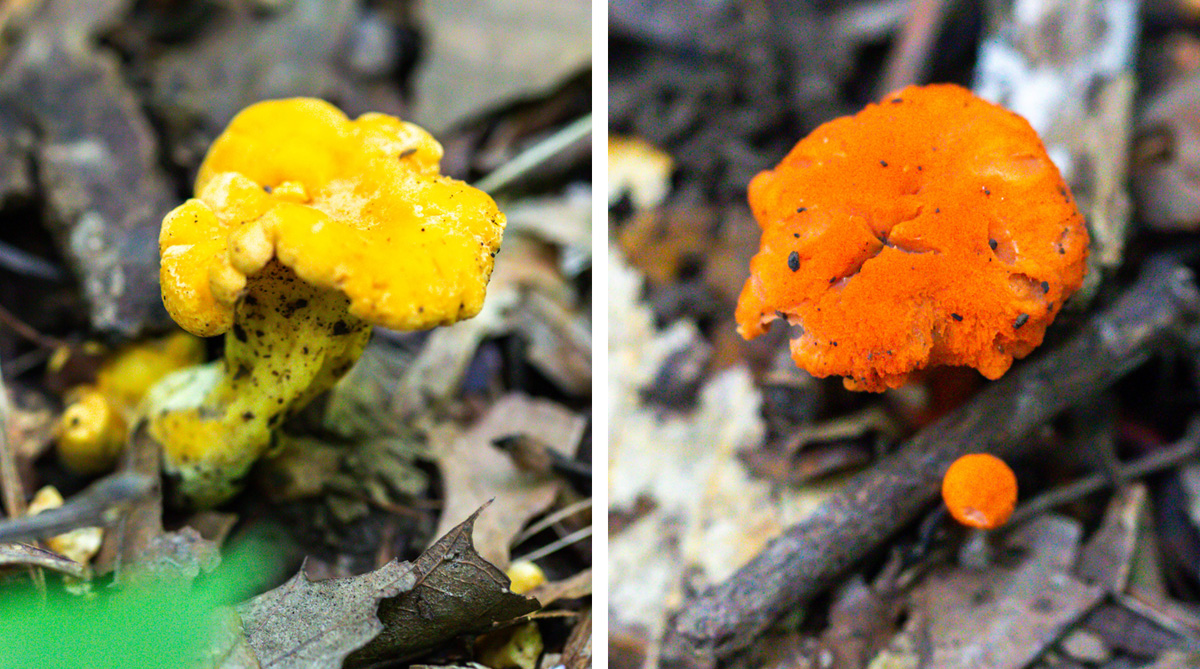
The Old Forest is a particularly fun place to look for mushrooms because some species–called mutualists–live in symbiotic relationship with particular types of trees. The mycelium of the fungus and the roots of the tree join to form a mycorrhizal association that can benefit them both. The fungus helps the tree’s roots absorb nutrients, and the tree gives the fungus carbohydrates it makes with photosynthesis. One of these beneficial relationships in the forest involves chanterelles and oaks.
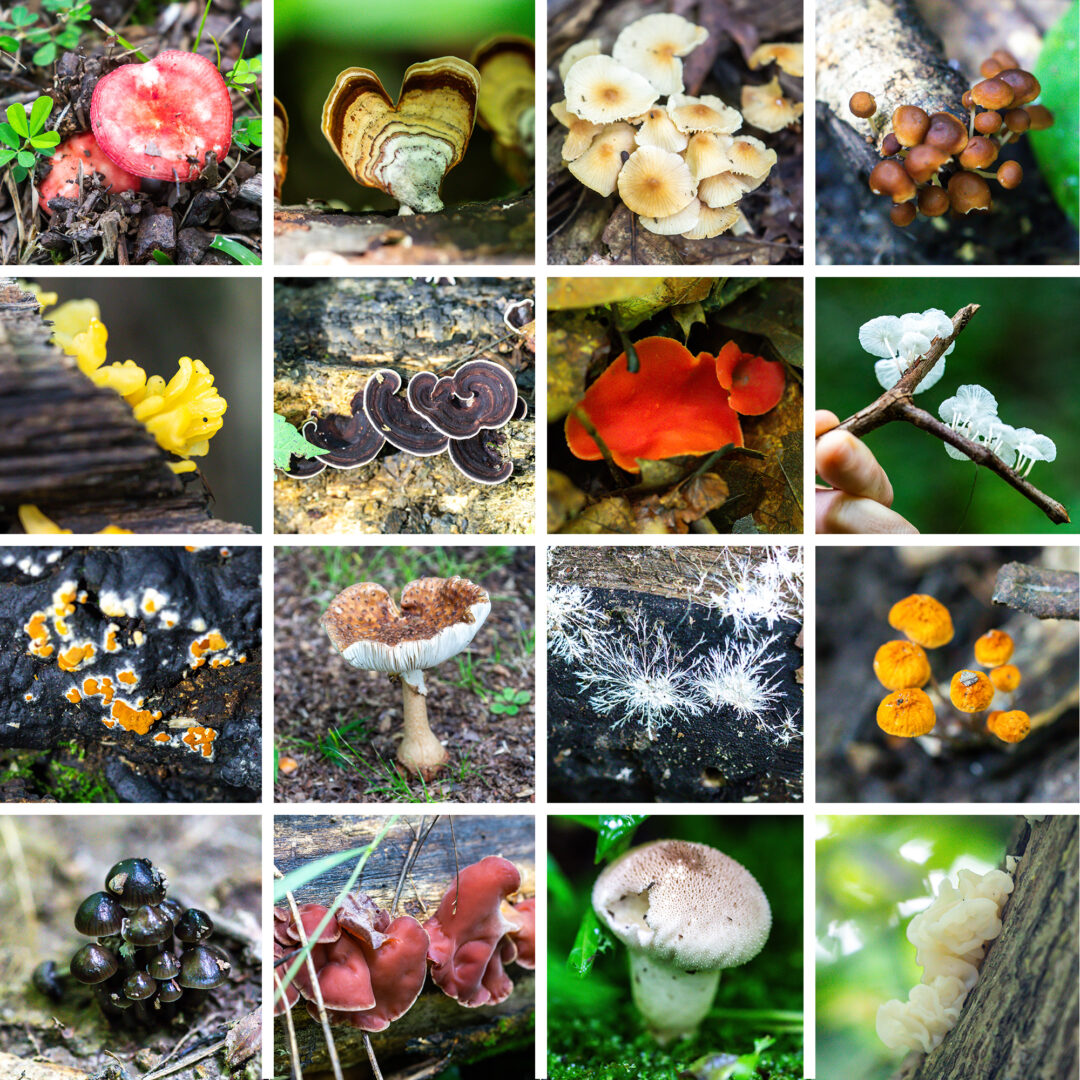
Boletes are often symbiotically associated with oaks and beeches.
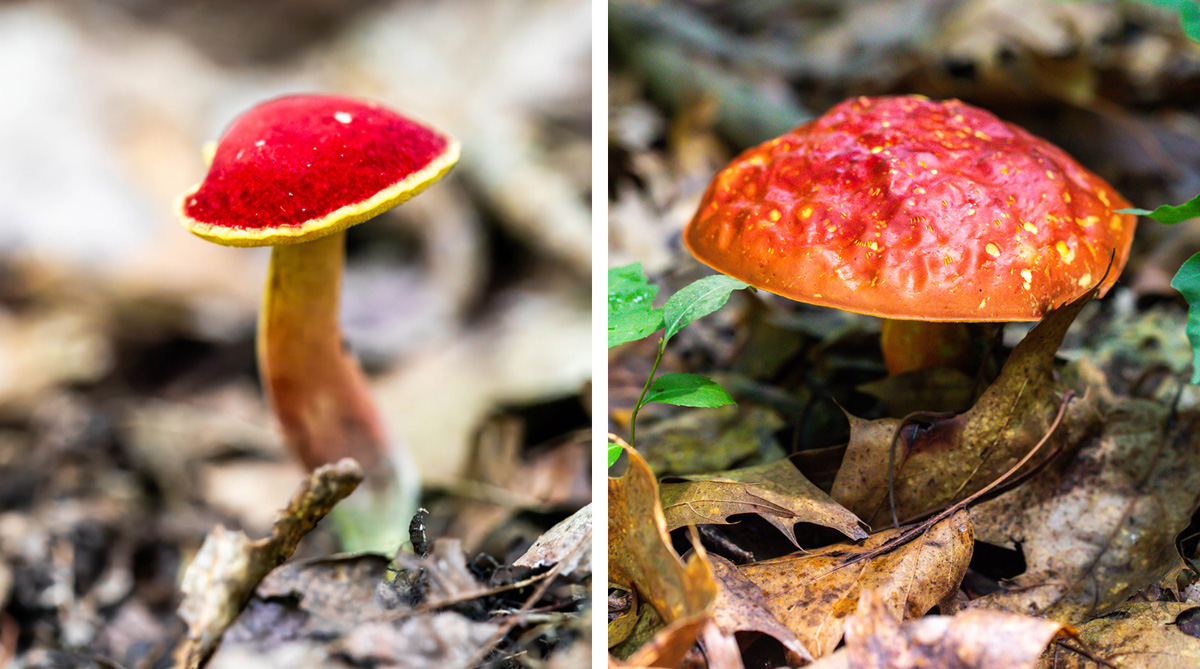
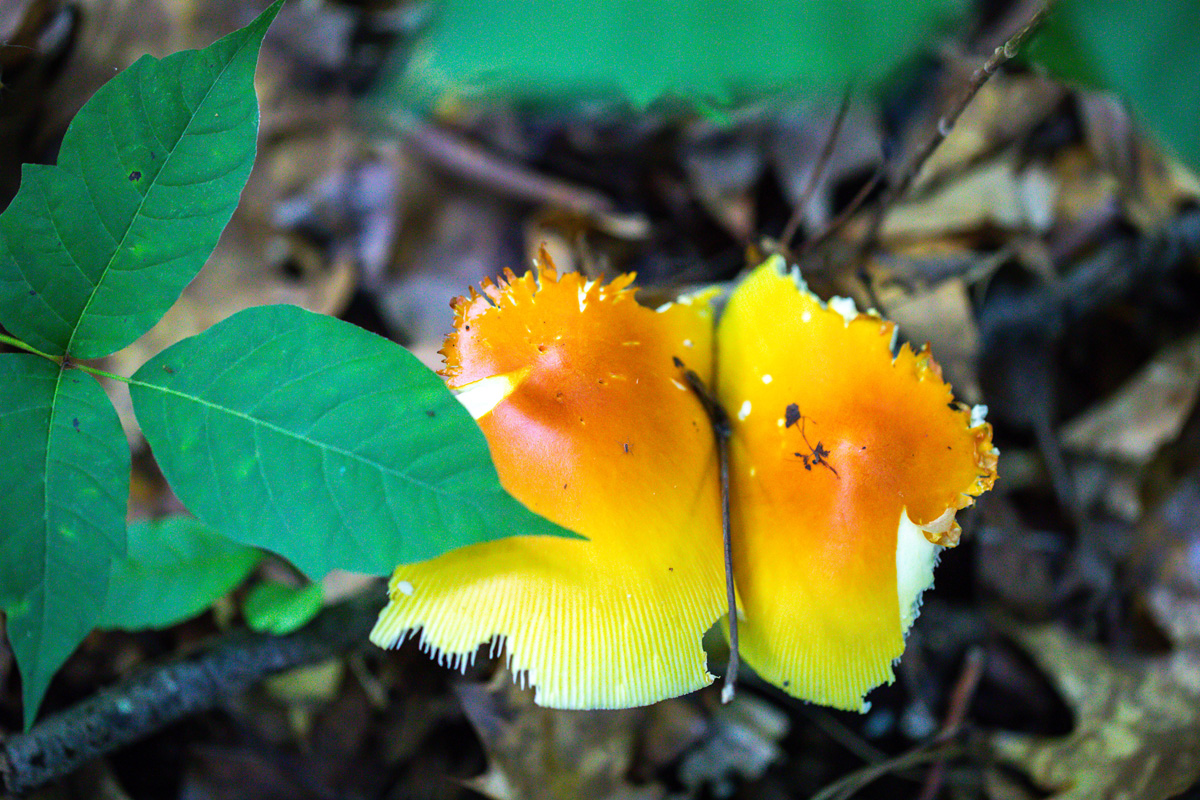
This Arkansas slender Caesar, shown after what was presumably a rough night, has a mutualistic relationship with oaks as well.
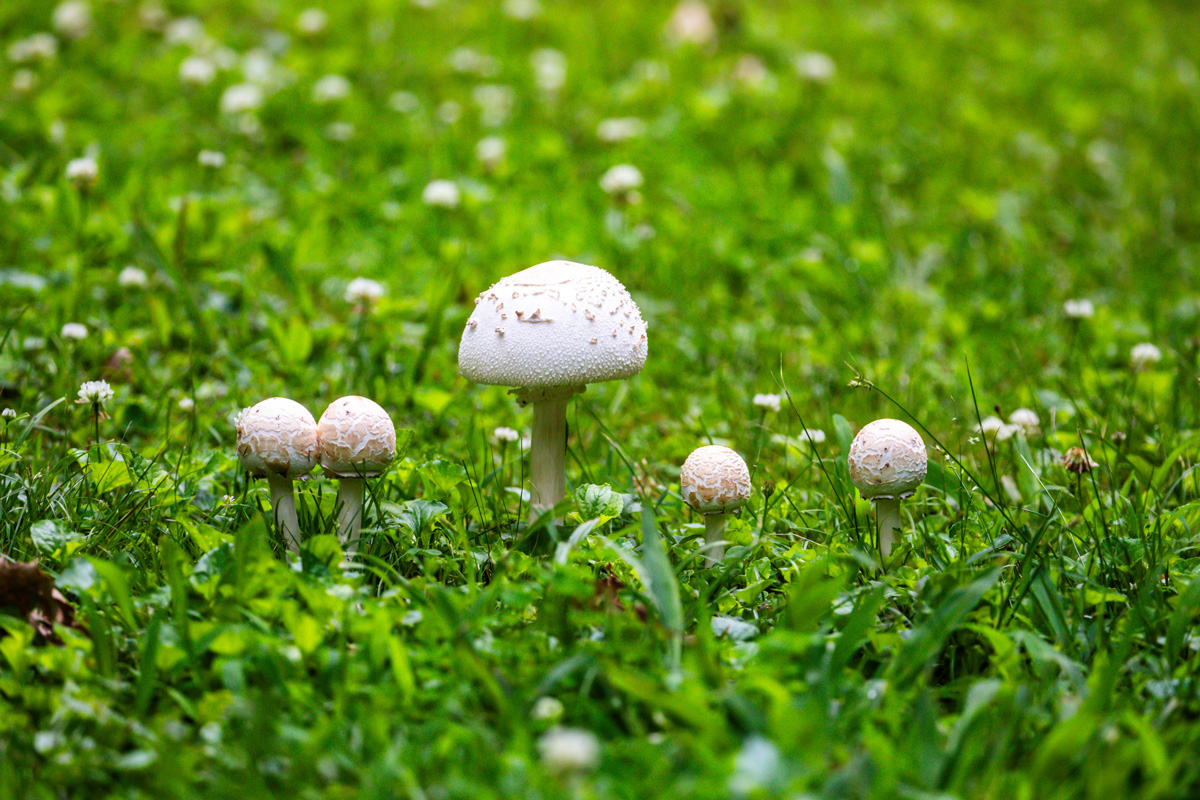
Sometimes we can guess at the underground location of the mycelium by seeing how the fruiting bodies are arranged on the surface. Some fungi form a large circular mycelium and in the right conditions, fruiting bodies pop up around the edges. You might have heard these referred to as “fairy rings,” and we spotted several of them along the paved trail near East Parkway this spring. This is one individual mushroom with lots of fruiting bodies.
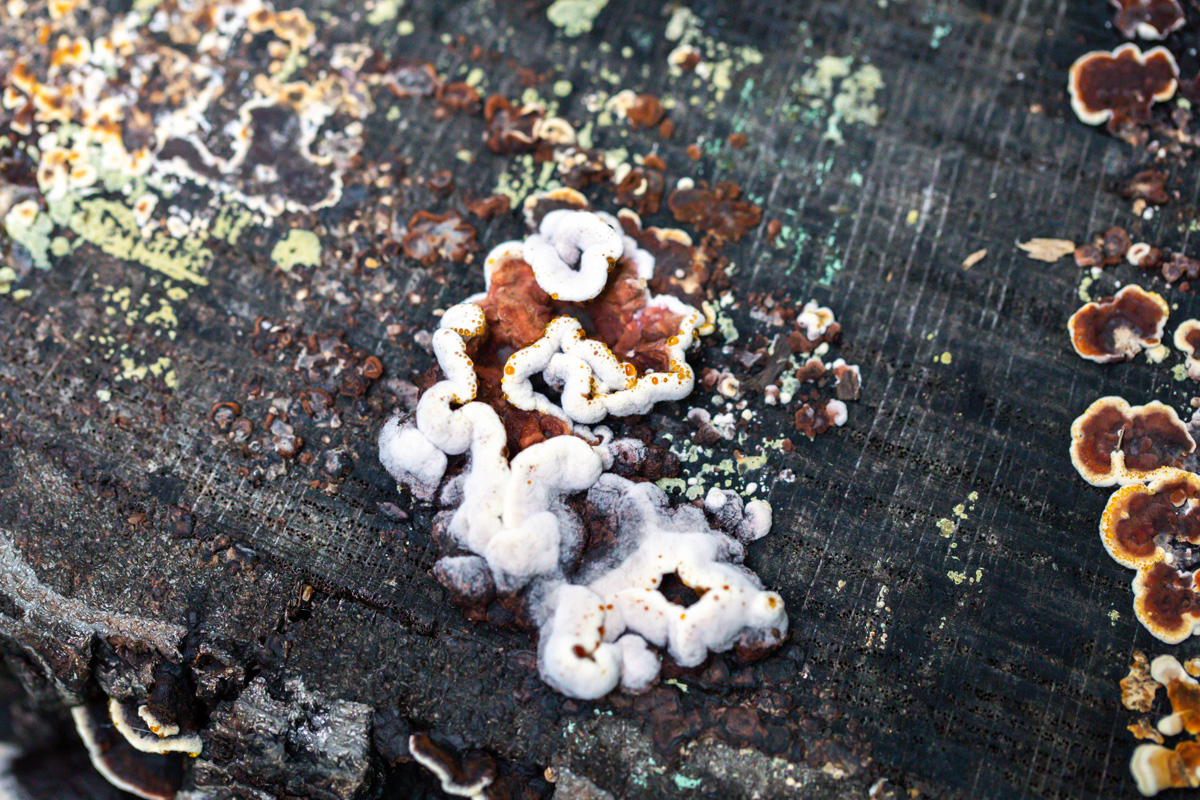
Mycelium doesn’t just live underground, though–it lives under tree bark, too. Particularly if a tree is wounded, spores can enter the bark above ground or mycelium can enter below ground, and the fungi will feed on both living and dead tissue. This category of mushrooms is called parasites, and unlike mutualist mushrooms, they eventually kill their hosts.
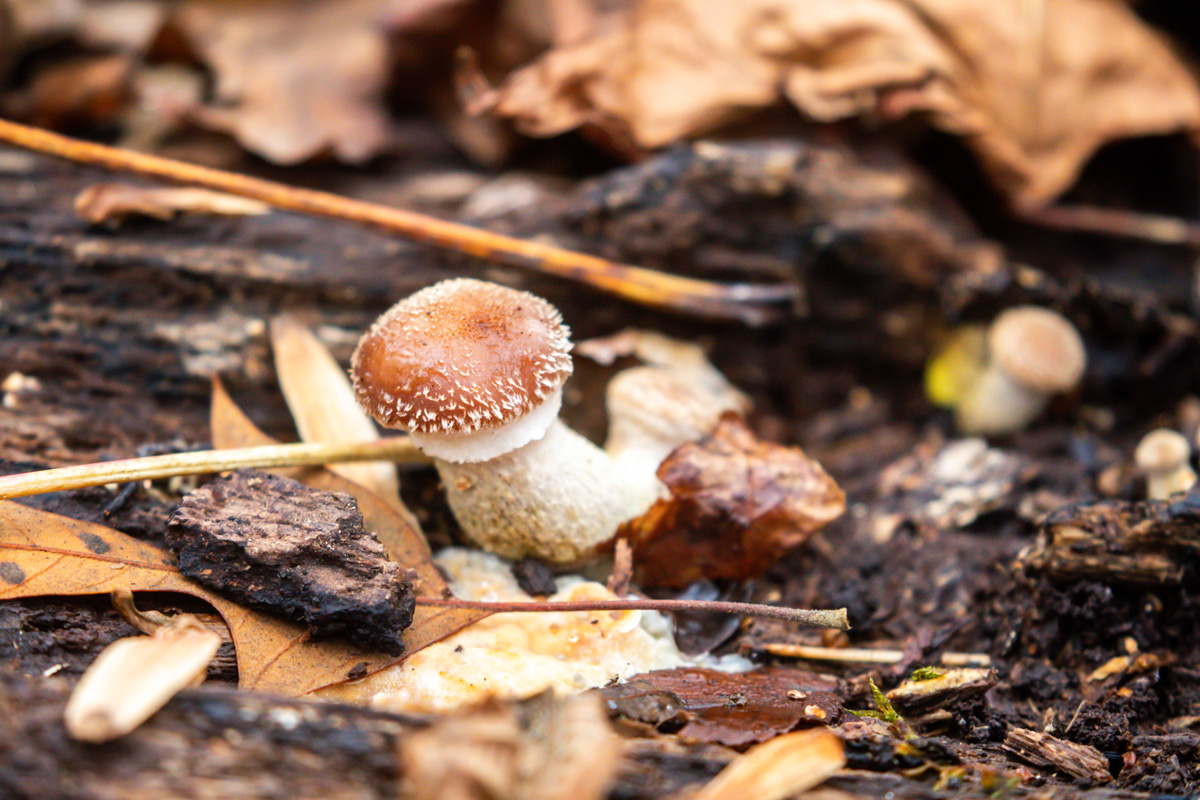
The largest category of fungi are the decomposers–called saprotrophs–and they feed exclusively on dead or dying tissue. These mushrooms keep the nutrients in a fallen tree from staying locked up inside the plant. By cycling the nutrients through their own digestive systems, mushrooms are breaking down tissue that can turn back into soil. Picture an Old Forest without mushrooms or other decomposers like beetles–it might look the world’s largest Lincoln log structure!
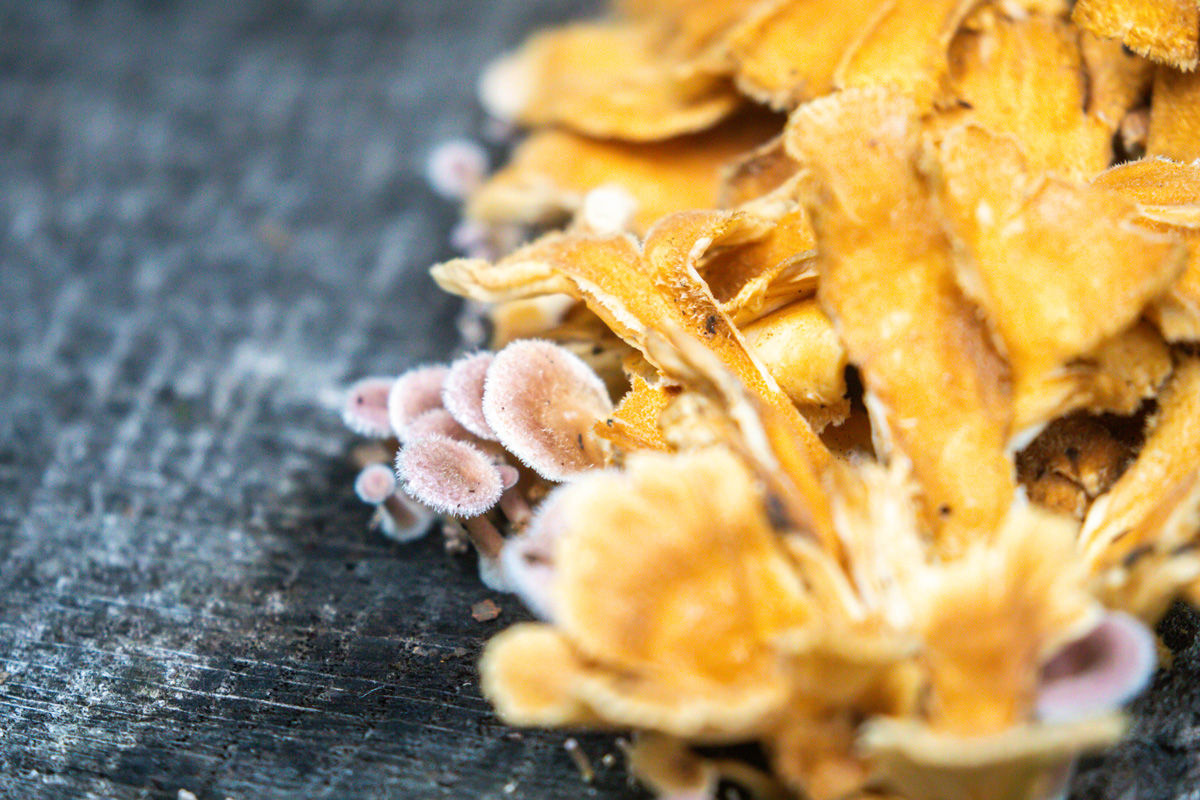
Oyster mushrooms like this hairy oyster quickly colonize downed trees like maples and tulip poplars and feed on the dead tissue. I particularly like this species because, as you can see here, it changes color and shape, starting off as a lovely lilac before transitioning to beige and then orange.
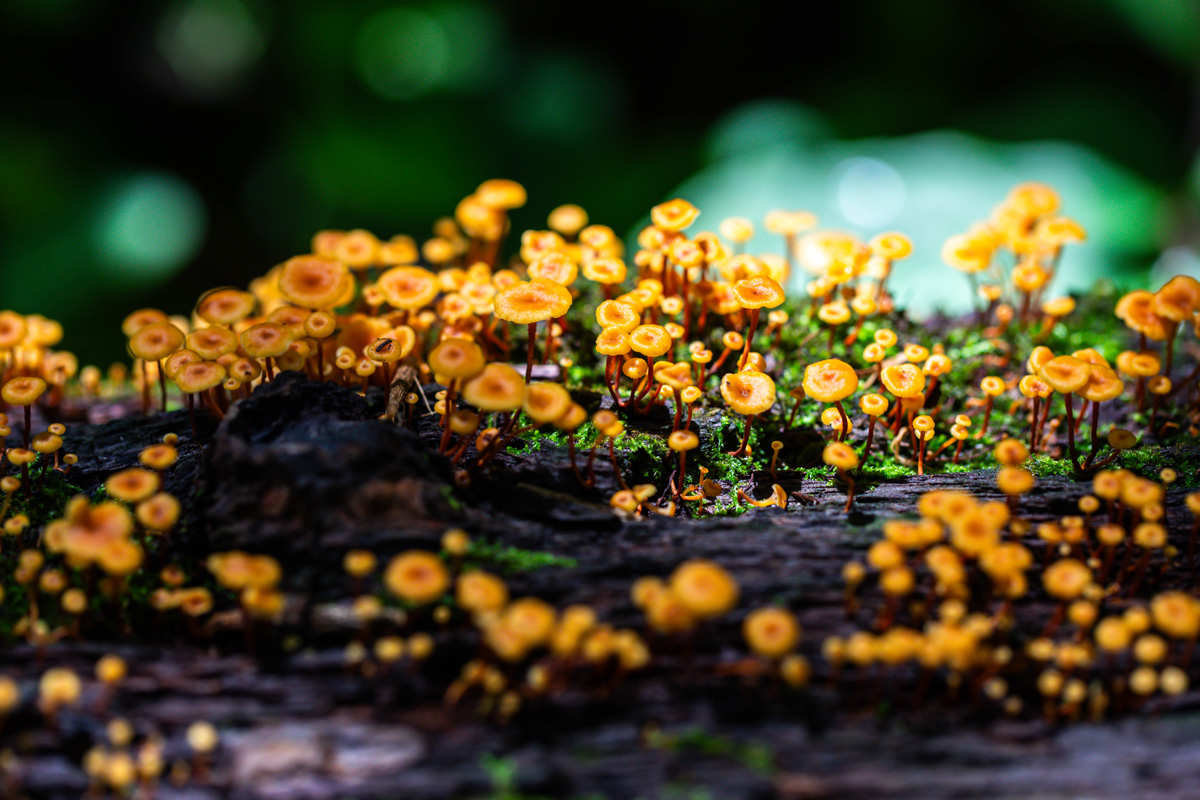
One of the most dramatic sights of the spring has been troop mushrooms that have colonized fallen trees. A big tree had come down along the new trail, and we’d cut the trail through the middle of it, leaving one large chunk on each side of the path and a smaller piece that had broken off the top. Though the third piece was further away, it was easy to identify as part of the same tree because all three logs were completely covered in cross-veined troop mushrooms. The fungus must have entered the tree while it was still standing, and after it began to decay on the ground, the fruiting bodies burst forth.
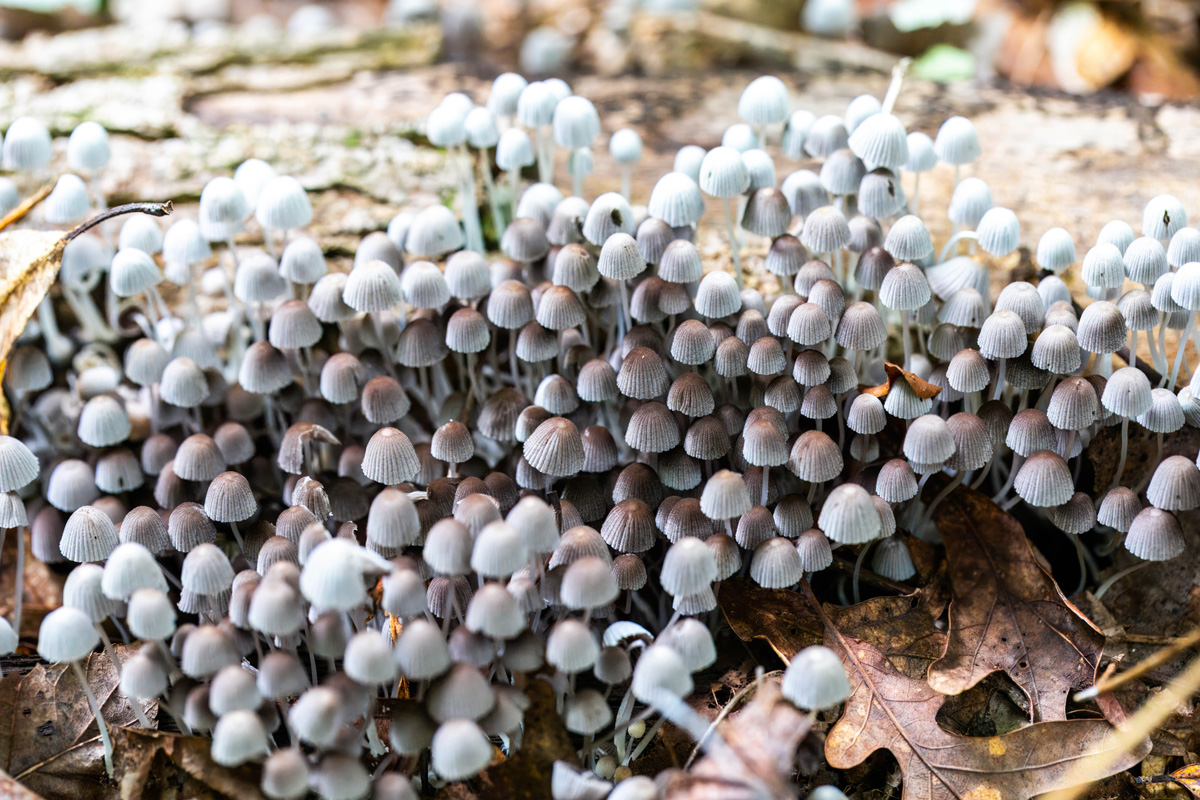
I also experienced this with fairy inkcap mushrooms, which I first saw in late May in a small bunch on the root ball of a tree. The day after I admired it, I walked back by to find the cluster had disintegrated–sponges dehydrate, after all! But this week I walked by the same area, and from a distance, it looked like an entire downed tree was covered in packing peanuts. I couldn’t believe how many there were–and true to their alternate name, trooping crumble caps, they were incredibly fragile to the touch. I understood why these displays didn’t stay intact for long.
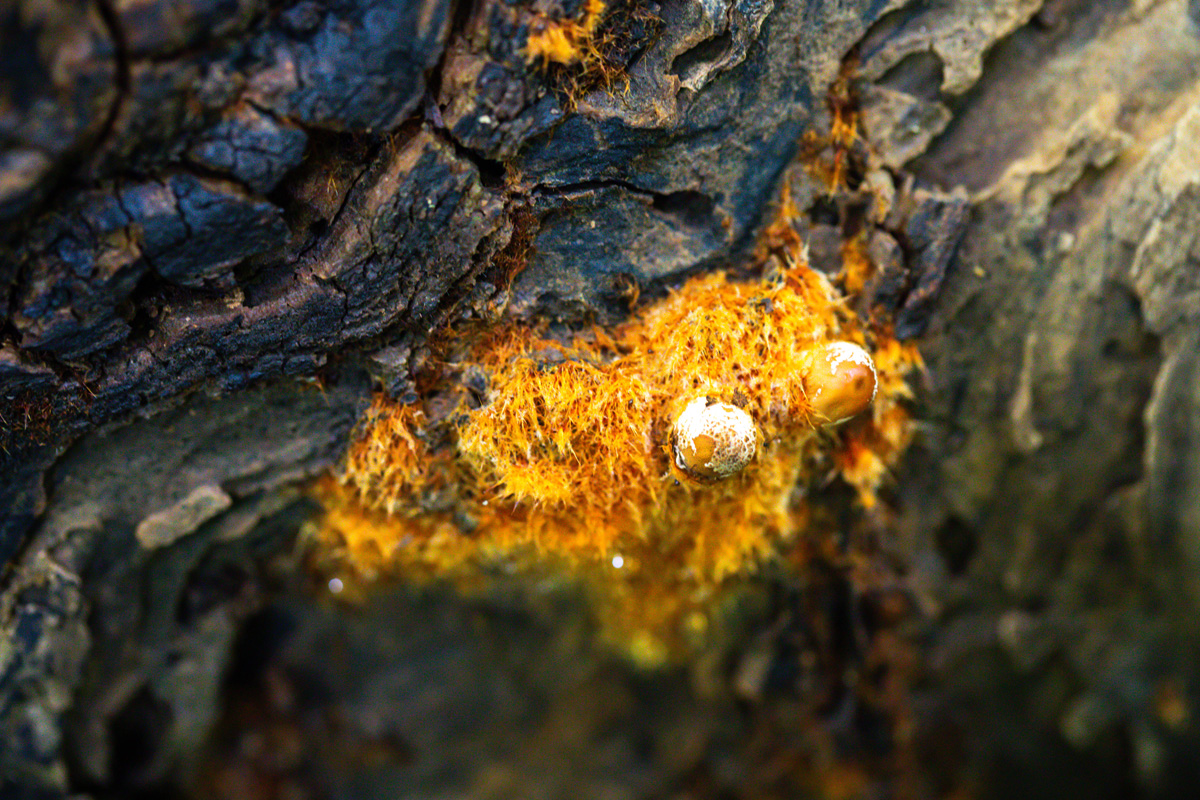
If you want a glimpse at what mycelium might look like, firerug inkcap offers a clue. This fungus (which, interestingly, occupies the same genus as the crumble caps above) sends some of its hyphae aboveground to create a perfect replica of the 70s shag carpet. This mat, called ozonium, may or may not be accompanied by fruiting bodies, and I’ve seen it both on logs and along the ground. If you feel you’ve suddenly wandered into the Brady Bunch home during a forest walk, chances are you’re seeing this fungus.
The fungi I’ve encountered in the forest this spring ran the gamut of colors, textures, sizes, and shapes…and they were just the beginning. In our next NatureZen, I’ll introduce you to their compatriots on the forest floor, the slime molds (many of which don’t appear slimy at all). In the meantime, if you can stand the mosquitoes, get out in the woods and see how many of these you can spot!