words and photos by Melissa McMasters
When I sat down to write last month’s NatureZen, I intended to talk not only about fungi, but about another life form that shows itself after a lot of rain: slime molds. But I found that I had too many fun photos of both to lump everything together, so consider this a bonus dive into something most of us probably never think about. (Unless, that is, you’re a fan of the sci-fi franchise “The Blob.”)
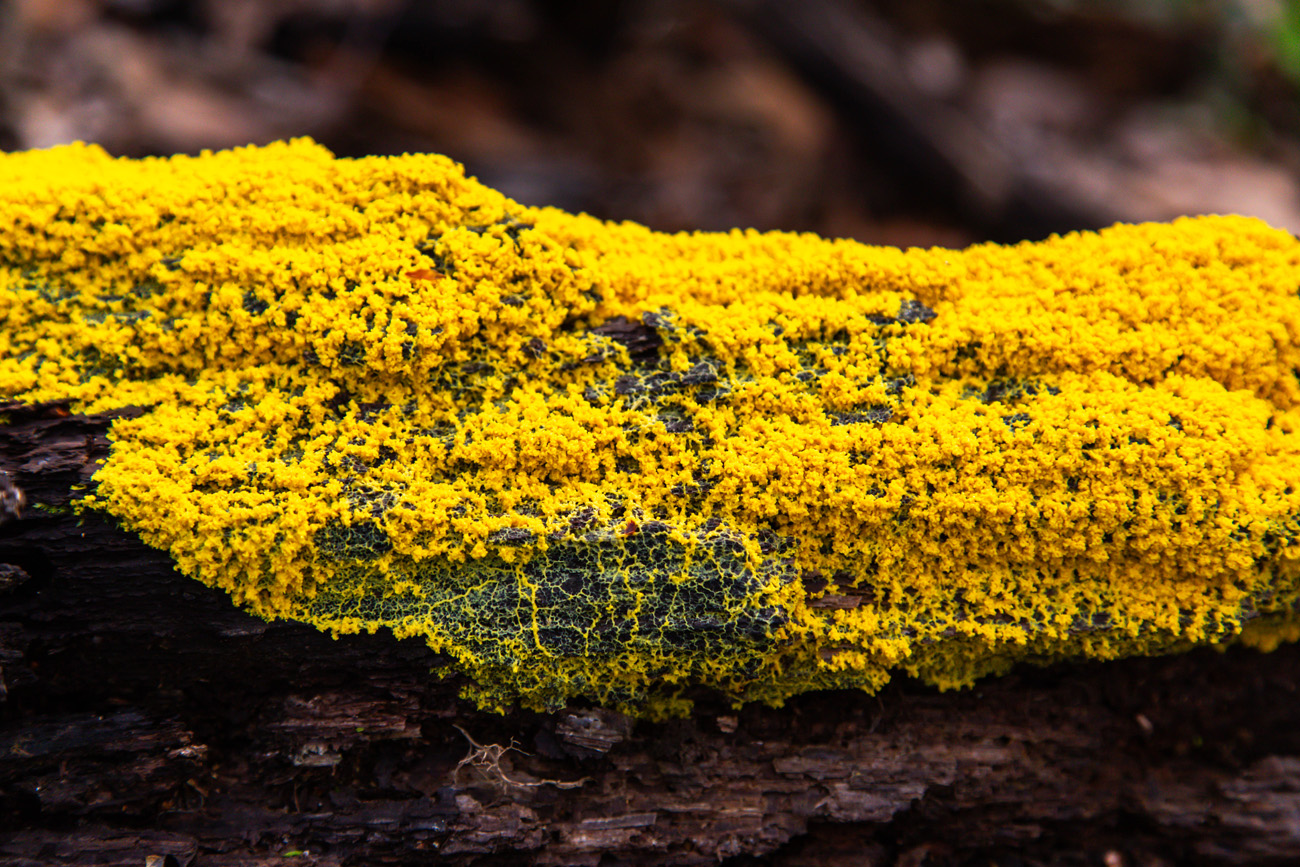
So what is a slime mold anyway? As a mold, isn’t it just another type of fungus? As it turns out, no. The word “mold” is a misdirection in this case! Slime grows in the same places that fungus does, and sometimes looks quite a bit like it, but it’s something else entirely. Slime is categorized in not in the Fungi Kingdom but in Kingdom Protozoa, which includes a bunch of single-celled organisms that exhibit animal-like behaviors such as moving (which they do in their early phases) and eating (which they do by engulfing food and enclosing it in a tiny bubble to digest it). Imagine a mushroom that moves–you’re having a nice vegetarian dinner and your portobello patty slides across your plate to engulf your French fries! Slime molds aren’t that dramatic (or fast), but they’ve been documented doing fascinating stuff.
Scientists have repeatedly done experiments where they take a map of a country, place rolled oats on some population centers and a slime mold on others, and watch as the mold grows toward the oats in the most efficient manner possible. The best part? The path it chooses often replicates a country’s train or subway system. This brainless creature manages to arrive at the same solutions that we do! (I choose to think that’s a compliment to the slime and not a knock on us.) Here’s a video of slime doing a solid impression of Tokyo’s rail system.
Most of the 900 described species of slime molds exist as single-celled organisms with multiple nuclei floating in a shared cytoplasm. (They’ve been described as “a bag of amoebas” that works together.) The bag doesn’t have a brain, but it does seem to make choices, mostly related to where it moves when it detects food. The slime mold ripples its cytoplasm throughout the length of its body in a process called “shuttle streaming,” changing its shape and direction with each pulse. You’d need a time-lapse camera to detect the movement, but coming to the same log two days in a row can certainly reveal that things are different!
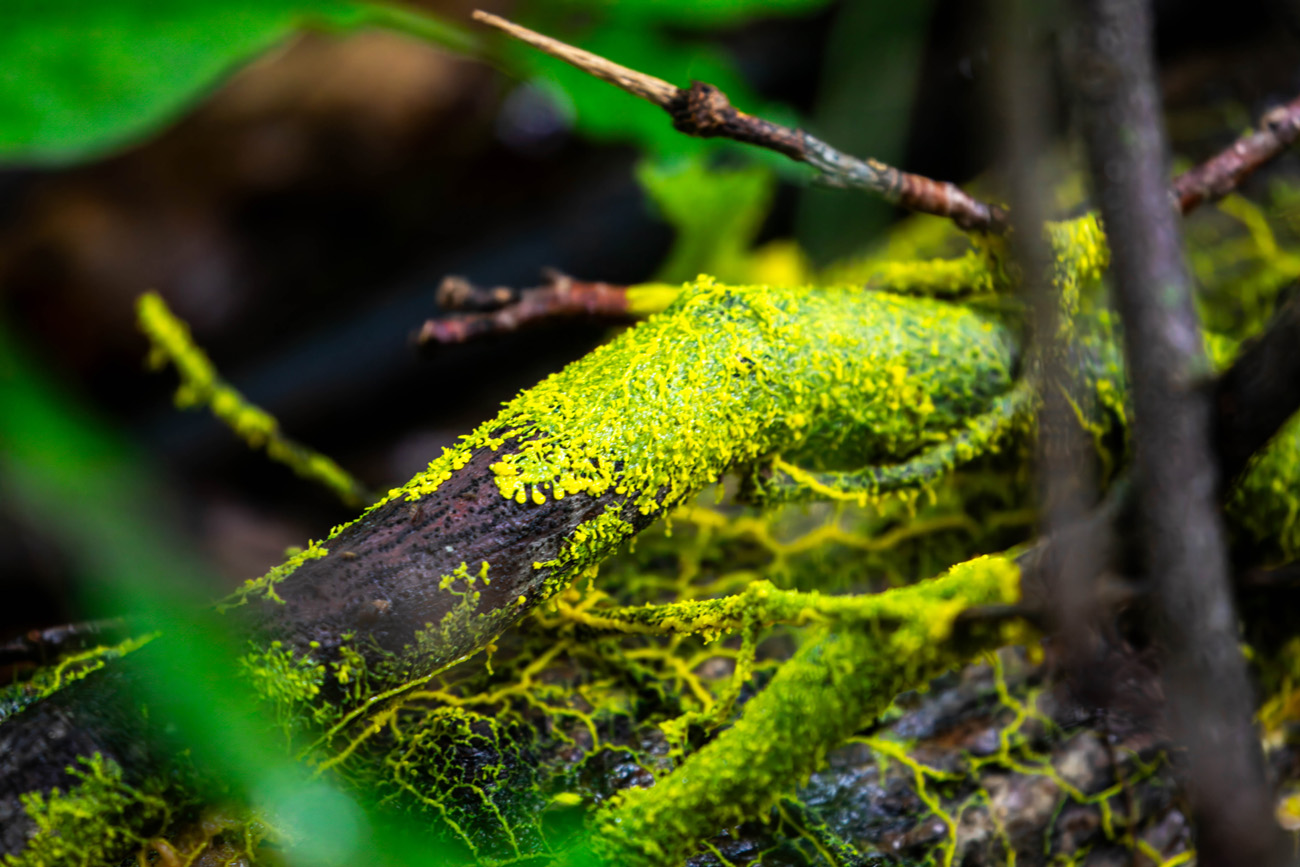
During this early, cytoplasmic stage of their lives, slime molds feed on the bacteria that feeds on decaying plant matter, which is why they’re seen on rotting wood and leaves next to their fungal neighbors. They also eat the spores directly from fungi, and they’ve been known to consume algae as well. And of course oats. They really seem to like science-experiment oats.
Up until this spring, I’d mostly seen slime molds that looked like…well, slime. But it turns out there’s another phase in their life cycle, and that’s when it gets trickier to separate them from fungi.
In last month’s NatureZen, we learned that the part of the mushroom we see above-ground is the fruiting body, which contains the spores the fungus uses to reproduce. Slime molds produce fruiting bodies, too; the process is just different. When conditions are good (and those are generally the same conditions that are good for mushroom reproduction!), the cytoplasm changes its shape and function. Now instead of looking like a splatter on a log, it looks like a bunch of tiny stalks. Basically, our Bag of Amoebas goes from one melting popsicle to many solid ones! These little structures, called sporangia, contain millions of spores, new single-celled organisms that disperse to begin the cycle again. Which is good, because the energy it takes to un-melt that popsicle kills the original organism.
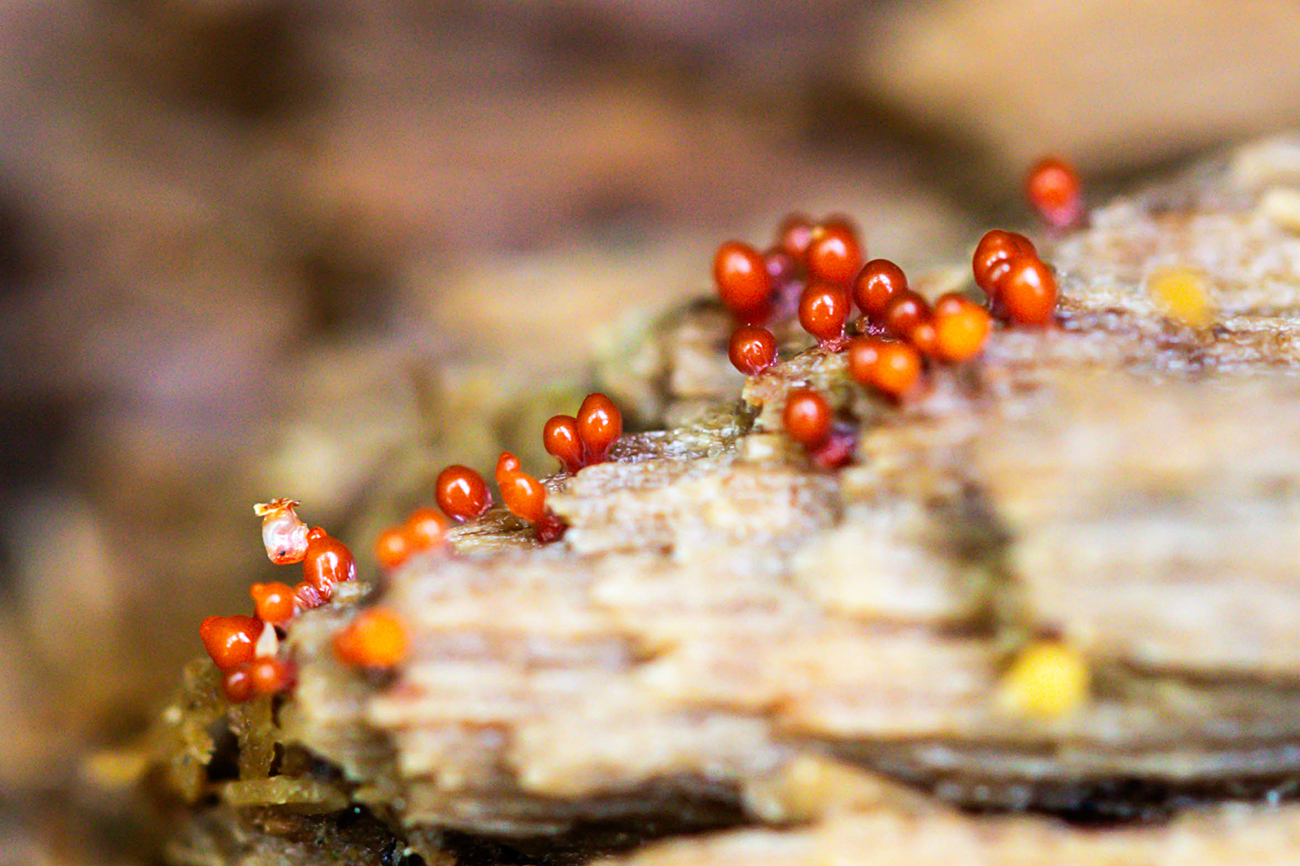
This is the life stage I most want to share with you today, because post-slime slime molds make some excellent shapes.
One of the most common species of slime molds is carnival candy slime, whose sporangia resemble a tasty treat. When their protective outer covering disintegrates, the fibers inside fluff out and look like spun sugar.
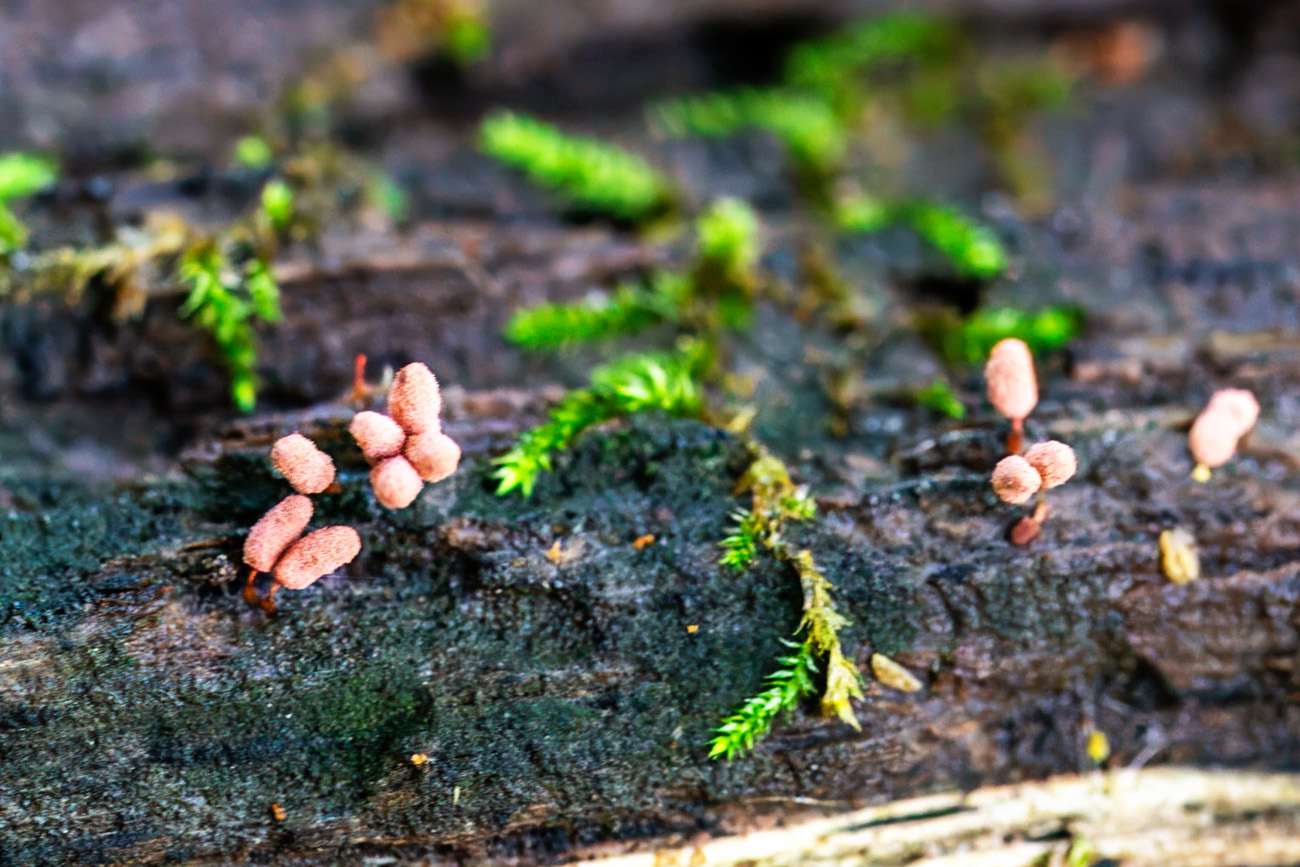
Common coral slime at first blush looks like a fungus covering a dead log, but unlike fungi that penetrate deep into wood or the ground, slime molds remain spread over the surface. Close up, you can see the fuzzy spores on the outside of the coral-like stalks.
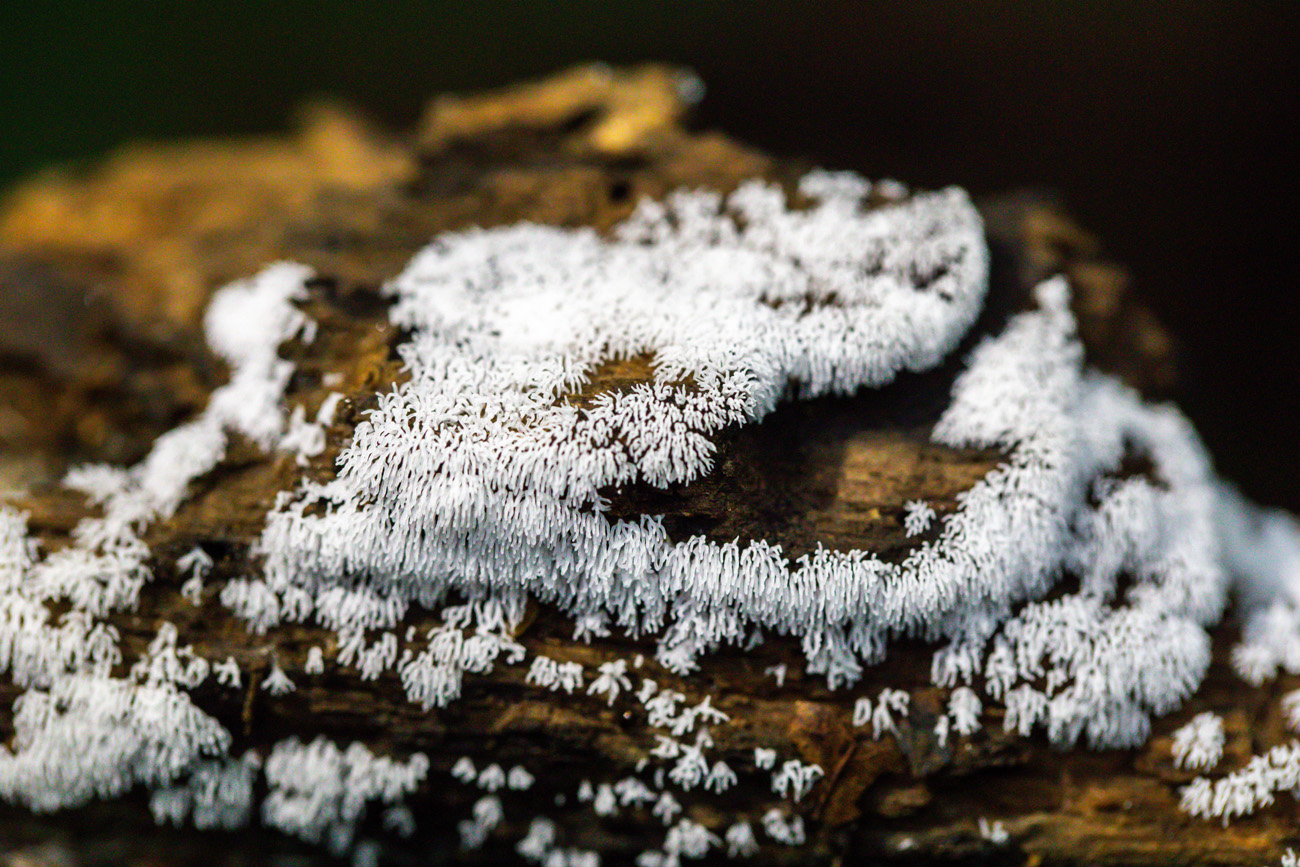
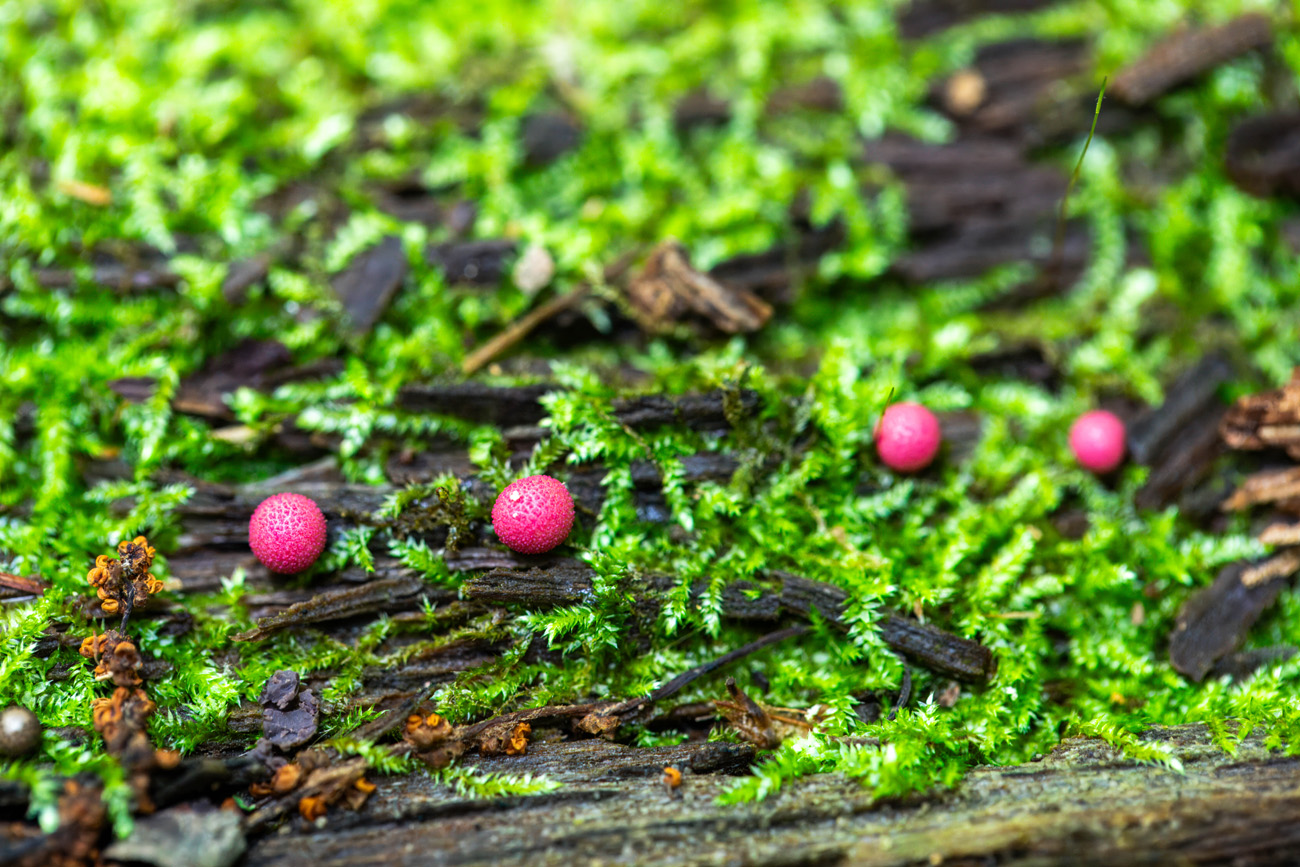
Wolf’s milk sporangia are tiny pincushions that range from hot pink in their youth to gray in their decline. (Many of us can relate.) Inside, they have a toothpaste-like texture when they’re young, which turns powdery later on.
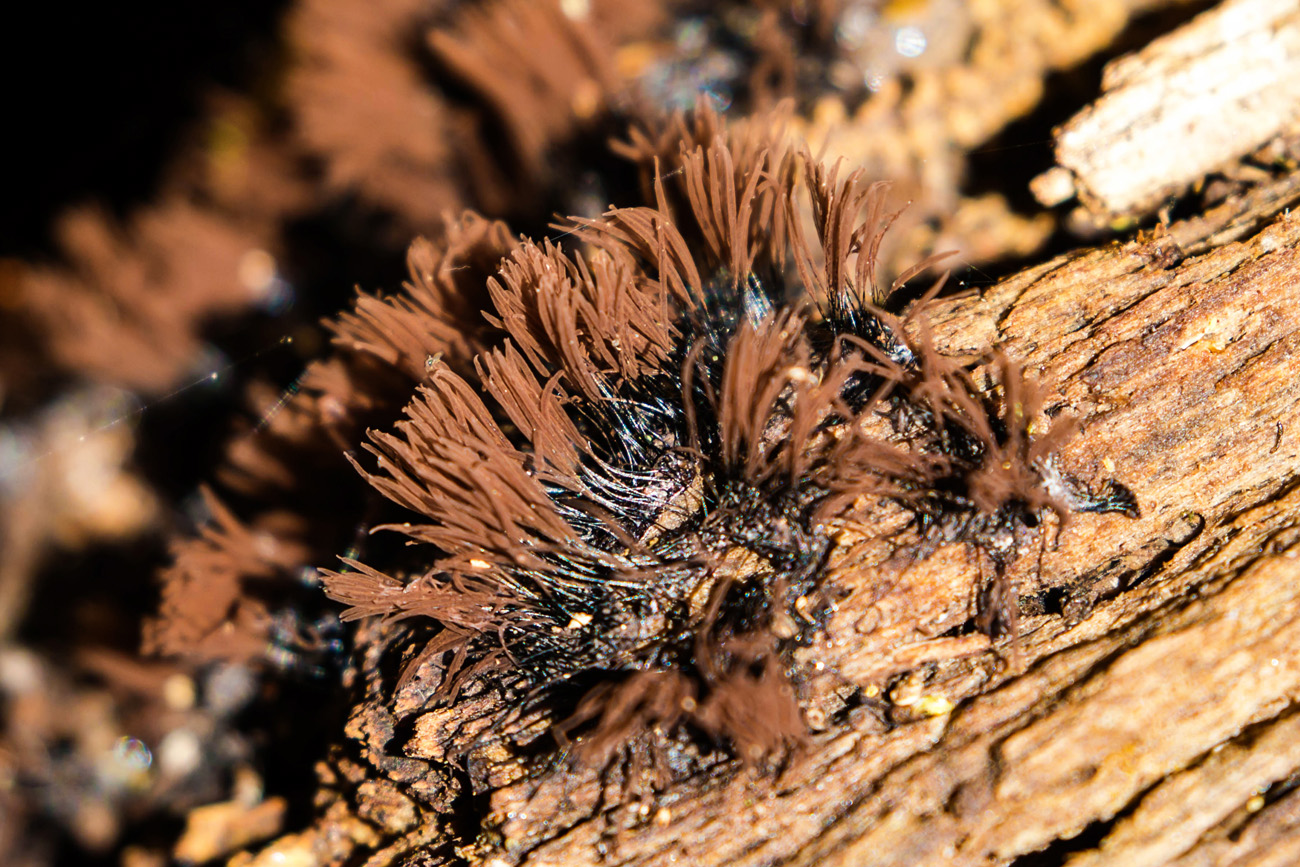
We’ve had a good number of chocolate tube slimes in the Old Forest this spring, and sometimes they legitimately look like someone has left a blob of cocoa powder on a log. If you tap them, they’ll release a cloud of spores into the air.
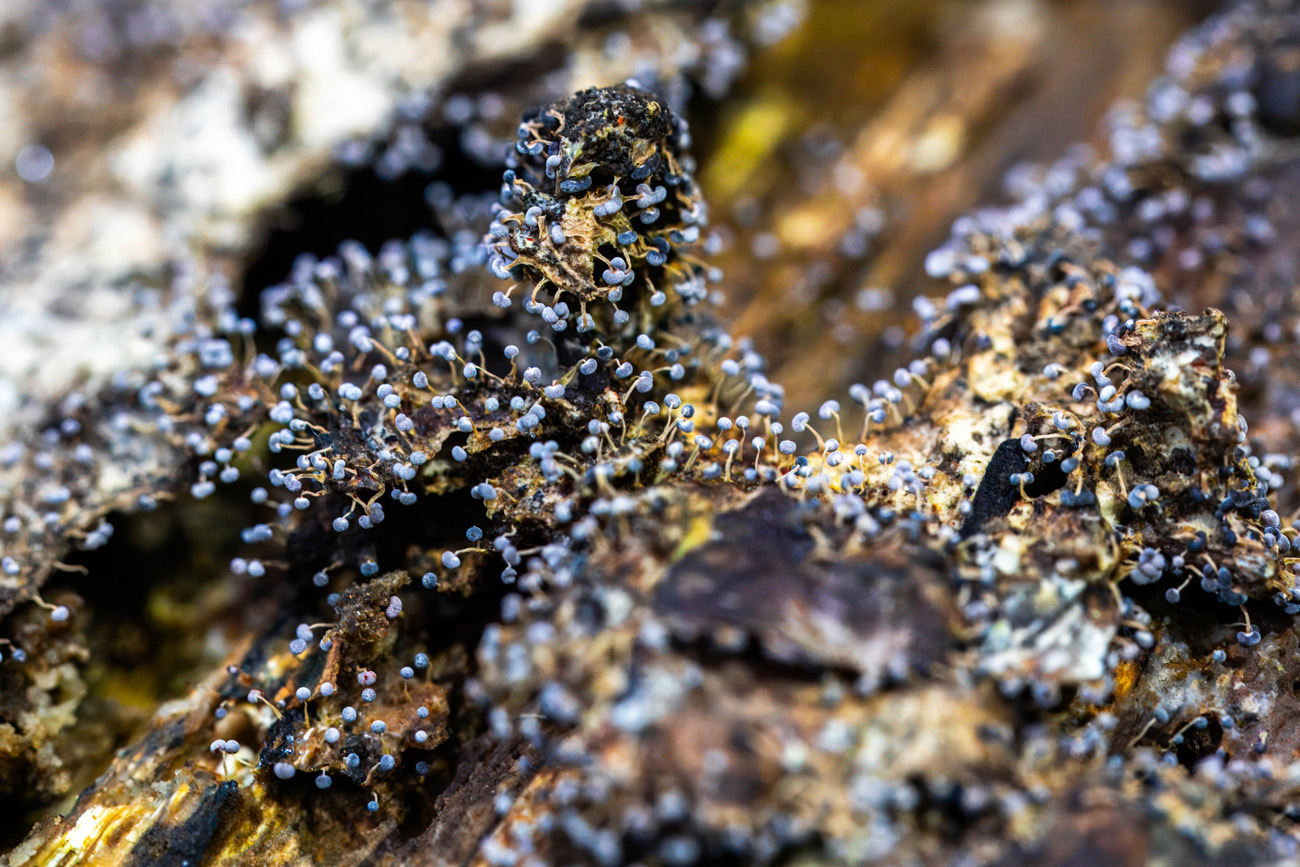
Slime molds in the Physarum genus have lovely blue caps that look like dried-up blueberries.
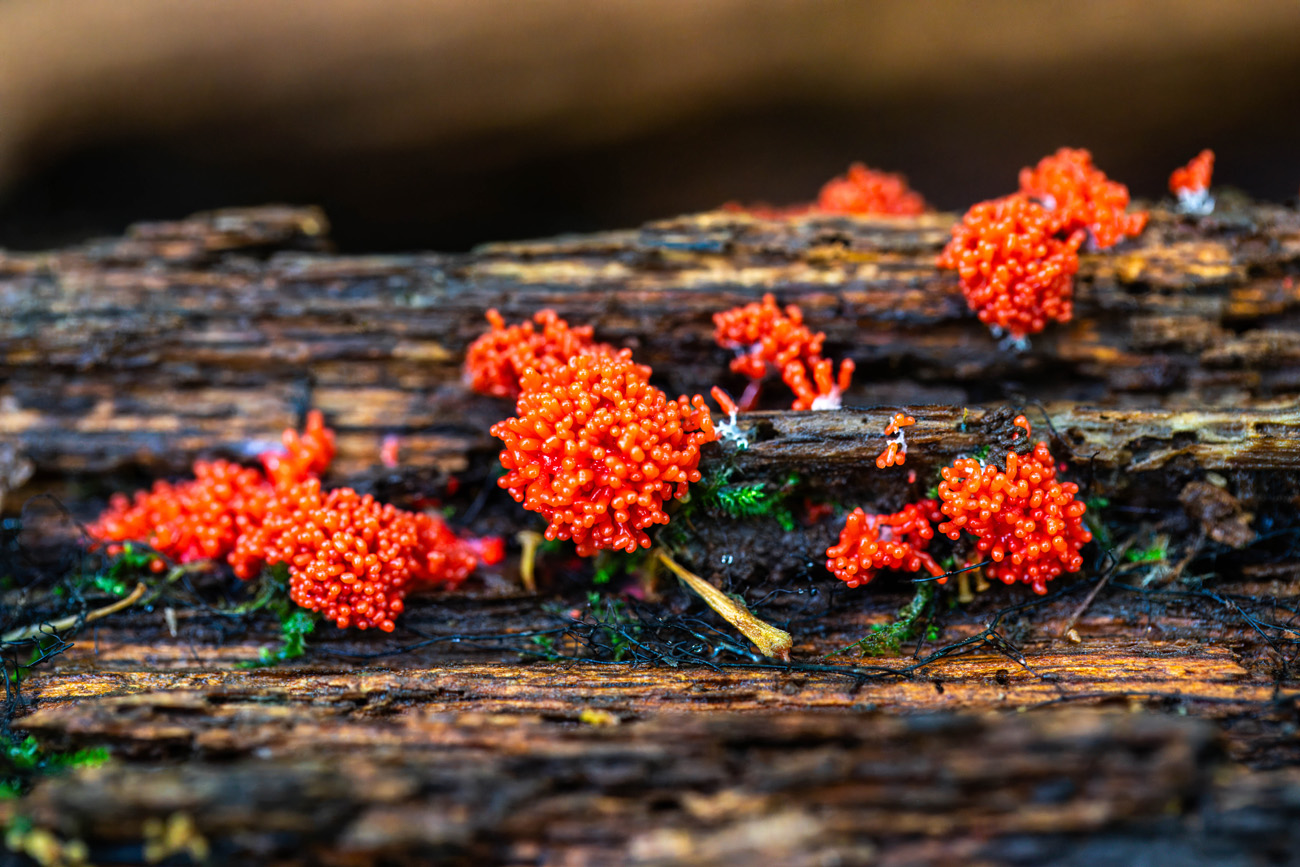
If there’s such a thing as a crowd-pleasing protozoan, red raspberry slime mold is the one. It doesn’t just please our eyes, though; these beauties have been uniformly devoured by millipedes within hours of my spotting them. We eat with our eyes first, I suppose.
One of my favorite fungus logs this spring also produced this showstopper. Trichamphora pezizoidea is a species that’s found all over the world but not in large numbers. I truly feel like I’m looking at a life-size diagram of a cell when I see these.
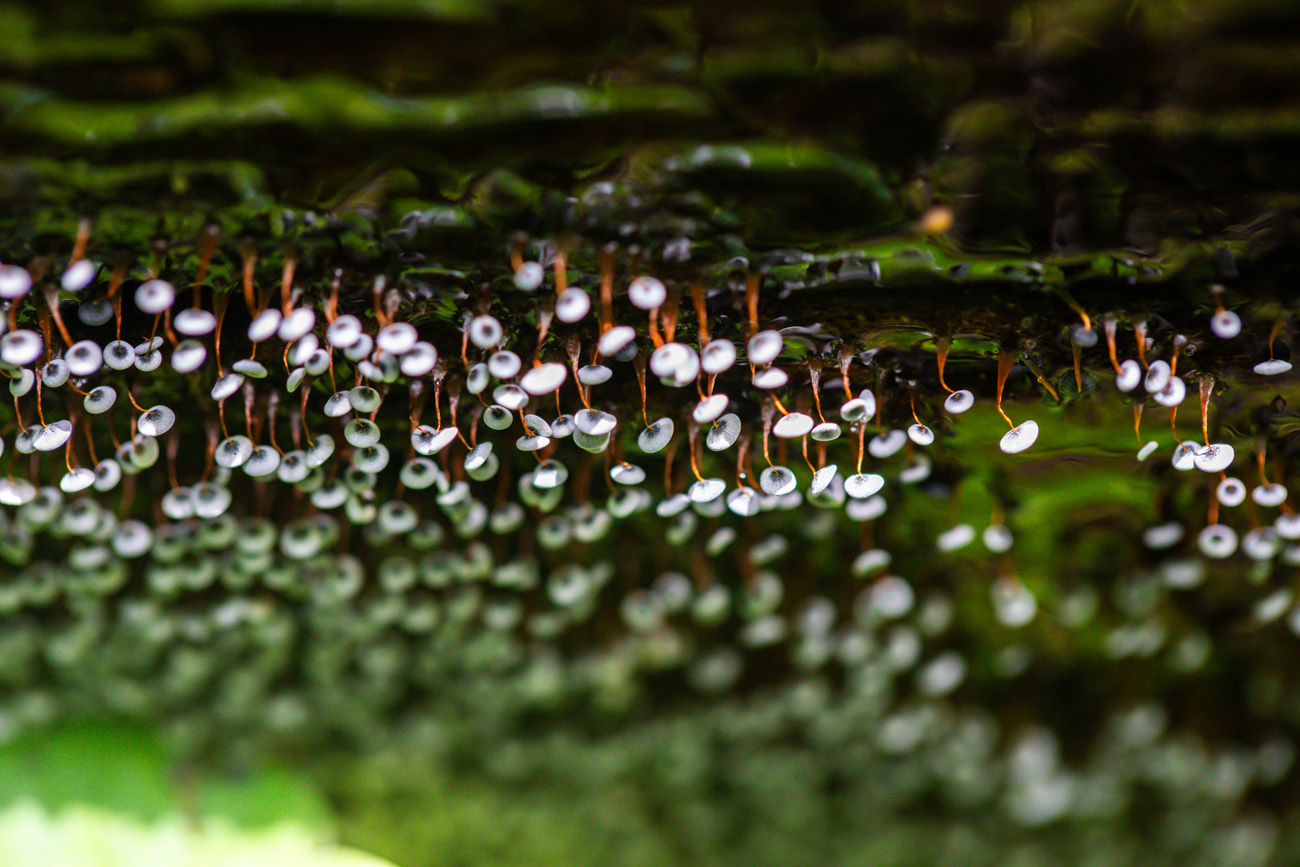
No, we didn’t just stumble upon a paper wasp subdivision; this is the wasp’s nest slime mold. When they release their spores and dry out, these structures have hollow chambers just like a paper wasp’s home would.
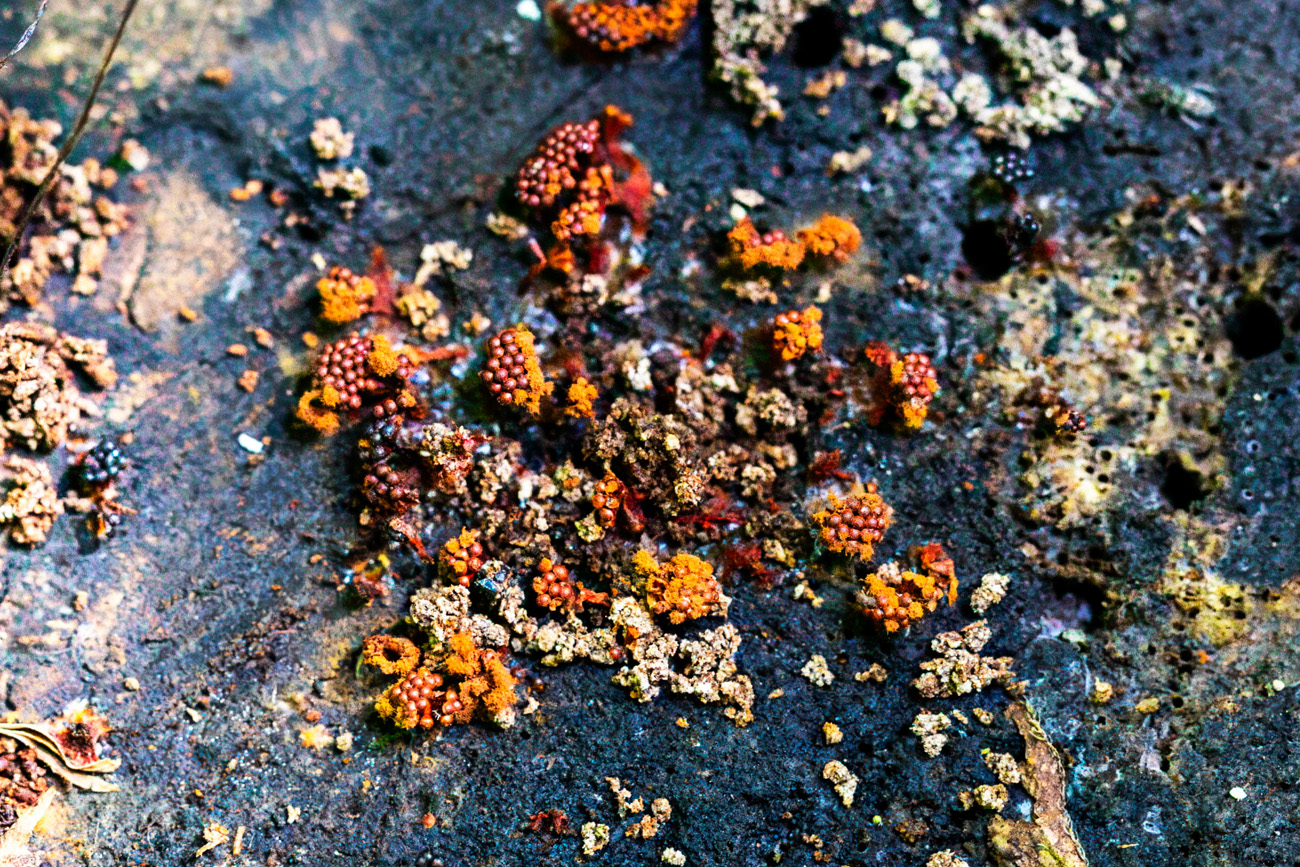
Finally, one of the revelations of spring was that slime molds may spend most of their time on decaying wood, but that they can also fan out harmlessly all over healthy leaves.
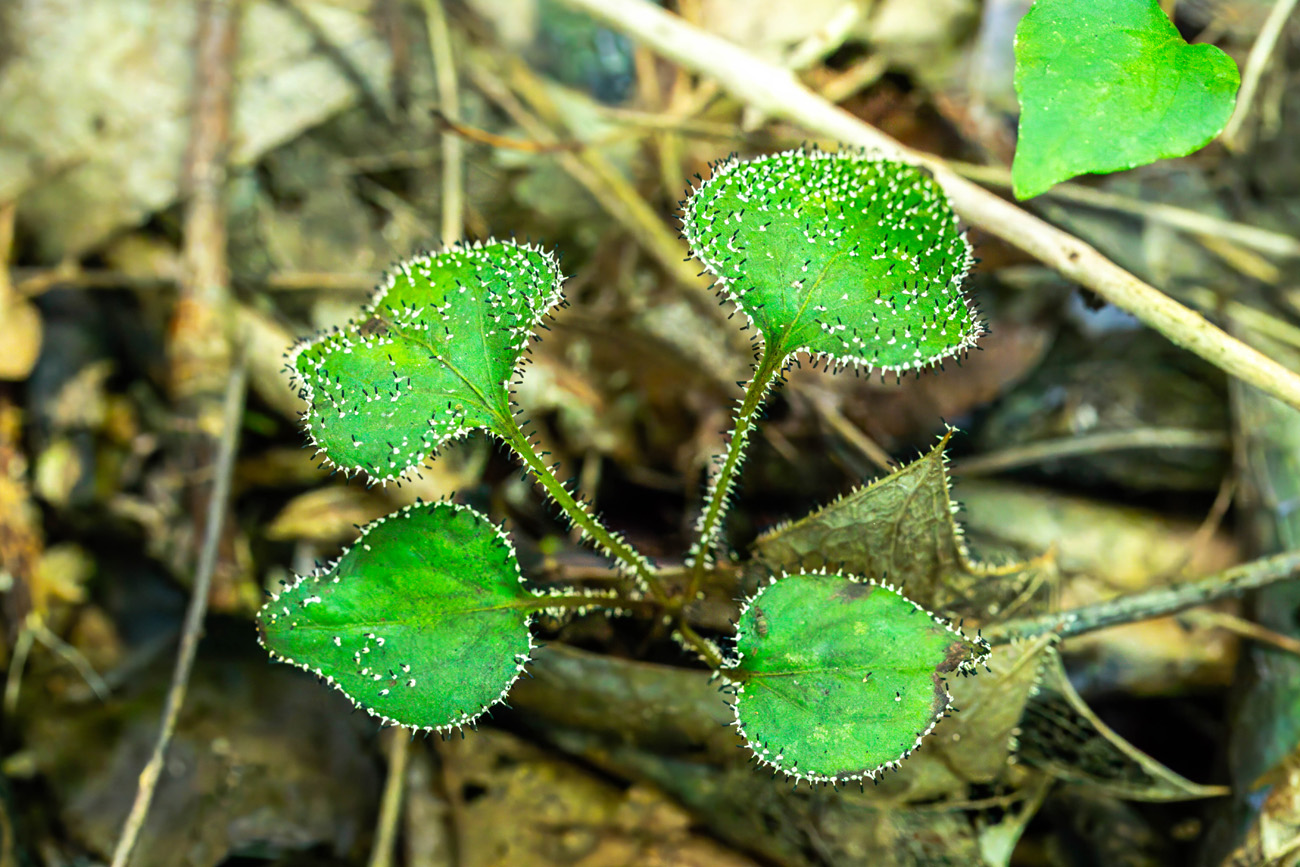
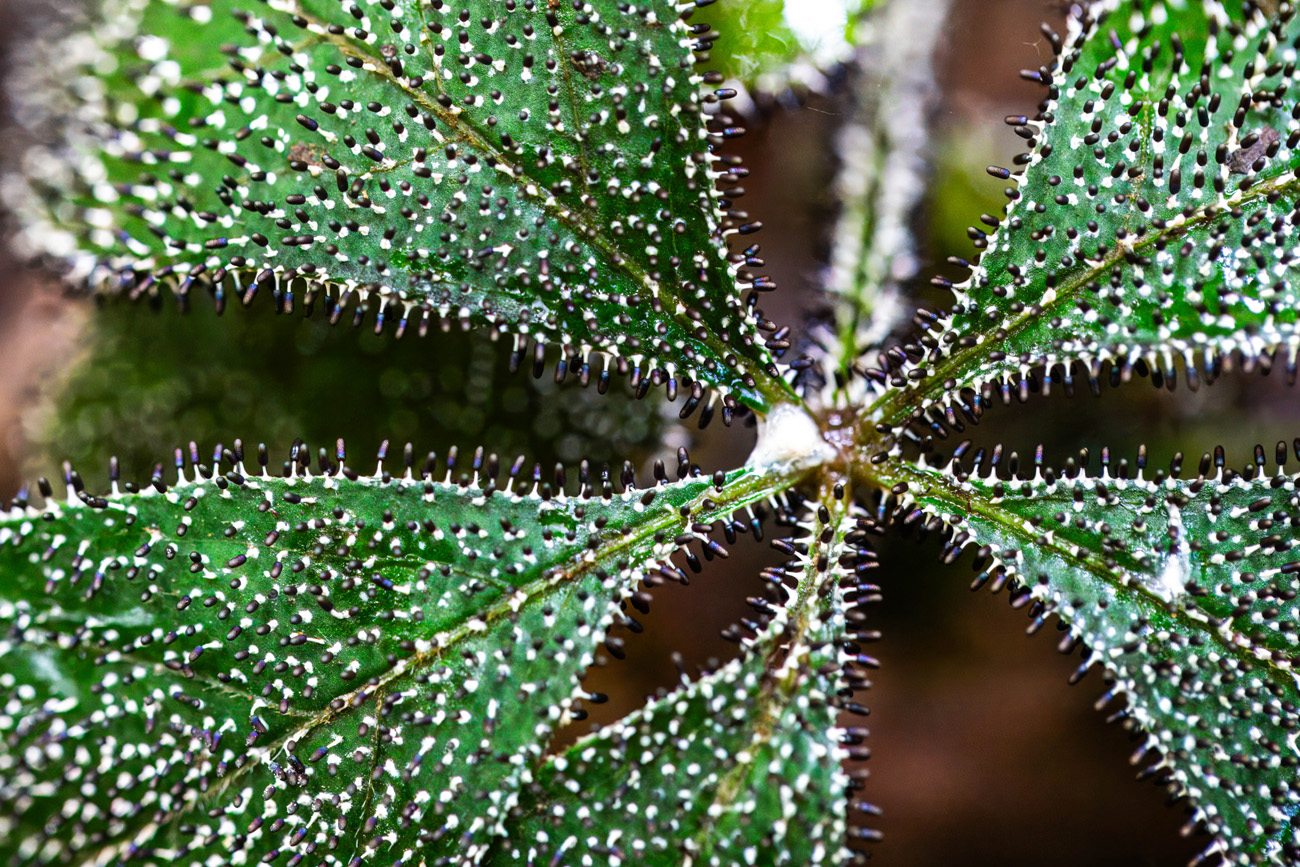
White-footed slime isn’t feeding on these living violets, but while it was moving around in its cytoplasmic stage, it wound up passing over the plant on its way somewhere. Thanks to all this rainy weather, something told the slime mold it was time to reproduce, so it went ahead and converted to sporangia. I’d say this is a pretty sweet place from whence to go forth and seek your fortune!
Thank you for bearing with today’s lesson full of words we all last heard in high school biology, if ever! Next time we’ll pivot back to winged creatures, but I’ve really enjoyed this opportunity to learn more about some underappreciated residents of the Old Forest.