words and photos by Melissa McMasters
If you’re like me, you’re currently getting your nature fix in small doses. I long for the days of the hourlong forest walk, but grabbing a few outdoor minutes at a time is the only way to avoid falling victim to the rampaging humidity demon. Luckily, there’s a lot you can see in just 20 minutes, and a recent trip to the Veterans Plaza pollinator garden bore that out.
The black swallowtail butterflies were slow in finding us this year, but now that they’ve arrived at the fennel buffet, they are making the most of it. (Fields recorded 19 caterpillars last week!)
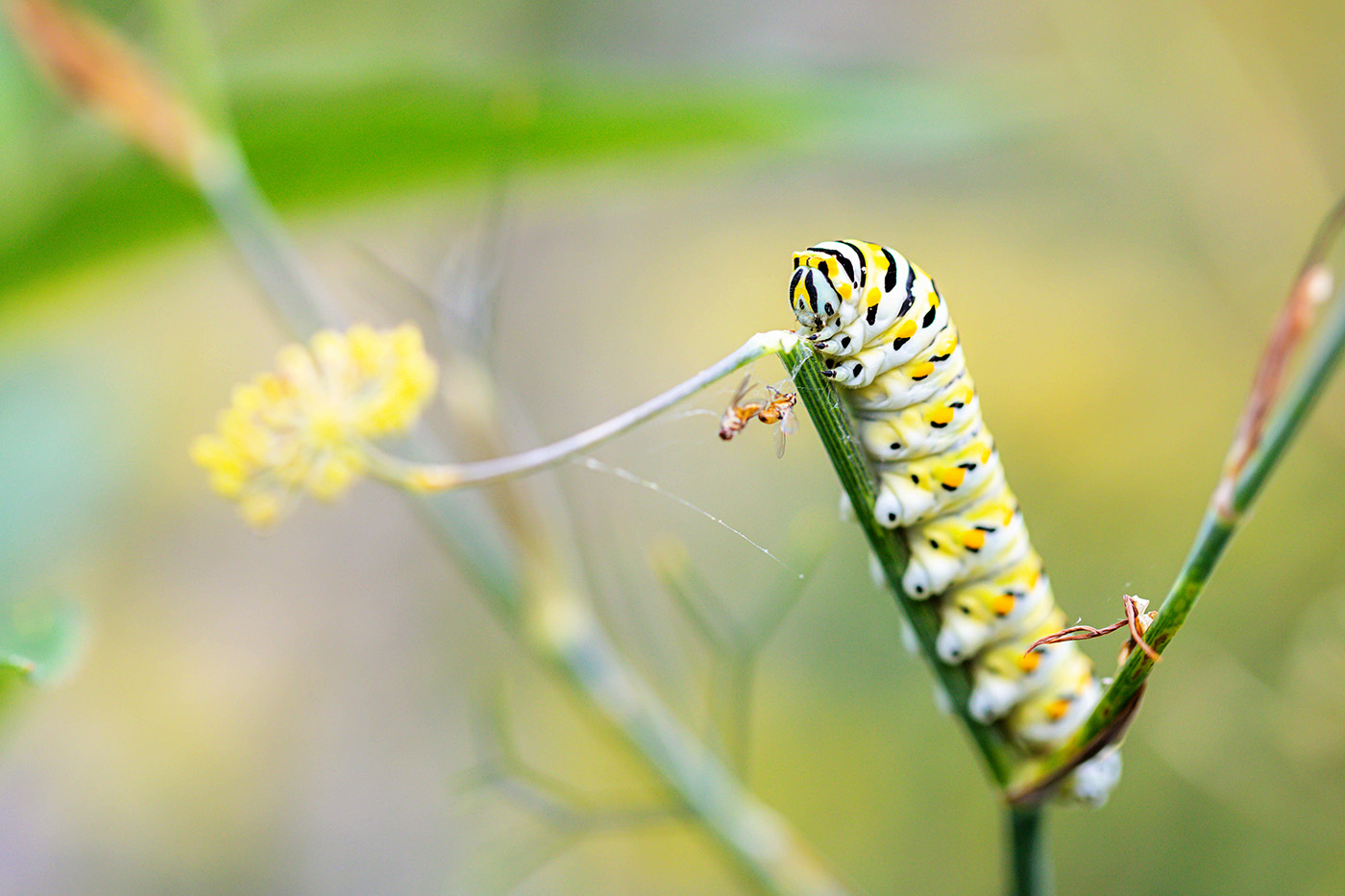
I’m always amazed at how these caterpillars, which become quite chunky by the time they’re ready to pupate, squish themselves up to form the shape of their chrysalis. After several molts that make them larger (creating the life stages known as instars), their final molt is one of compression. I came upon this one as it had finished creating its silk “button,” by which it attached its hind end to a stem, and its harness, which secured the rest of its body in a reclined position. It appeared to be sighing heavily, expanding and contracting with its now-limited range of motion. This process looked like breath but was actually moving fluids through the caterpillar’s body, loosening the skin around its head in preparation to split open and reveal the lovely green chrysalis inside.
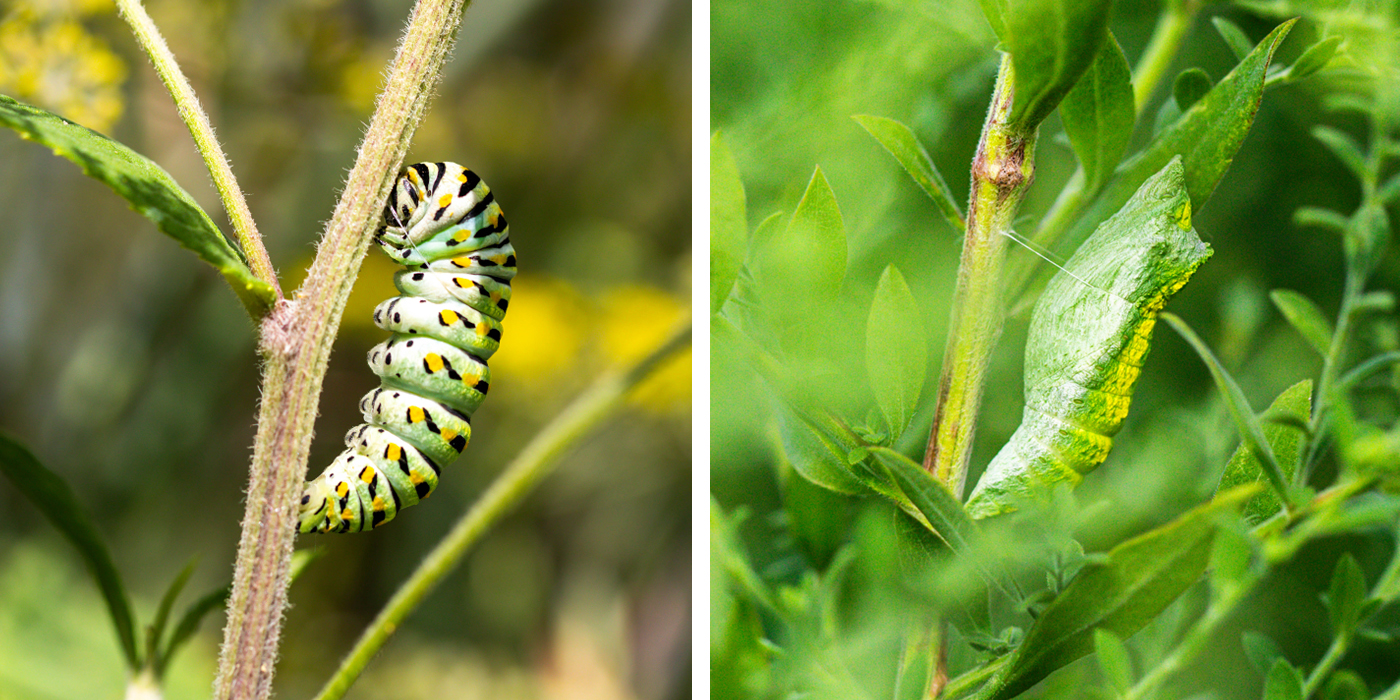
Watching a caterpillar prepare for metamorphosis never fails to move me. To employ a reference that’s somehow both topical and ancient, she has to lash herself to the mast, Odysseus-style, with no hope of escape, no option to turn around and keep enjoying her fennel salads, only the necessity to trust that she’ll emerge on the other side with the ability to fly. Can a plump little critter be brave? She feels brave to me.
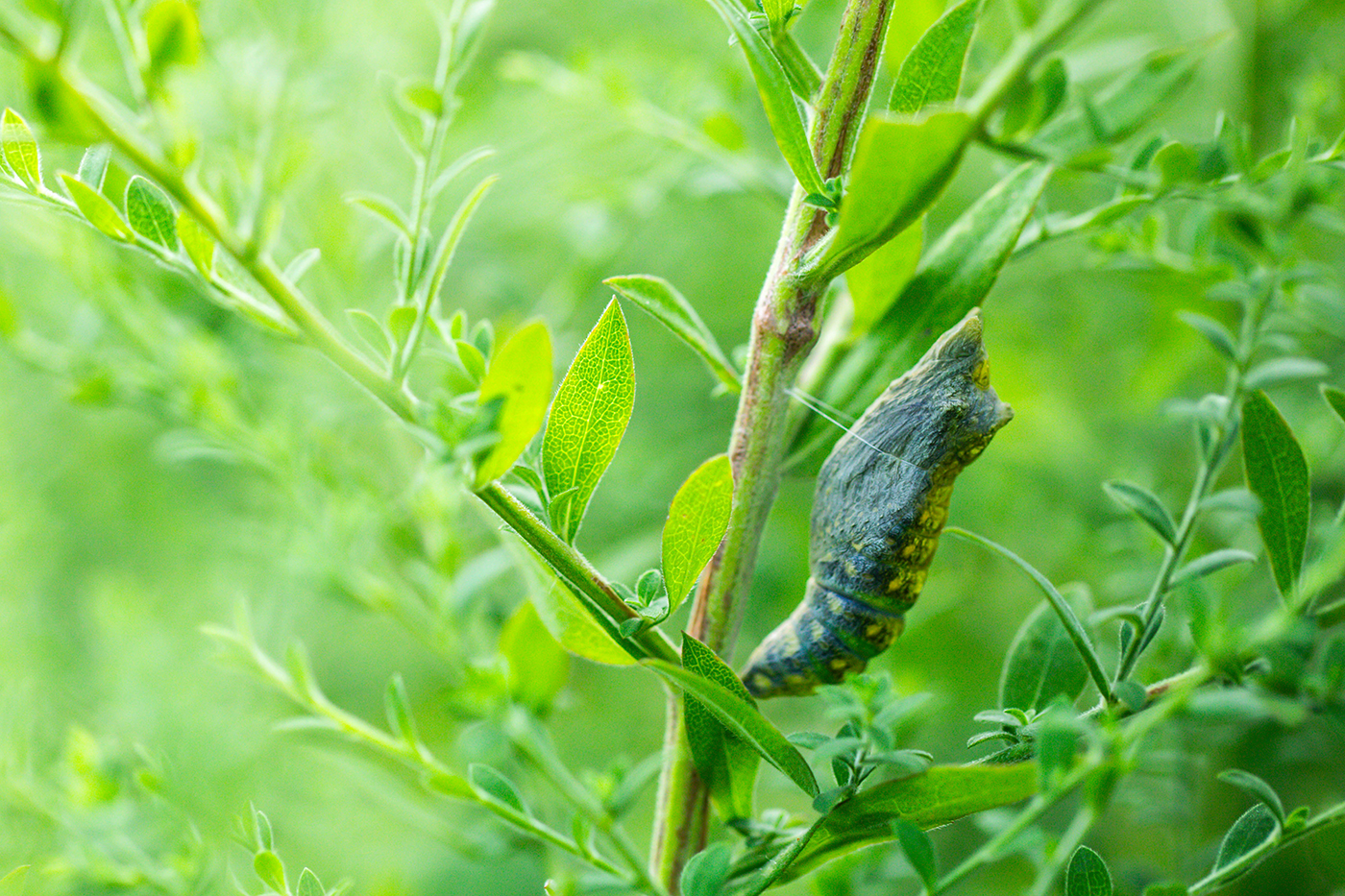
In a lifetime of butterfly-watching, one thing I have never managed to witness is a butterfly emerging from its chrysalis. Over the last few summers, I’ve kept an eye on our pupating swallowtails, hoping that one day I would get to watch one eclose. A couple of weeks ago, I made a morning stop at the garden and noticed that the chrysalis pictured above was quite dark. The bottom was even starting to show the spot pattern of the butterfly inside. “Any minute now, huh?” I thought.
A small movement to my left distracted me: a little grass-veneer moth. Since it was National Moth Week, I figured I’d better take a photo even though these guys are a dime a dozen and look like a piece of thread that comes loose from your pocket. But when I turned my head, I saw something much more exciting: a freshly-emerged black swallowtail! It must have been no more than an hour or two old, and it was sitting right next to its spent chrysalis.
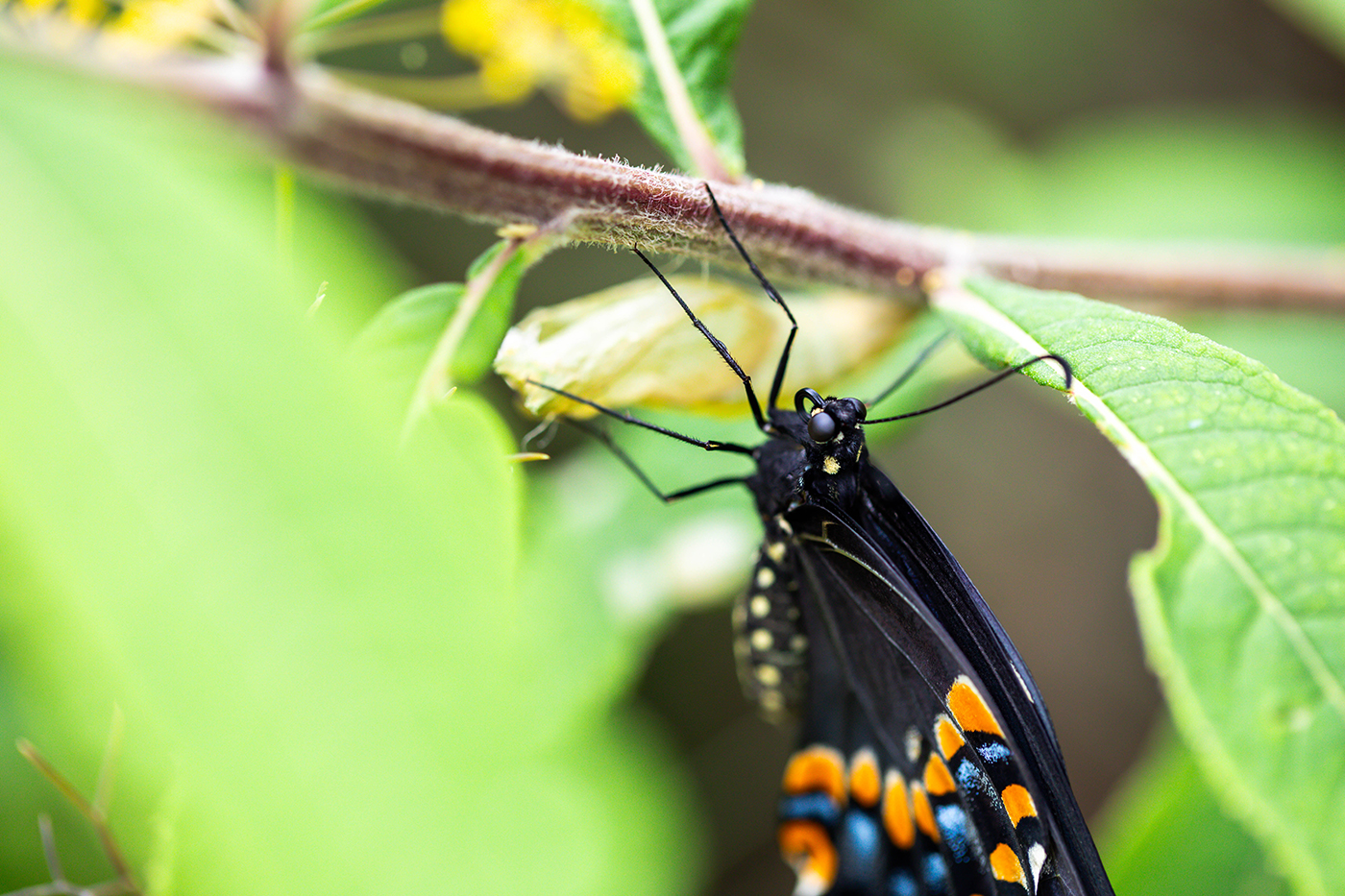
According to my camera’s metadata, I admired this gorgeous creature for six minutes, and then turned back to the plant that held the dark chrysalis. Something remarkable was unfolding in total silence. The butterfly had pushed its way out of the chrysalis and was crawling up a stem!
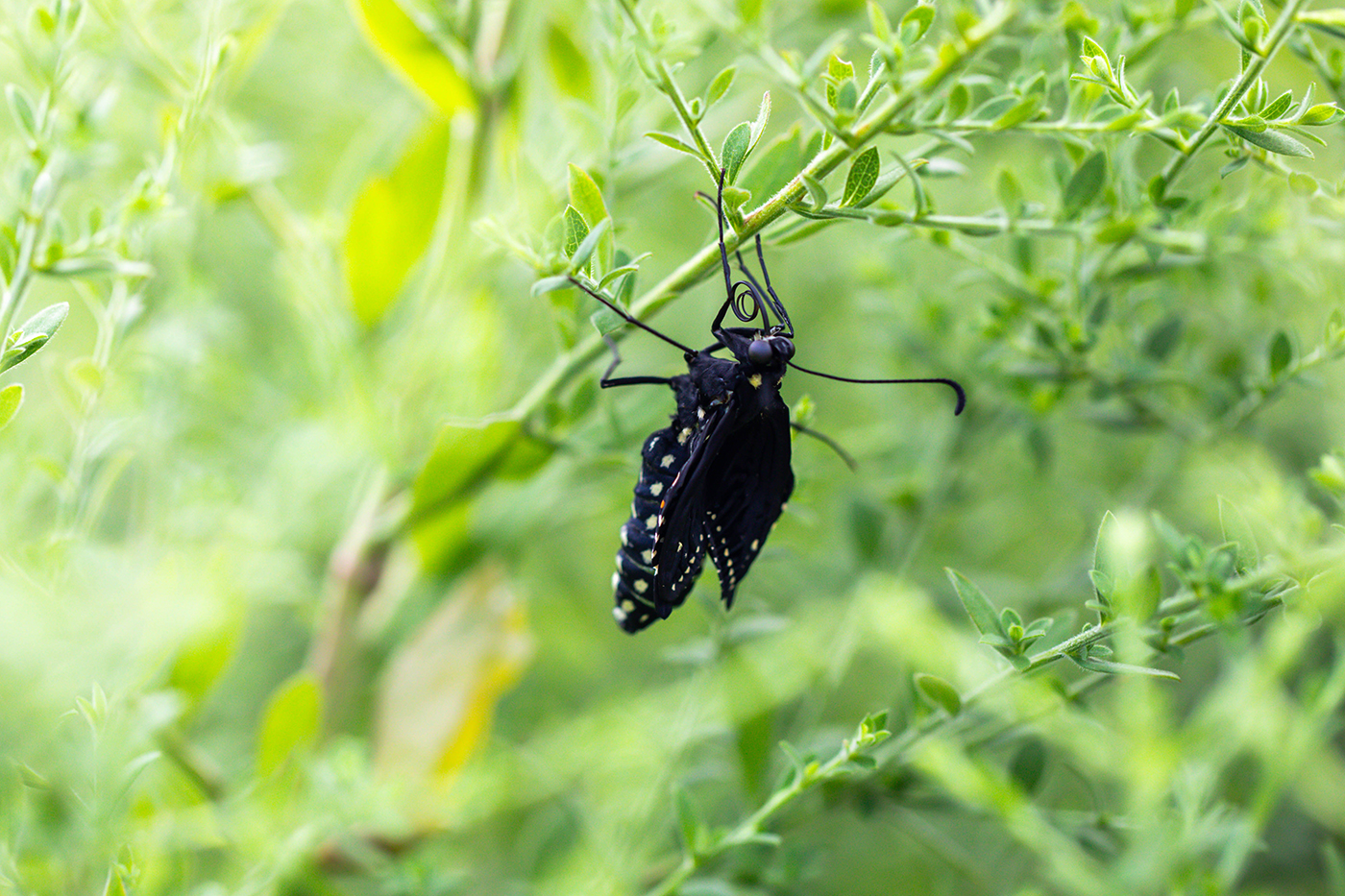
This was a critical window of time for the butterfly, who needed to get quickly into a vertical position. Wet from the waste fluid called meconium that she’s expelled during the metamorphosis process, her wings only have a short window to dry in the correct shape and expand.
Similar to the way our hearts pump blood through our bodies, butterflies pump a substance called hemolymph through theirs. Getting the hemolymph into their wing veins creates pressure that expands them and gives them their structure, like the rods in a kite. But to do this effectively, a butterfly needs gravity to help open her wings, space to allow them to unfurl fully, and a few undisturbed hours to pump them full of enough fluid to make them structurally sound.
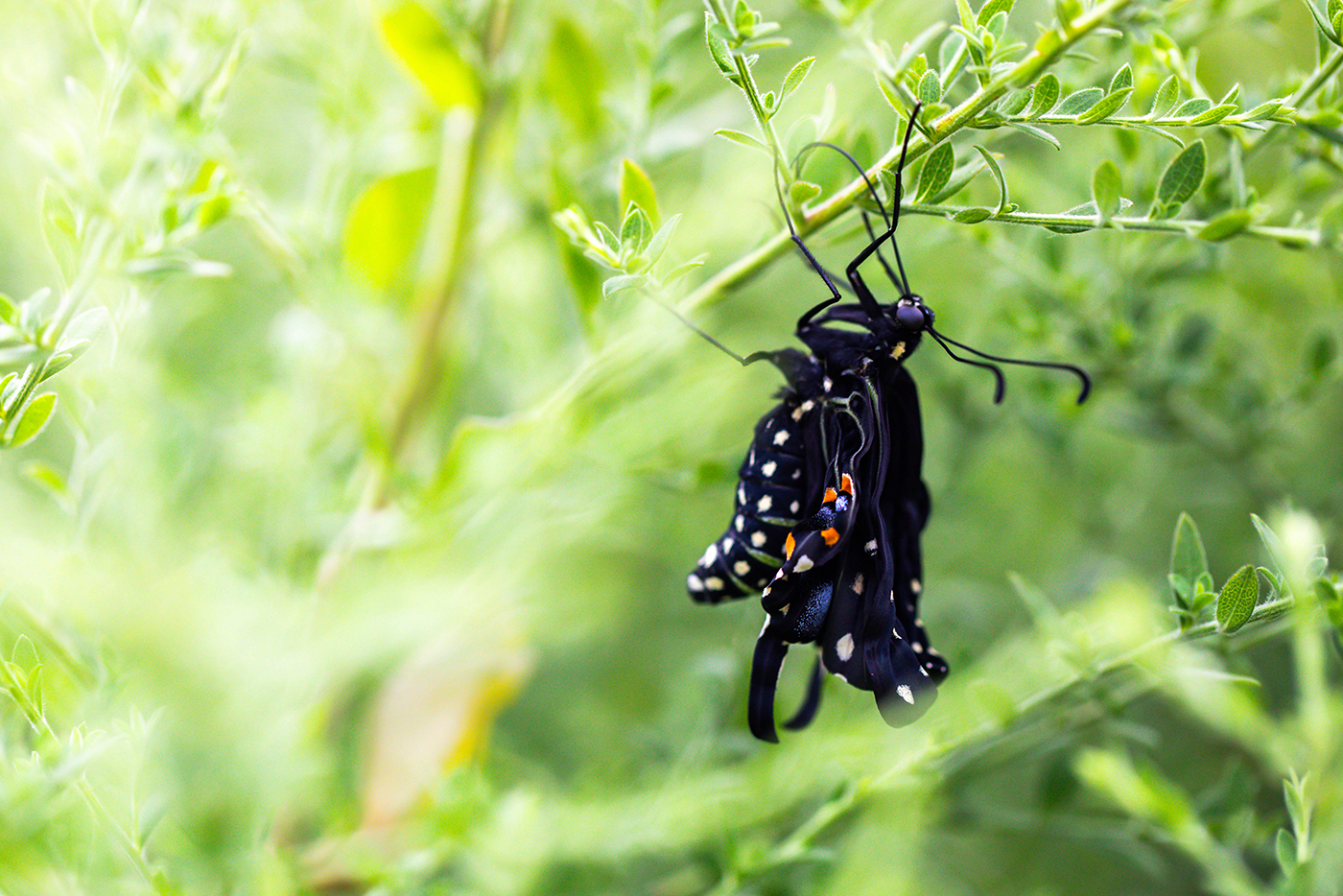
It was a windy morning, so when the butterfly started crawling up towards the top of the plant, I experienced a moment of terror: if she fell down, she’d land on her fragile wings and they’d never set up properly, dooming her before she ever took her first flight. I worried something was wrong, that her wings should be opening faster, that maybe she’d brushed against a leaf and interrupted the drying process. I had full-blown butterfly anxiety, but I knew the best thing I could do was leave her be and let her complete the process that her ancestors had undertaken for millions of years.
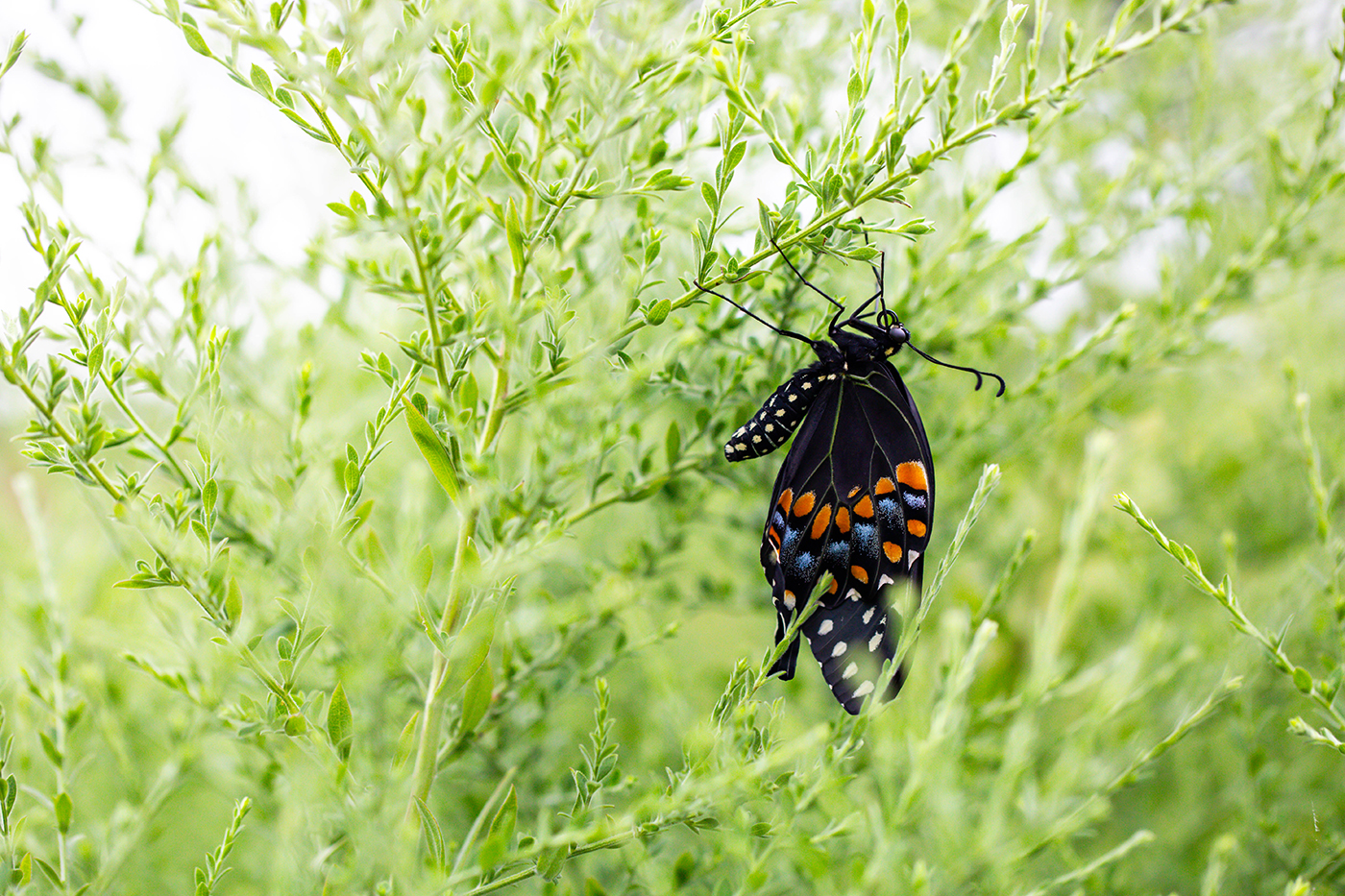
I needn’t have worried; she knew exactly what she was doing. On a cloudy morning, the sun wasn’t much help in helping her wings dry, but the breeze was gentle enough to give her some lift without blowing her around too much. Within about 10 minutes of emergence, she had begun to experiment with opening her wings.
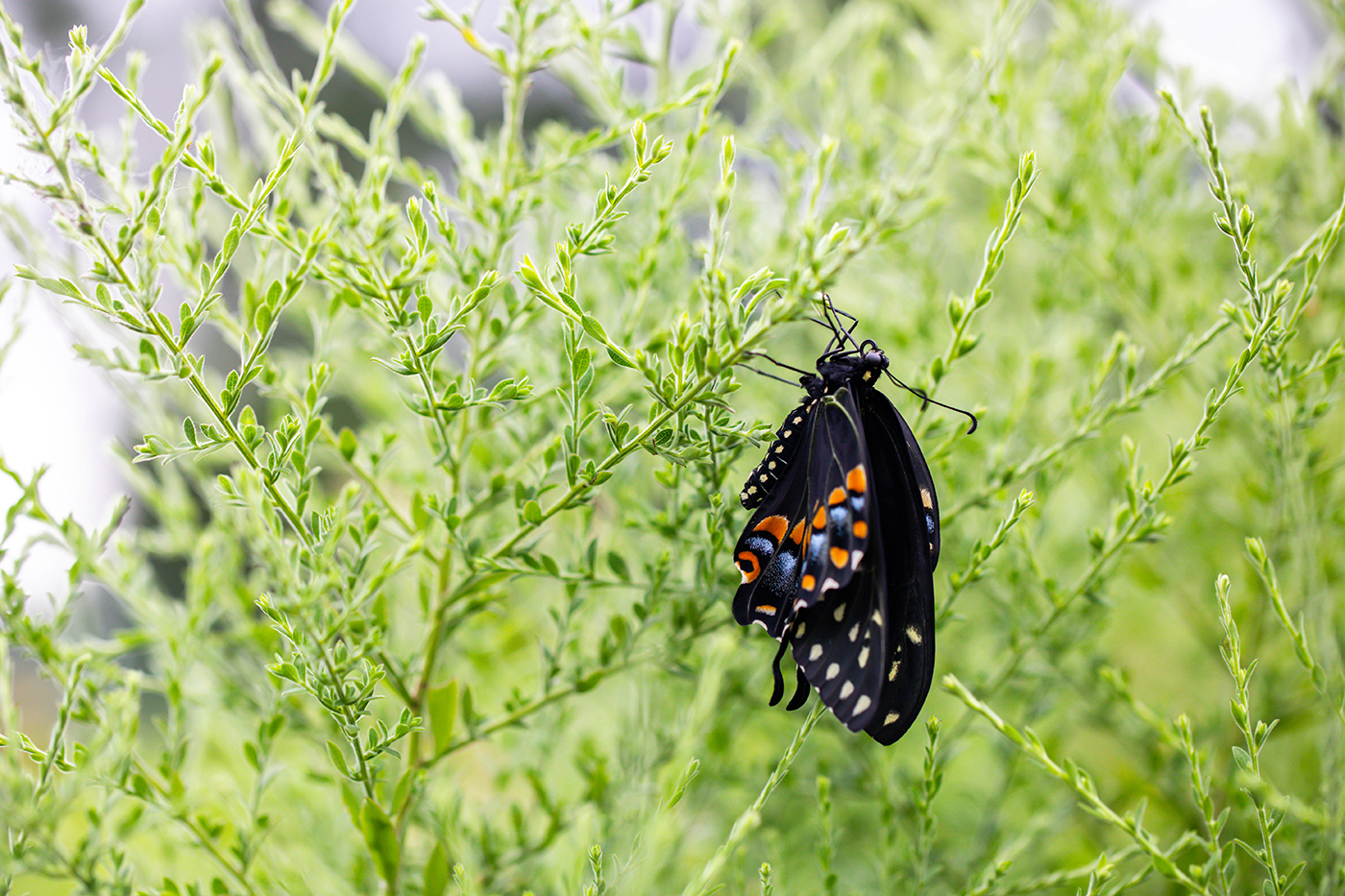
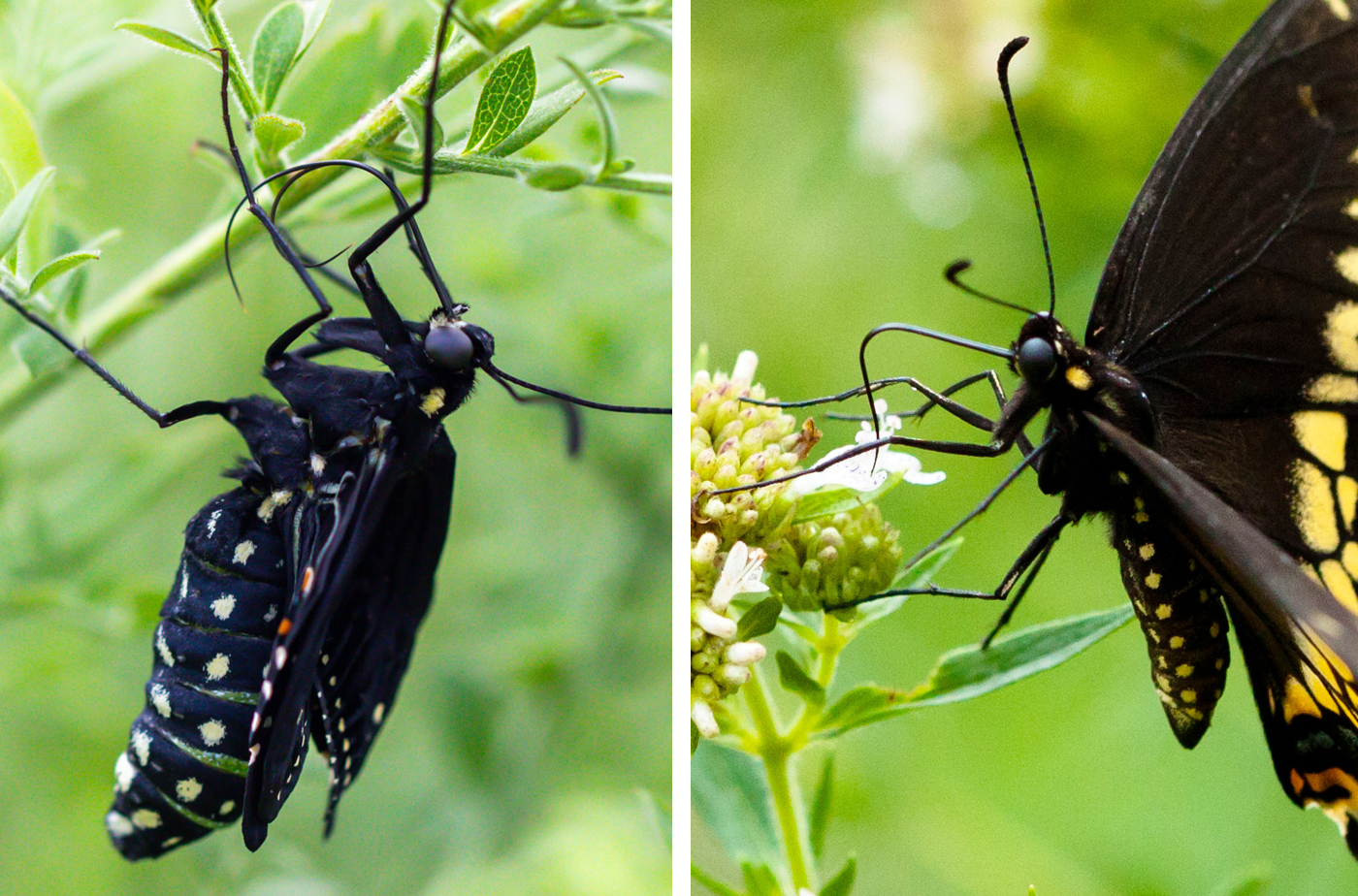
She was also up to something else: fusing her proboscis. Butterfly “tongues” develop as two separate structures, but in order for them to function as a proper unit, they have to fuse together. While the butterfly is working to pump her wings full of her special strength serum, she’s also having to curl and uncurl her proboscis to bind it together using saliva and little hooked structures. The ridge between the two halves forms a drinking straw that she’ll use to sip nectar, salts, and other nutrients.
Twenty minutes after pushing her way out of the home she built from her own body, this swallowtail had transformed from the crumpled-up laundry that comes out of the washing machine to a fully fluffed-out towel. Whirlpool could never.
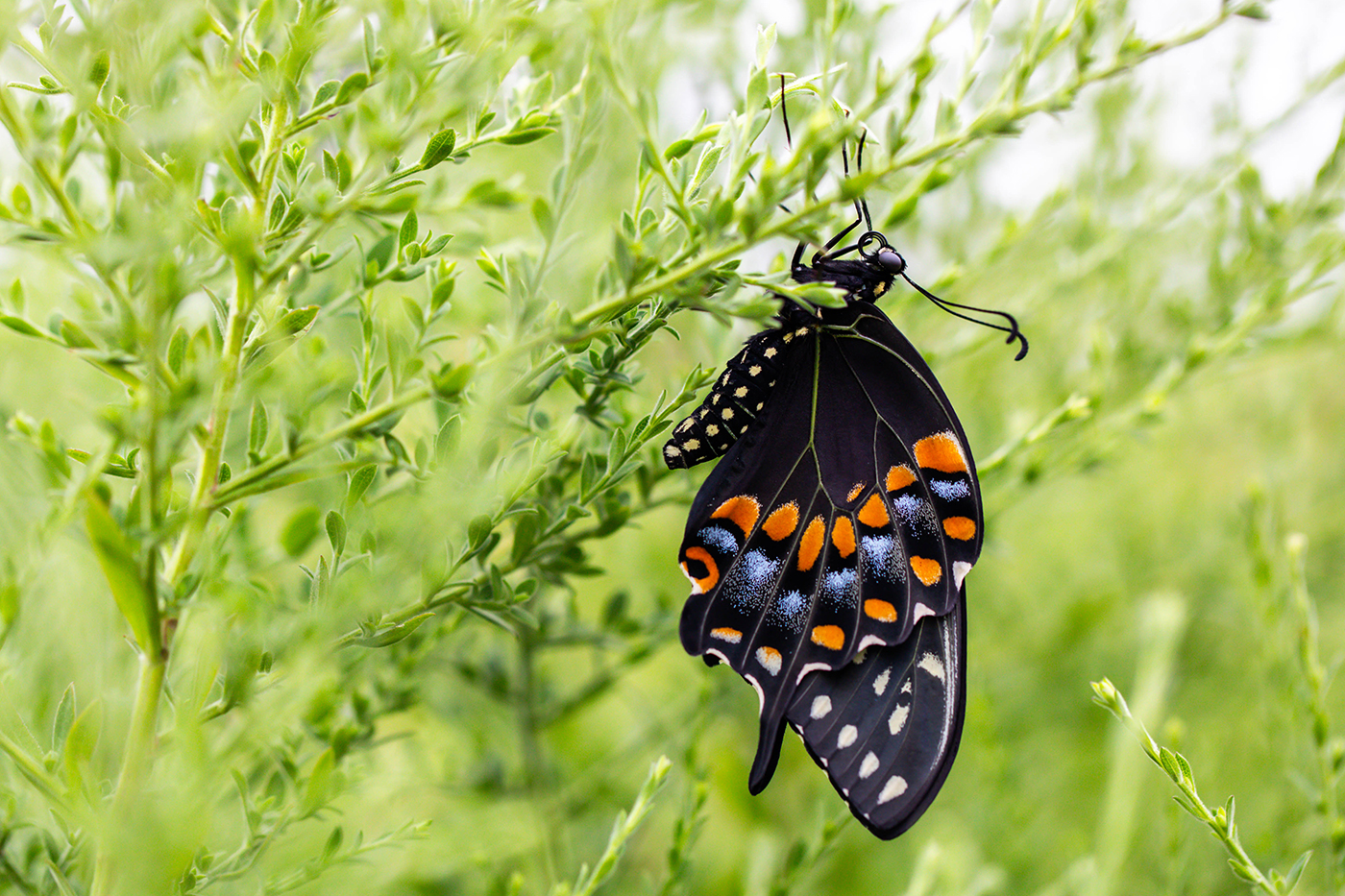
I reluctantly left her behind to start my work day, and by the time I returned at lunch, both she and the other recent graduate from the chrysalis academy had flown off to seek their fortunes. I feel so privileged to have witnessed this butterfly doing the hard work of growing up and going out into the world. Even if she did sneak out of that chrysalis about 30 seconds too quick for me!