words and photos by Melissa McMasters
The kid version of me could very much be described as a collector. I collected teddy bears, business cards, Lisa Frank stickers, letters from pen pals, and like everyone else, eraser shavings. (The one trend I’ve started in my life was getting every girl in my third-grade class to destroy their erasers and put the shavings in Tupperware containers. The texture was soothing!) These days I’m less interested in collecting things and more in collecting experiences, especially if I can also collect photographs of those experiences. And there’s no creature more fun to photograph than a butterfly. They don’t fly as high or cover themselves in as much shade as birds, they’re slower than dragonflies, and they’re so colorful and charismatic.
Today I’d love to share ten of my favorite additions to my butterfly-experience collection from the last 365 days. In honor of third-grade me, I invite you to follow along with pencil in hand, erasing a blank sheet of paper.
1. I’ve written in this space before about how much I treasure the National Butterfly Center in Mission, Texas, and late 2025 was an absolute barn-burner for rare butterflies on the Texas-Mexico border. Within five minutes of my arrival in November, I ran into an old friend who added me to a Discord channel that allows everyone in the Lower Rio Grande Valley to alert each other of rare butterfly sightings. All weekend the pings peppered the Center as we ran from one end to the other chasing the first ruby-spotted swallowtails spotted there in over a decade, the Central and South American specialty Isabella’s longwing, and a bumper crop of emperors and sisters.
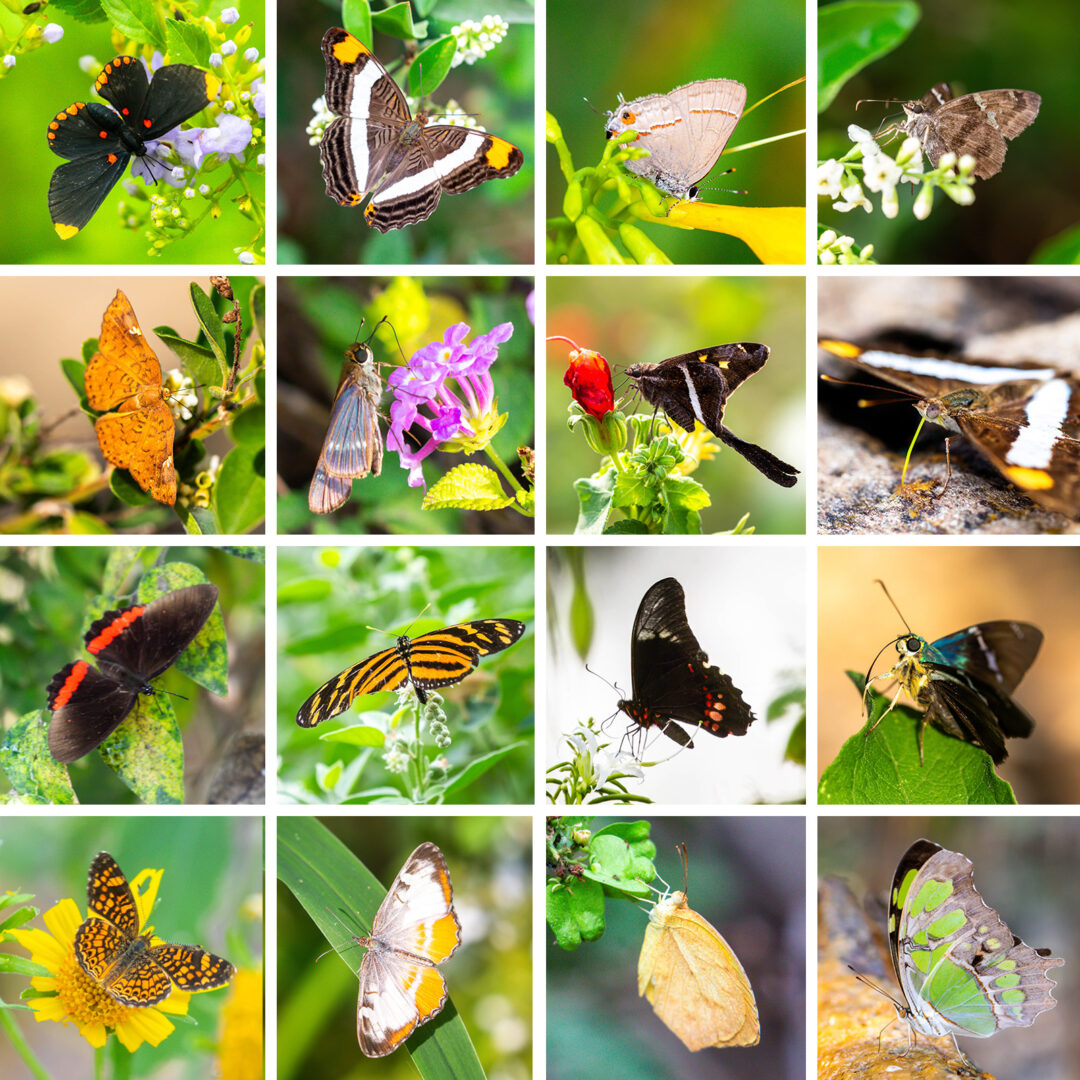
Row 1: red-bordered pixie, band-celled sister, ruddy hairstreak, potrillo skipper
Row 2: curve-winged metalmark, purple-washed skipper, white-striped longtail, silver emperor
Row 3: Northern red rim, Isabella’s longwing, ruby-spotted swallowtail, Qian’s flasher
Row 4: vesta crescent, common mestra, tailed orange, malachite
All told, I saw 86 species in less than four days, 11 of which were new to me, and I had an absolute blast sharing butterfly joy with everyone else making their annual fall pilgrimage. Cheers to the NBC team for continuing to add new butterfly host plants that attract species that had long been absent–their work is paying absolute dividends for both butterflies and the people who love them!
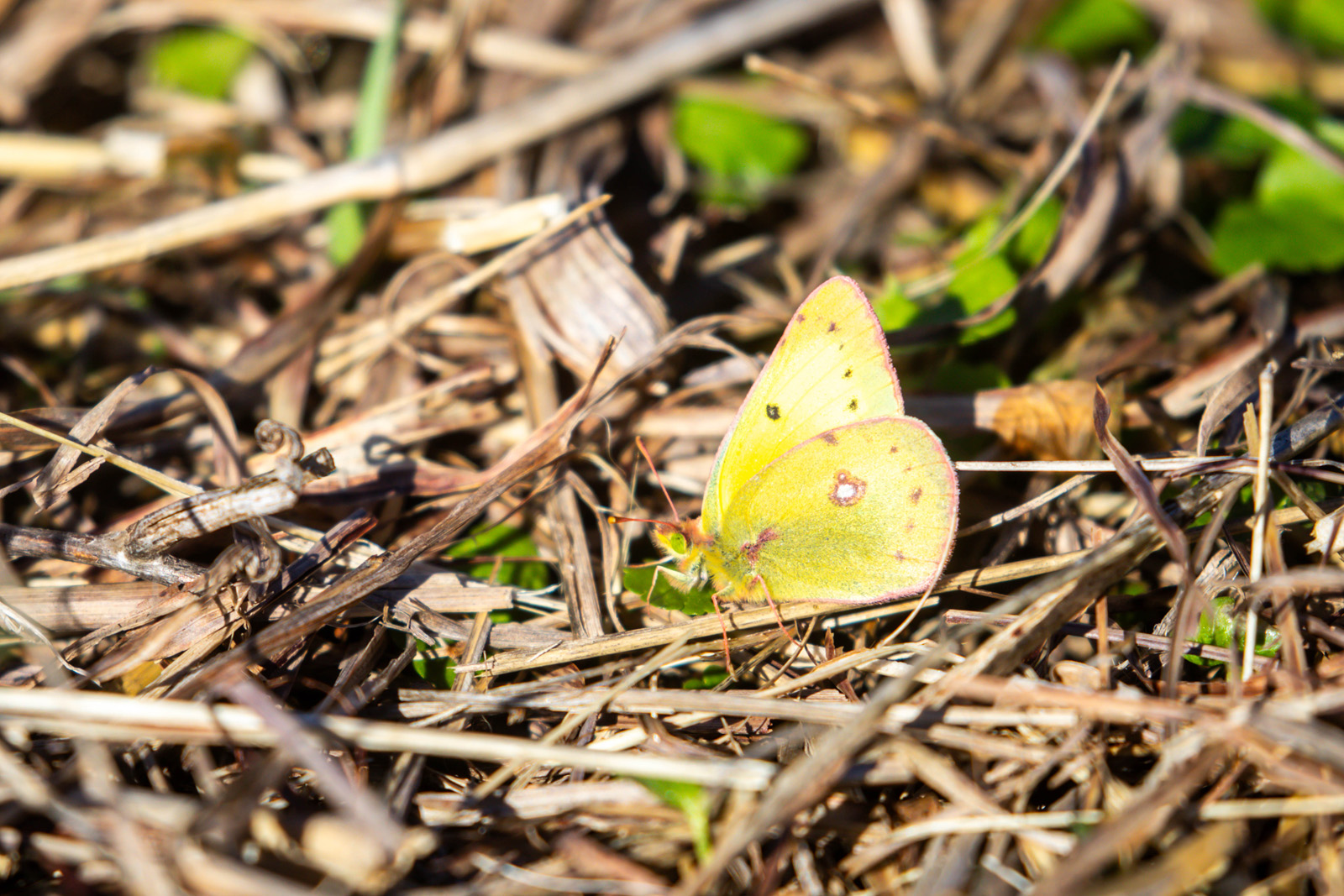
2. On New Year’s Day, my Conservancy colleague Kim and I have a tradition of going out to look for our first birds of the new year. This year’s red-shouldered hawks at Shelby Farms Park were not a surprise, but the flash of yellow wings flying low over a dormant field was. Eventually it settled down and we could see that it was a fresh orange sulphur, officially the earliest butterfly I’ve ever seen flying in Memphis. I suppose unless I see one on January 1 at the crack of dawn, that record is going to stand.
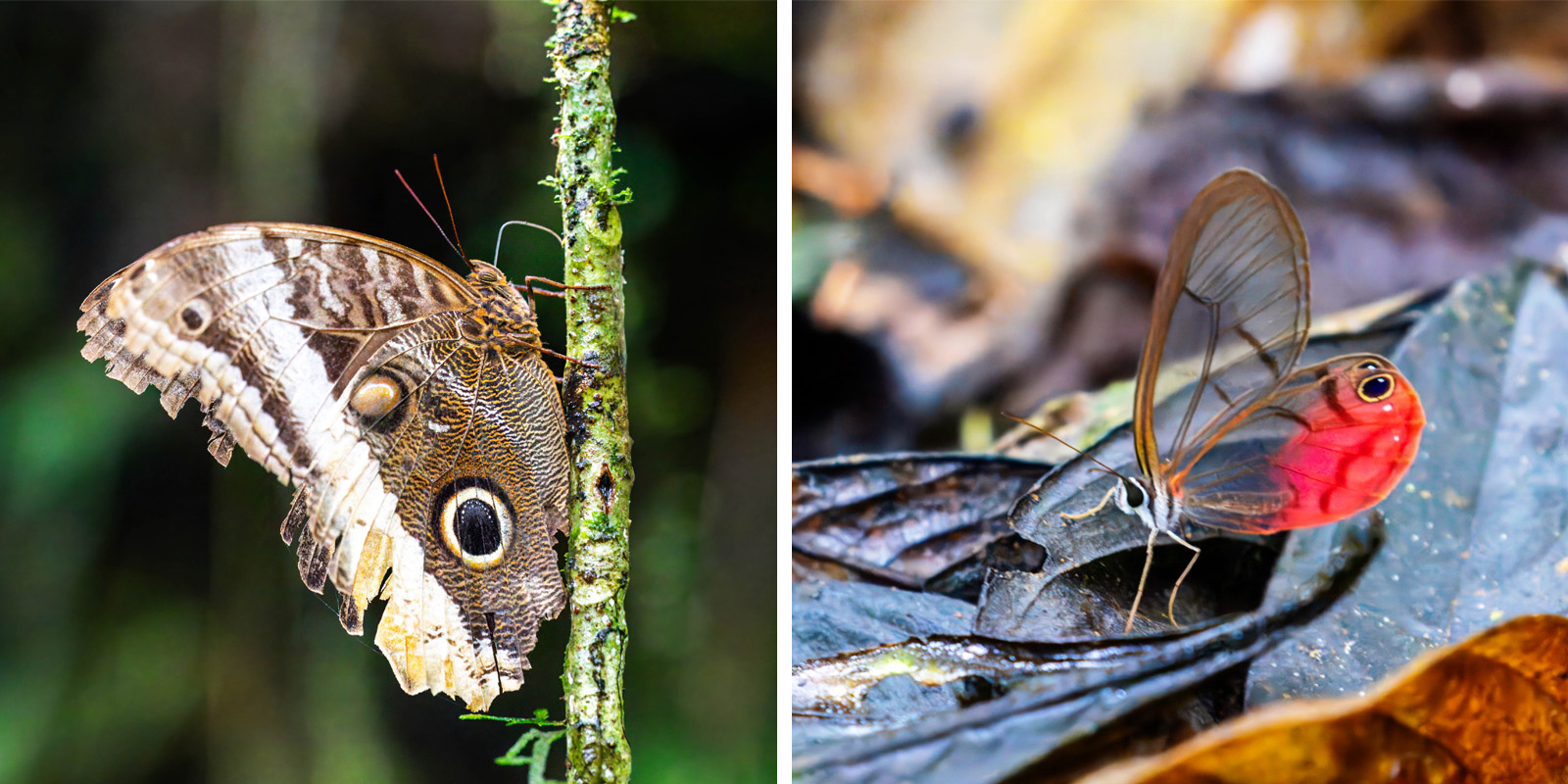
3. Later in January, Kim and I were lucky enough to spend a few days in Costa Rica, where we were staking out a small hummingbird who never materialized because it was too chilly and rainy. (Male snowcaps: who knew they were such cowards?) In between stalking his preferred hedge, we took some muddy forest walks and had two butterfly encounters that made us forget all about no-show birds. One was watching this enormous banded-owl butterfly evade a predator and then come to rest just a few feet from us. We can confirm this butterfly is the size of an adult human hand because we were close enough to make that comparison! The other was a butterfly that’s long been on my wishlist because its hindwings mimic a scaly red-faced snake: the rusted clearwing-satyr. At first all we could see was what looked like a laser pointer dancing along the forest floor, but when we finally caught sight of one perched, we were absolutely bowled over. As an enthusiast of critters with false faces, I couldn’t ask for a better duo than this one.
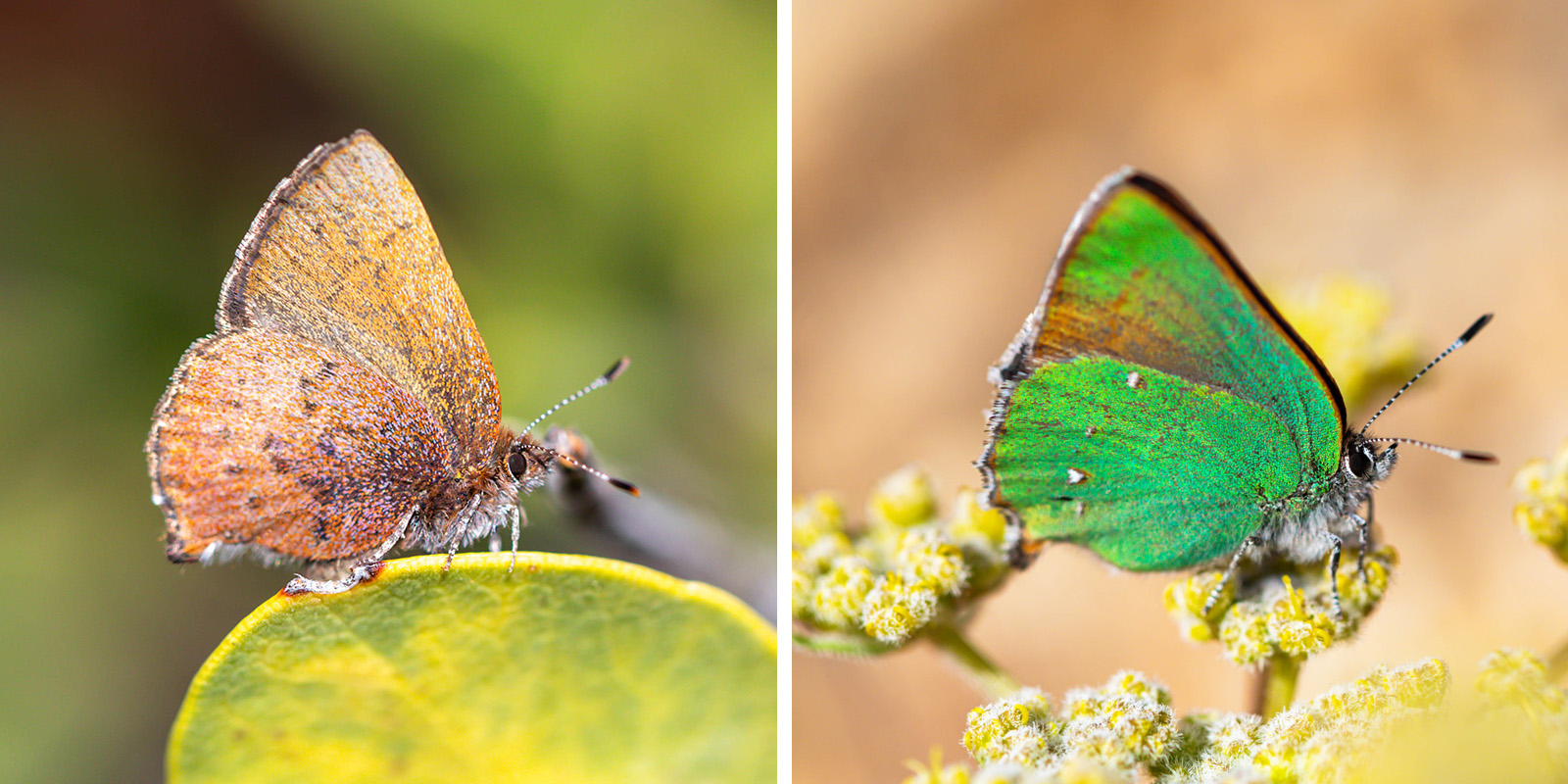
4. In March, I decided to go to the Anza-Borrego Desert in California to look at wildflowers and pollinators, but I was a week too late for the bloom. A canyon where I’d seen hundreds of butterflies a few years ago had me standing in the baking sun, wishing for any signs of life, a wish that was granted when a rattlesnake teed off at me from underneath a nearby bush. I did not collect a photo of this experience because I was too busy not suffering grievous bodily injury. The next day I drove through the San Jacinto Mountains and hiked up a random trail, where I finally ran into a whole mess of butterflies. My favorites were the brown elfin and lotus hairstreak, whose colors are quite different but whose general look might clue you in that they’re in the same genus. Fun fact: I’ve never seen an elfin of any kind without a green member of its genus right next to it (around here it’s Henry’s elfin and juniper hairstreak). What’s the butterfly equivalent of “birds of a feather flock together?” Butterflies of a scale stay out of jail? (I’ll keep working on it.)
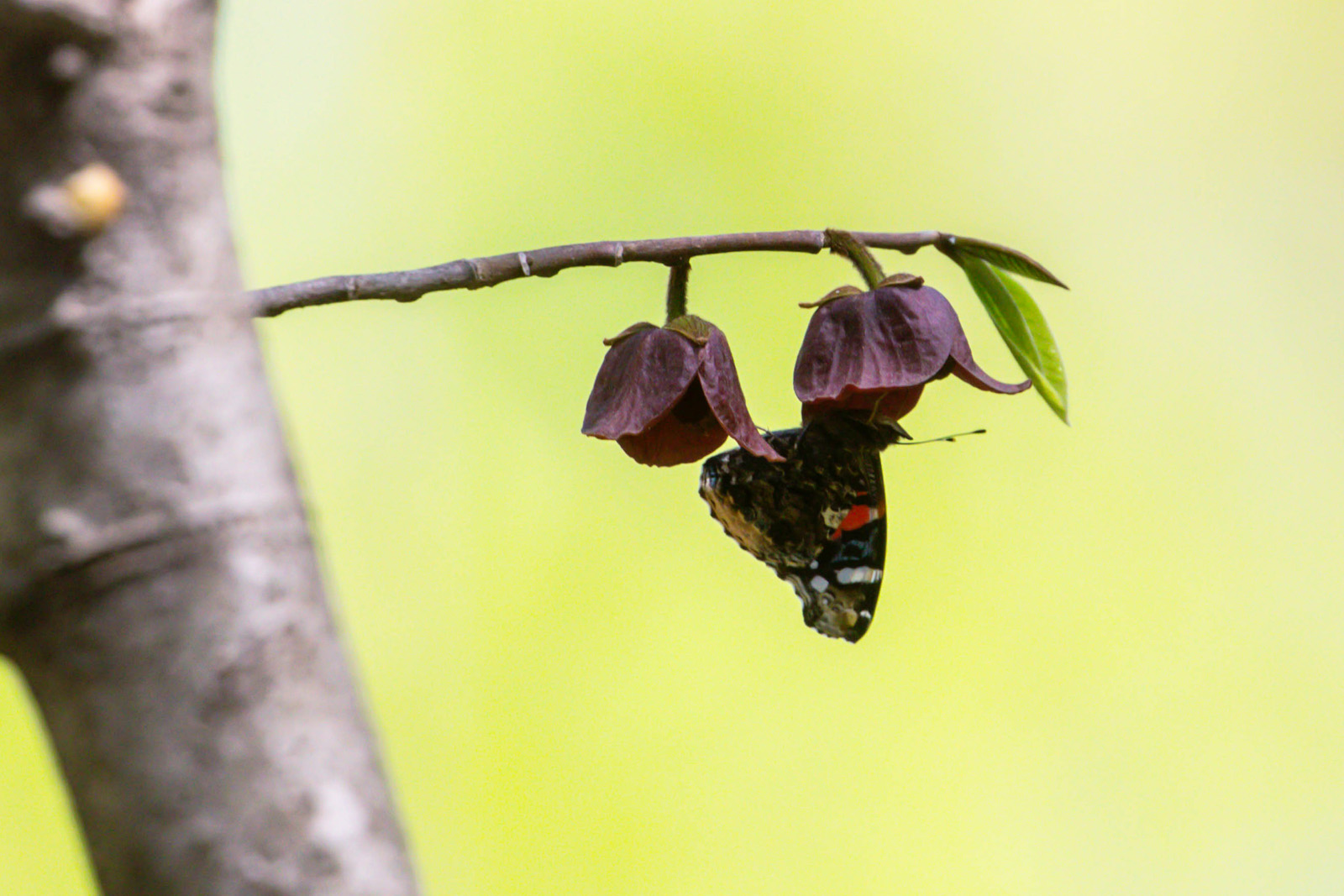
5. The next week I was back in Overton Park admiring the bell-shaped flowers of the pawpaw trees when I saw something I’d never seen before: a butterfly feeding on one! These flowers are notoriously musky, and generally pollinated by things like flies and small beetles. They don’t offer nectar, only pollen, so it was interesting to see a red admiral taking a turn. Because red admirals take nourishment from things like sap, soil, and rotting fruit, there must have been something in the smelly pawpaw flower that caught this one’s interest.
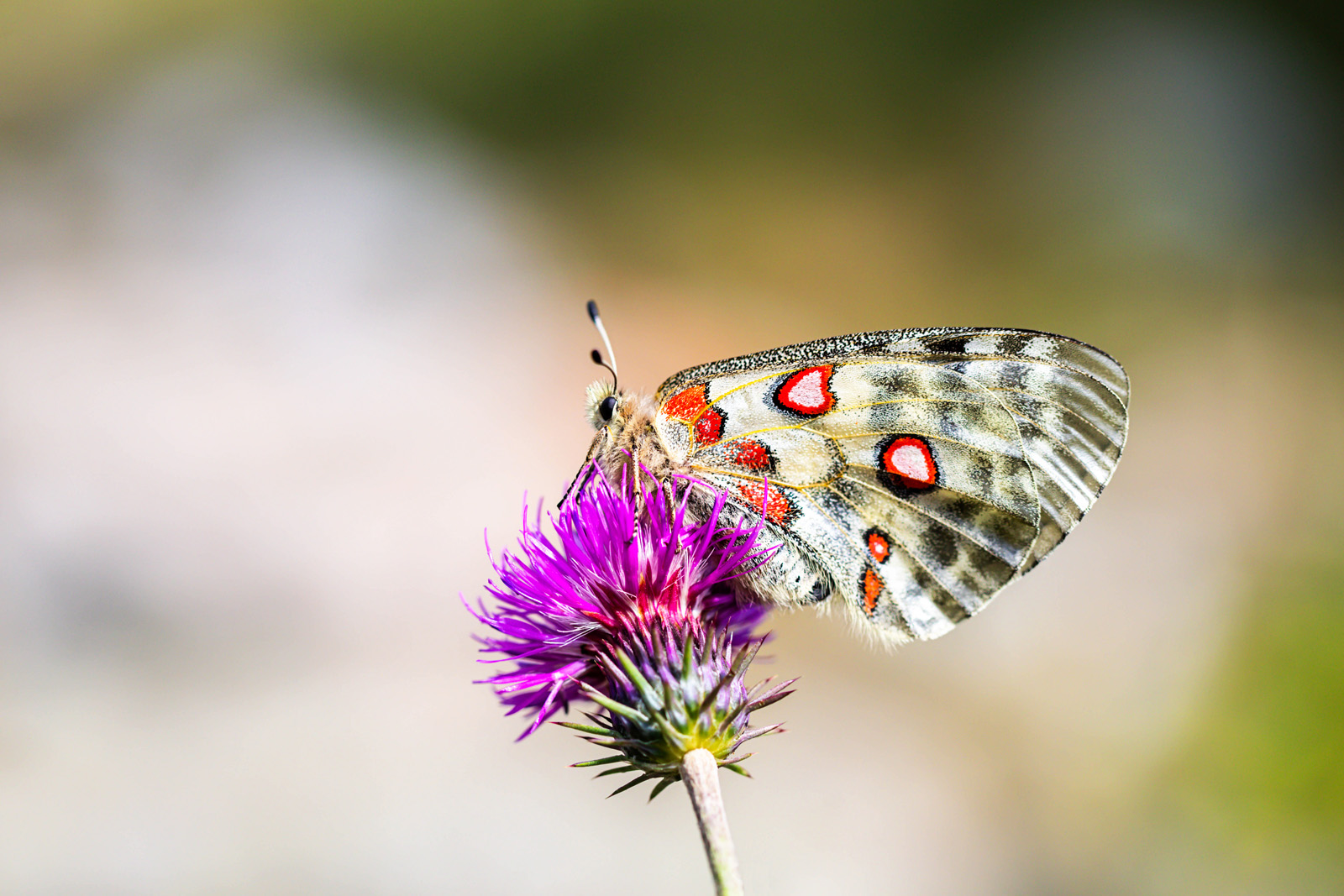
6. In July I joined my friends at Mariposa Nature Tours for a jaunt through the Hautes Pyrenees looking for high-altitude butterflies. Somewhere near a reservoir in the Néouvielle Massif, our guides found an enormous butterfly struggling to gain purchase on some grass. It was a freshly-emerged Apollo, her body too heavy for her just-dried wings to support. Our guide coaxed her onto his finger and deposited her on a thistle, where she drank greedily and showed off her stunning colors to a rapturous audience. I’d met my first Apollo four years ago, with my same guides who are now my friends, and I associate this butterfly with a profound moment of healing in my life. So this time, I waited for everyone else to disperse and sat with her a moment, thanking her for what she meant to me and wishing her safe travels.
7. Although the Apollo has my heart, the star butterfly attractions at high altitude are the Erebia ringlets (our Northern U.S. friends call them alpines, and we in the South call them strangers because they don’t live here!). Europe has dozens of species, all with different combinations of a dark ground color, orange cells, and eyespots within those orange cells. It’s the subtle differences between them (how many eyespots are there? do those spots have a white center? is the orange cell more of a splotch or a well-defined bar?) that allow them to be separated from each other. Knowing their habitat preferences helps too, and that’s why I’m always grateful to our Mariposa guides for telling us what to look for and helping us sort through them in the field.
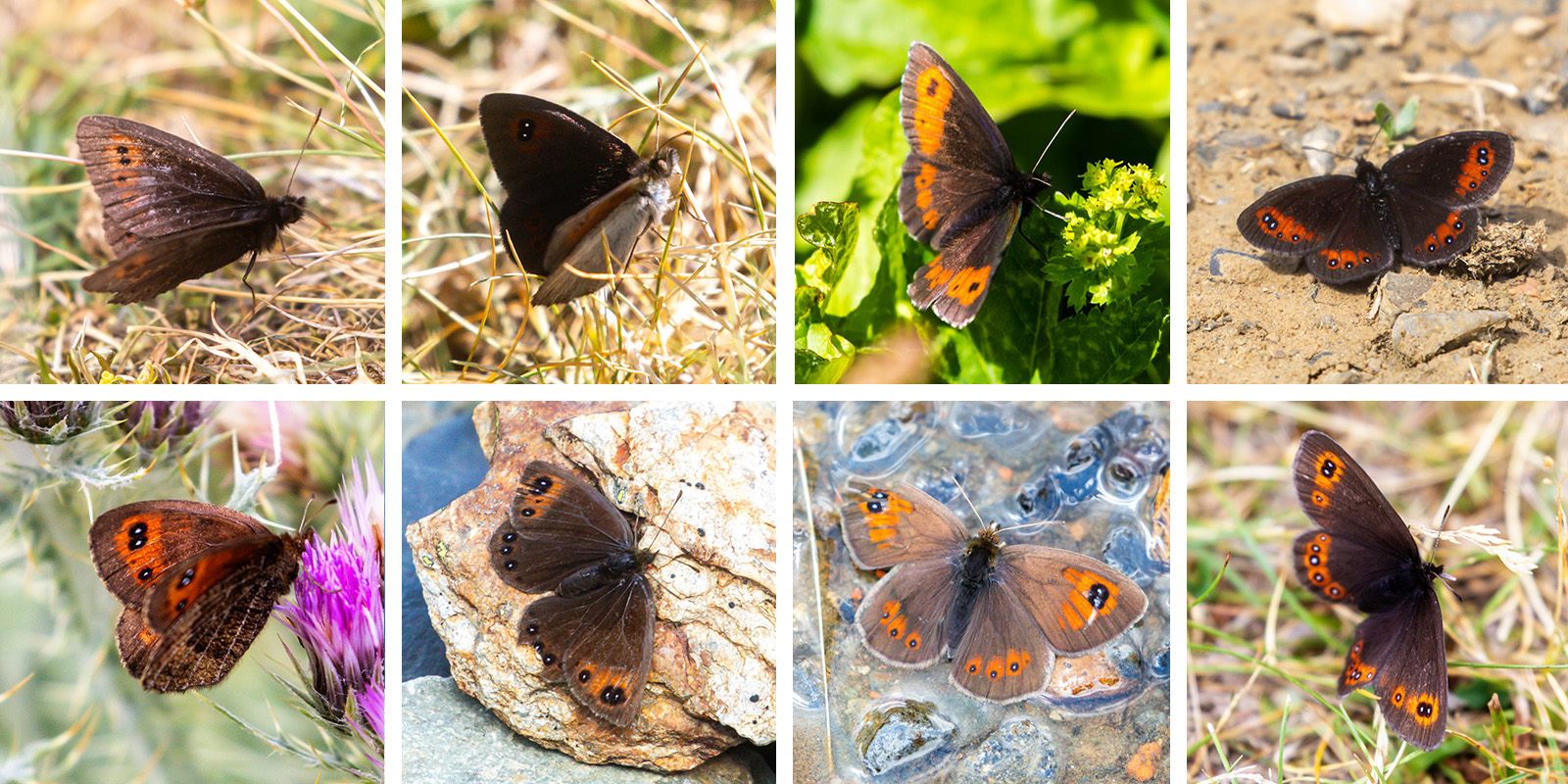
Row 1: Mountain, Western brassy, large, and Piedmont ringlets
Row 2: Gavarnie, Lefébvre’s, Pyrenean brassy, and bright-eyed ringlets
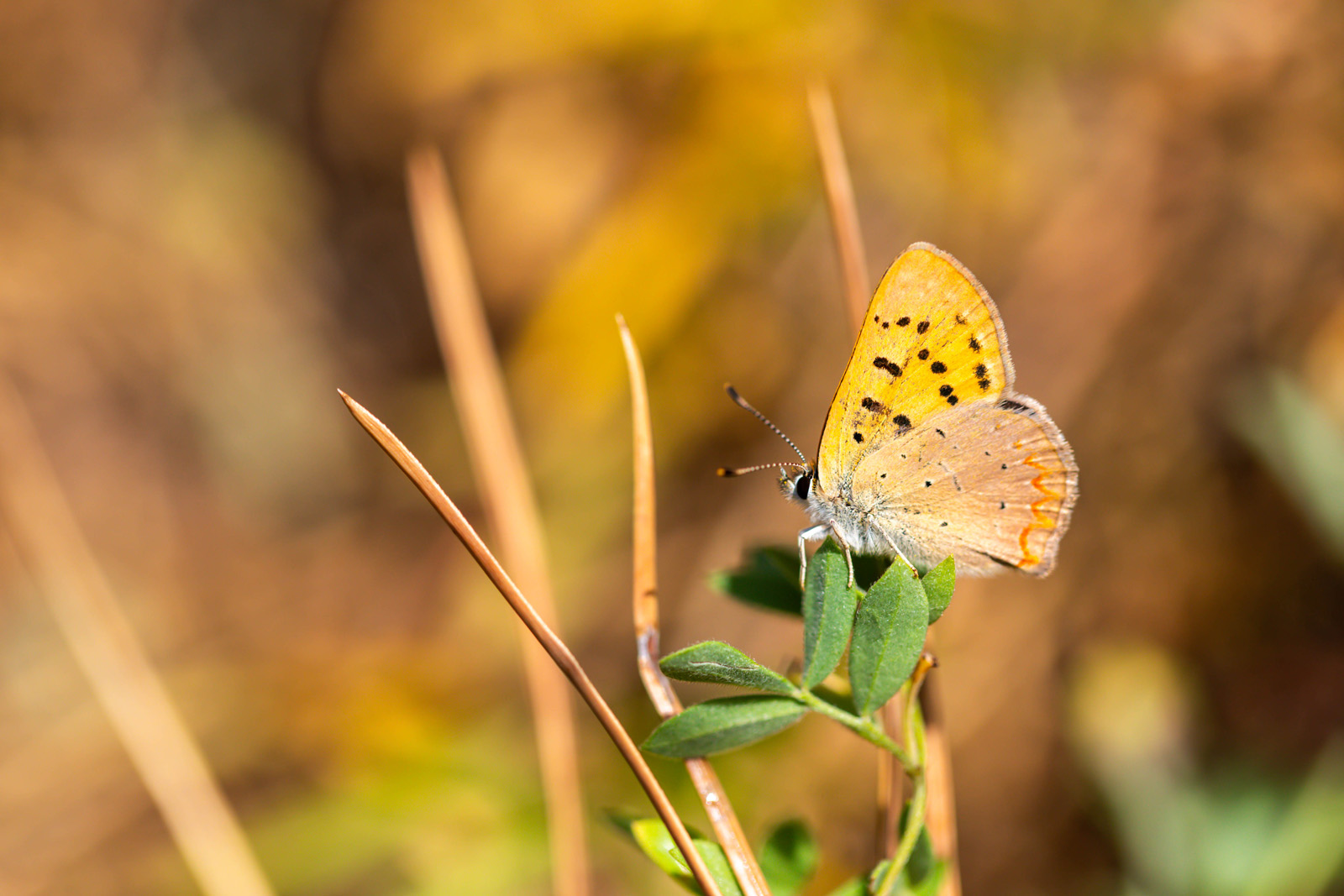
8. In late August, Kim and I took a trip to the Pacific Northwest, where I’d been warned not to expect too many butterflies so late in the season. I still held out hope of seeing some coppers, small bright butterflies related to blues and hairstreaks which (like Apollos and ringlets) tend to prefer latitudes higher than ours. On our first morning, we drove to a wildlife refuge in Washington where a construction crew was blasting “Jolene” in honor of Dolly Parton, who had died the day before. It was with this perfect Tennessee soundtrack that we found our first purplish copper darting in and out of grasses alongside a stream. That one didn’t sit still for long, but later we spotted another that was willing to pose.
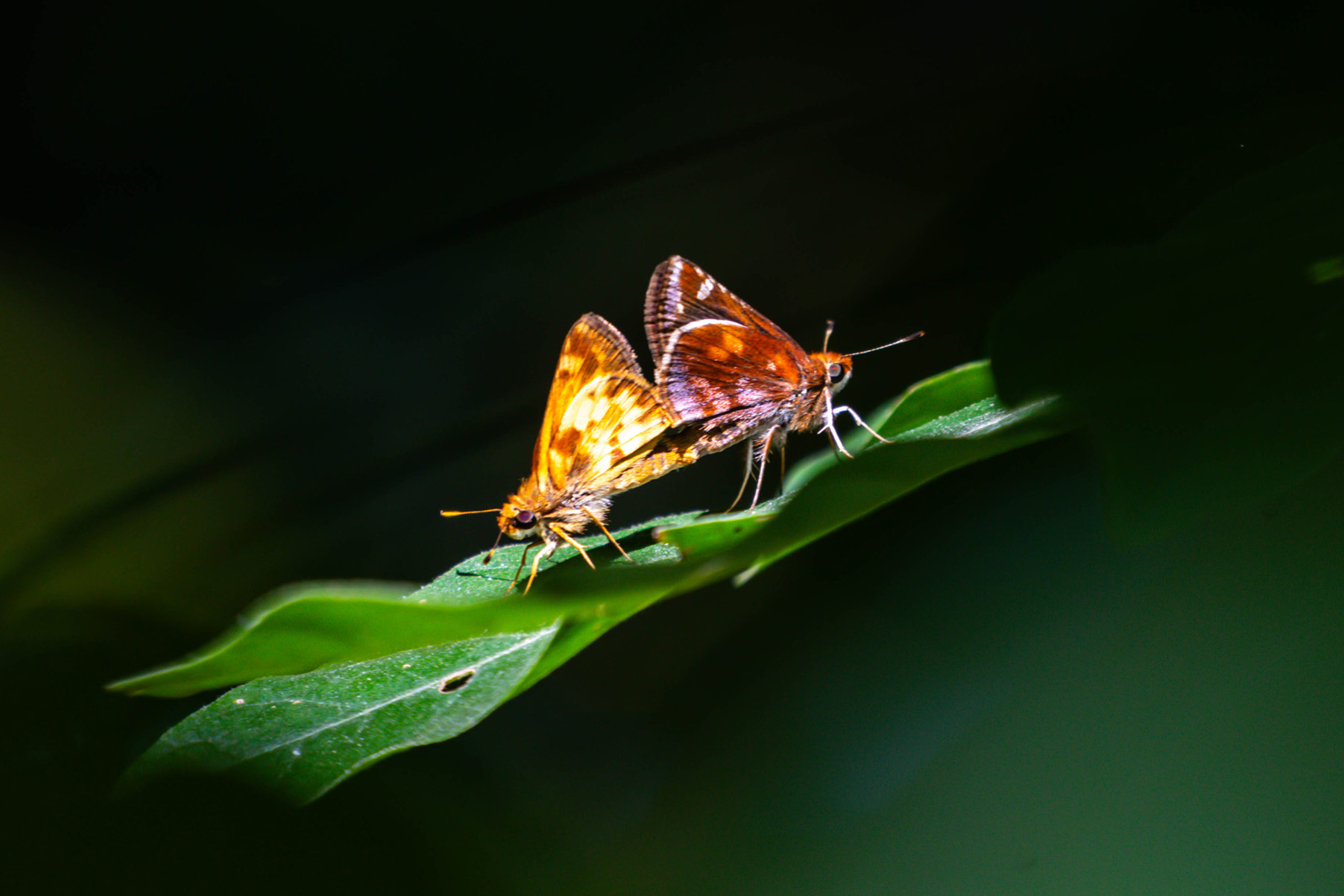
9. Last month during the worst of the heat dome, I was walking through the Old Forest when I spotted a pair of Zabulon skippers sitting directly in a sunspot. These are my favorite of our local skippers, both because they favor the woods instead of an open meadow, and because the males look like butterscotch candies and the females like chocolates. I turned myself inside-out trying to squeeze between spiky greenbrier vines to get this photo, and when I emerged absolutely drenched in sweat, I was approached by two content-creating teens who were hoping a gal with an imposing camera had something interesting to say. I really hope that I did not, because TikTok did not need to see a video of me in that state.
10. Finally, last month I was at Eagle Lake Refuge in Millington trying to get some decent photos of the hundreds of phaon crescents we’d found on our Meeman-Shelby butterfly count the previous weekend. I found them just as impossible to photograph as I had before, but I did find a butterfly barely a quarter-inch long: it was a ceraunus blue, only the second ever to be recorded in Tennessee! These are butterflies of warmer climes like Texas and Florida, but St. Louis butterfliers had recorded a real incursion this summer and it looked like we’d gotten some strays as well. Mine got away quickly, so I went back a few days later hoping to relocate it. I couldn’t believe my luck when I found one nectaring on prickly fanpetals, but after I got a couple of shots off, I started feeling some prickles of my own.
“Are there nettles here or something?” I wondered, but I tried to ignore the stabs of pain all over my legs and focus on photographing the blue. Alas, the pain moved to my arms and became so sharp that I yelped and flinched, scaring the butterfly off. When I looked down, the source of my woes was obvious: I had stepped in a colony of fire ants. I tried to remain calm and brush them off as fast as I could, but there were so many of them and only one of me, and it will surprise no one who has been through this before that I ended up pantsless in a field. Eventually I emptied my shoes and socks of the offenders, made myself decent, and set out to (carefully) refind my butterfly. I wound up being too skittish to really concentrate, so I decided to be happy with what I’d gotten and head back to the parking lot. It was there that I ran into a couple on their way out who asked what I’d been photographing out there. I told them about the butterfly and how I got derailed by fire ants, and they said, “Yeah, we saw you scrambling out there!” As they drove off, I realized this was their polite way of telling me they’d seen me in my skivvies and wanted to verify that I was not experiencing an episode requiring their intervention. The scars on my legs still have not healed, but I bet they’ll fade before I forget that I gave a couple of strangers a show in a cornfield.
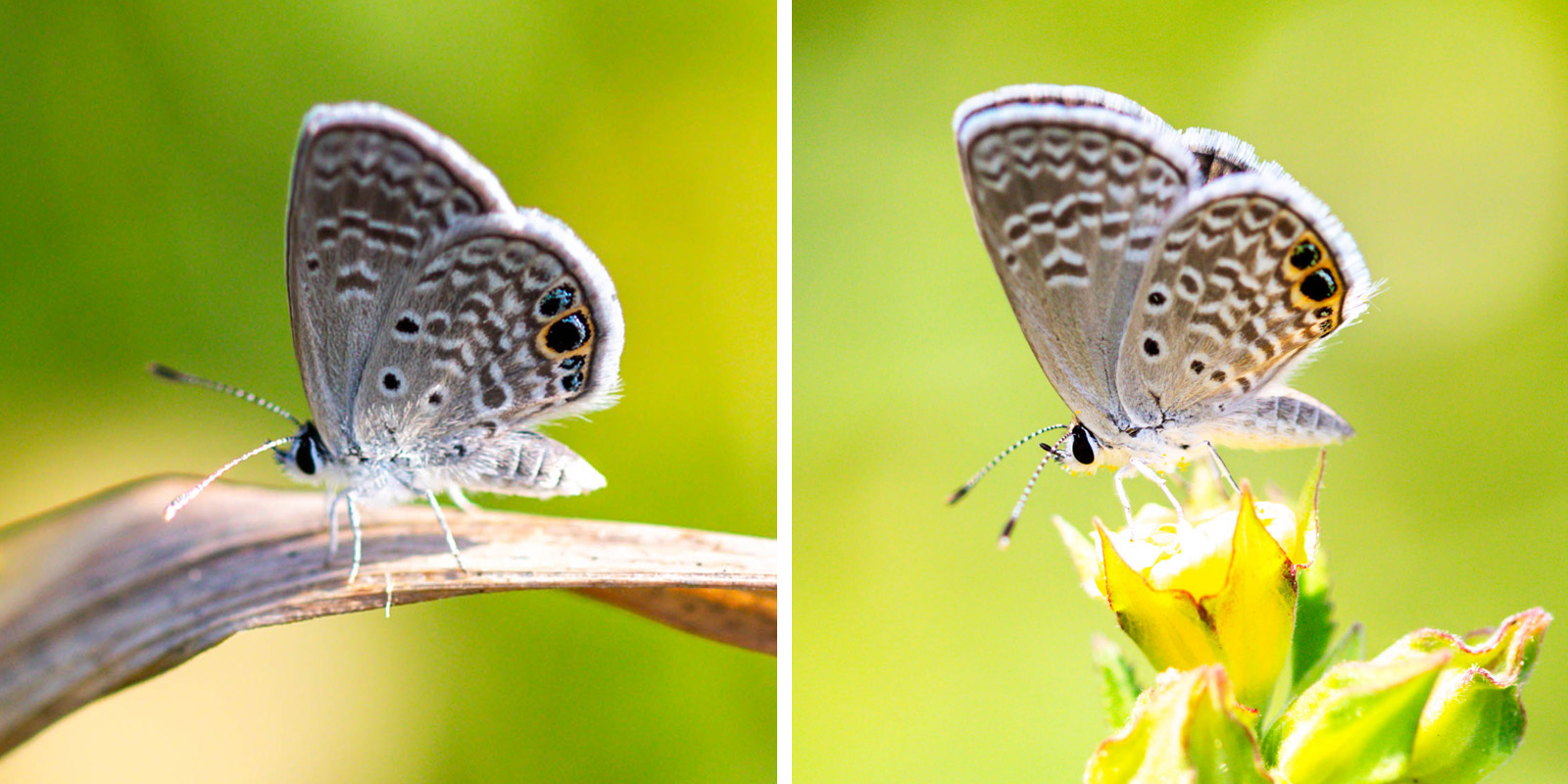
Friday ceraunus turned out to be different than Sunday ceraunus: note the more extensive orange on the one on the right, as well as the slightly different arrangement of the white-edged bands. Our butterfly count leader wound up visiting this location a few weeks later and finding at least five more individuals, so we have officially joined St. Louis’s ceraunus party!
I hope you’ve enjoyed this year’s butterfly collection. Now put your pencils down, shavings in a bowl, and see if you don’t think that’s just as good as a fidget spinner!