words and photos by Melissa McMasters
This summer I spent more time in the Old Forest than usual, which meant I met some creatures I don’t normally see. Often I take a summer break from walking the dirt trails because it’s chigger-bite season, but this time around I pulled on my tall rain boots and took my chances. (My galoshes were certainly gathering dust otherwise.) I’m happy to report that the main arthropods I encountered were not chiggers, but moths!
One day in mid-August I was rounding the corner at Old Forest Loop marker 33 when my presence stirred several winged creatures from their resting spots. I peered at the bark of a tree where I thought I’d seen something touch down, but it appeared nothing was there. Finally I kept walking and flushed something onto another tree: it was a sizable moth, and it blended right into the bark.
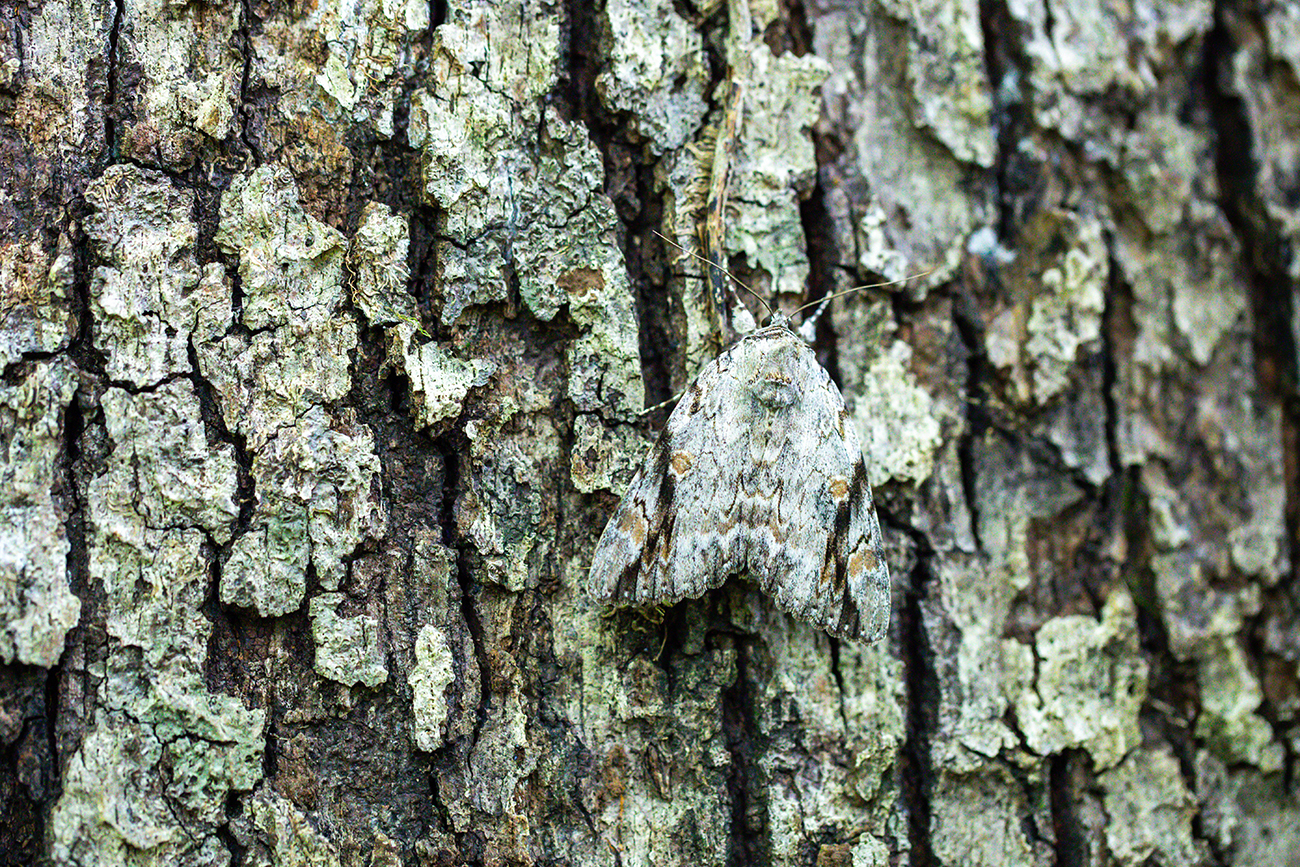
Now that I was tuned in, I could spot them when they flushed and follow them to their perches. I’d happened upon a fresh flight of sad underwings, moths that are named for the dark colors visible on their hindwings when they fly. (The mourning cloak butterfly is similarly burdened by our human emotions around colors.) My first thought was of my ongoing battle with the folks who name critters. I think I’d have preferred the underwing’s naming authorities take a cue from the namer of the tulip-tree beauty, a moth that absolutely vanishes into the bark of the tulip poplar.
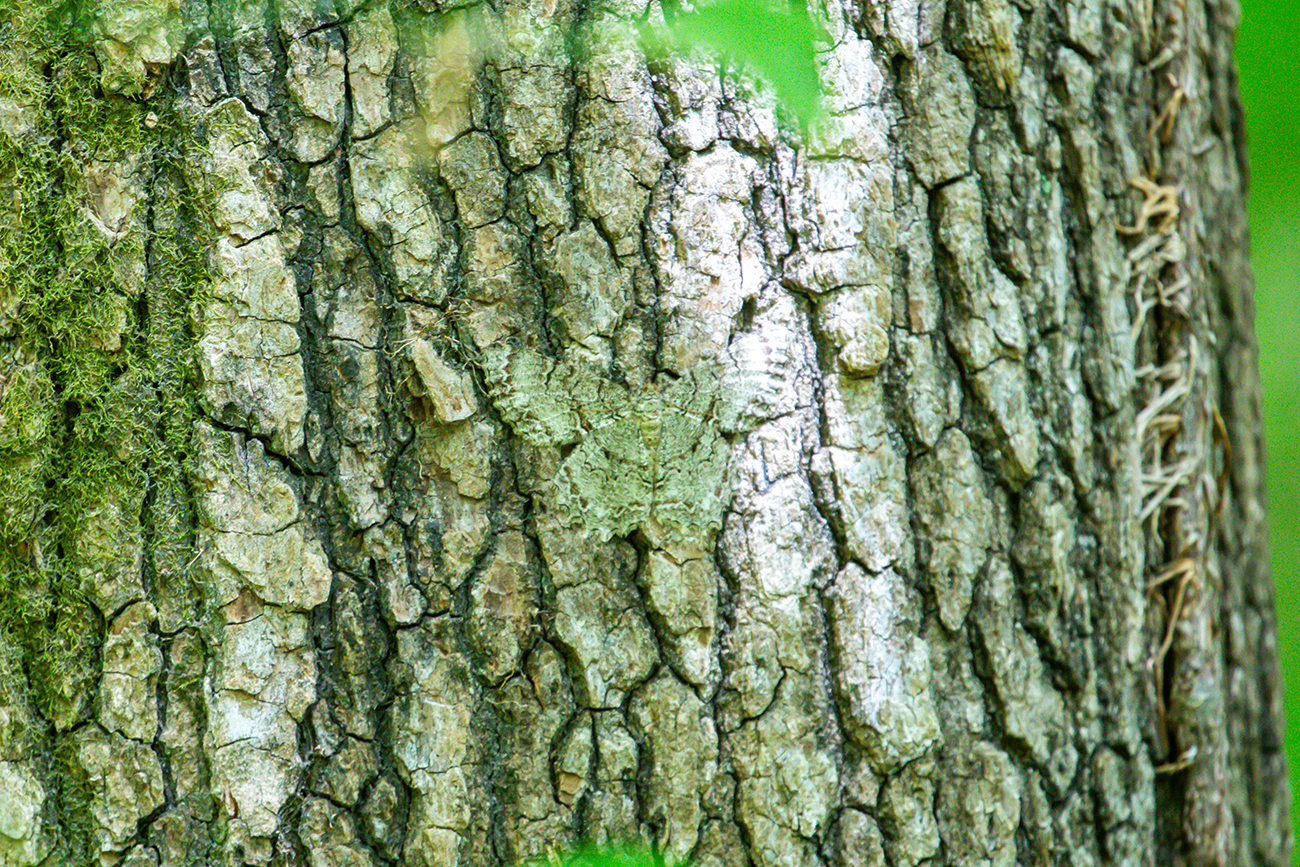
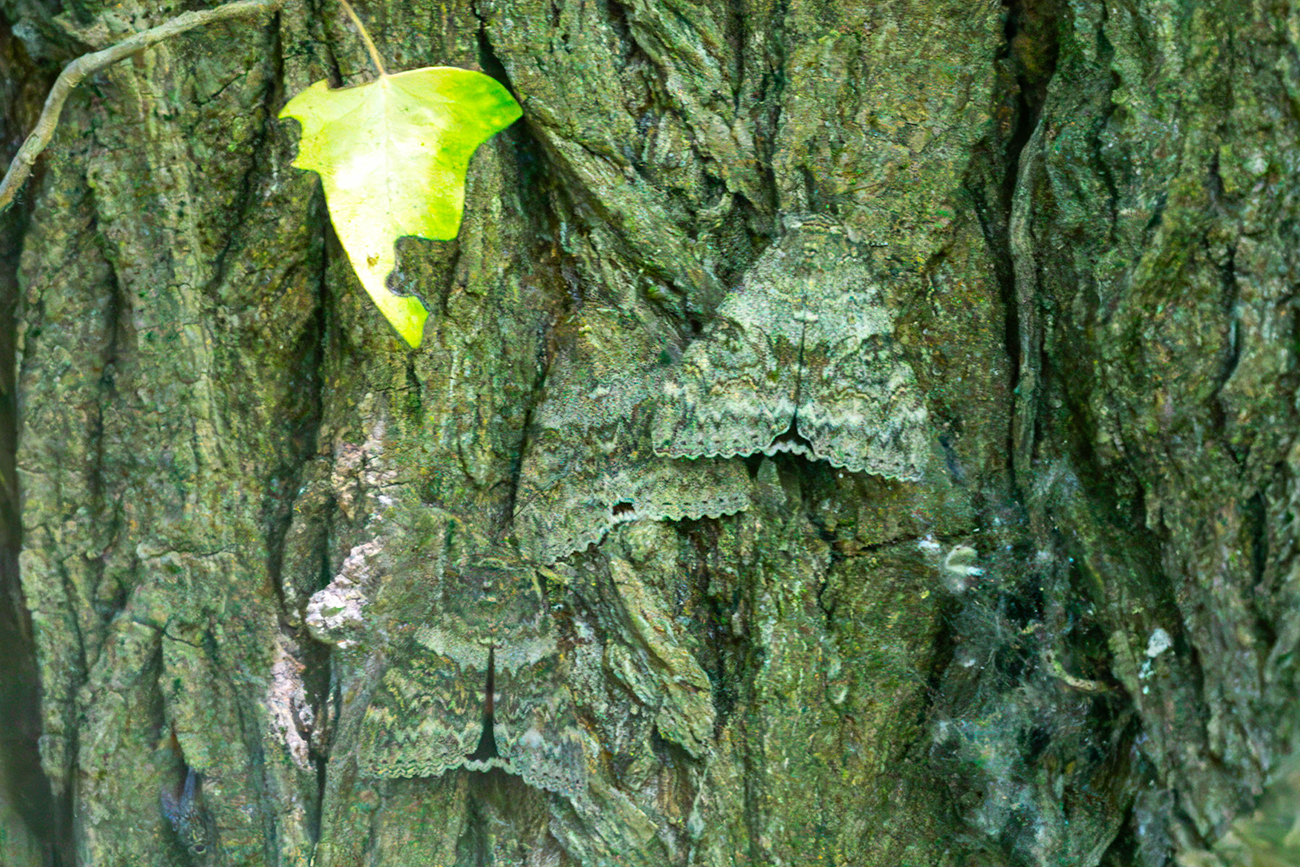
After I’d made peace with our human projections of misery, I remembered that a few weeks earlier, I’d run across some very similar moths in a forest in France. These were easy to see in flight because their wings flashed scarlet, but I was surprised that when I followed one to a perch, what I thought was a showy insect put on a cloak of invisibility–along with several other friends! It turned out these red underwings were from the same genus as my sad American moths: Catocala, which means “beautiful hindwings.” The part humans find worthy of nomenclature, apparently, is not the amazing camouflage but the more aggressive defense mechanism these moths deploy whenever they have to be on the move.
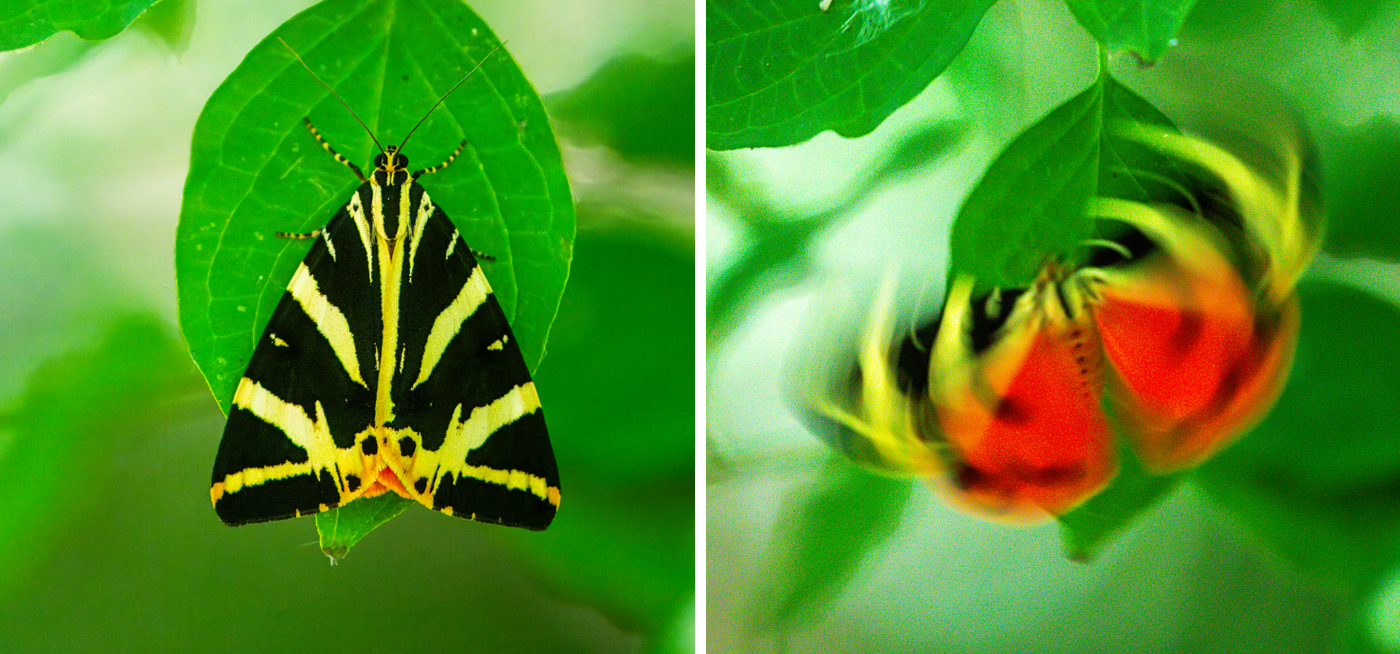
Elsewhere on that trail in France, I’d seen an even more powerful example of hindwing coloration from another member of the underwings’ Erebidae family, a jersey tiger moth. While these moths differ from the underwings in also having showy markings on their forewings, they too employ the flashy display to stun the birds who want to eat them. It was dark in there, so I didn’t manage an in-focus shot of the hindwings, but I certainly captured the effect as it took off!
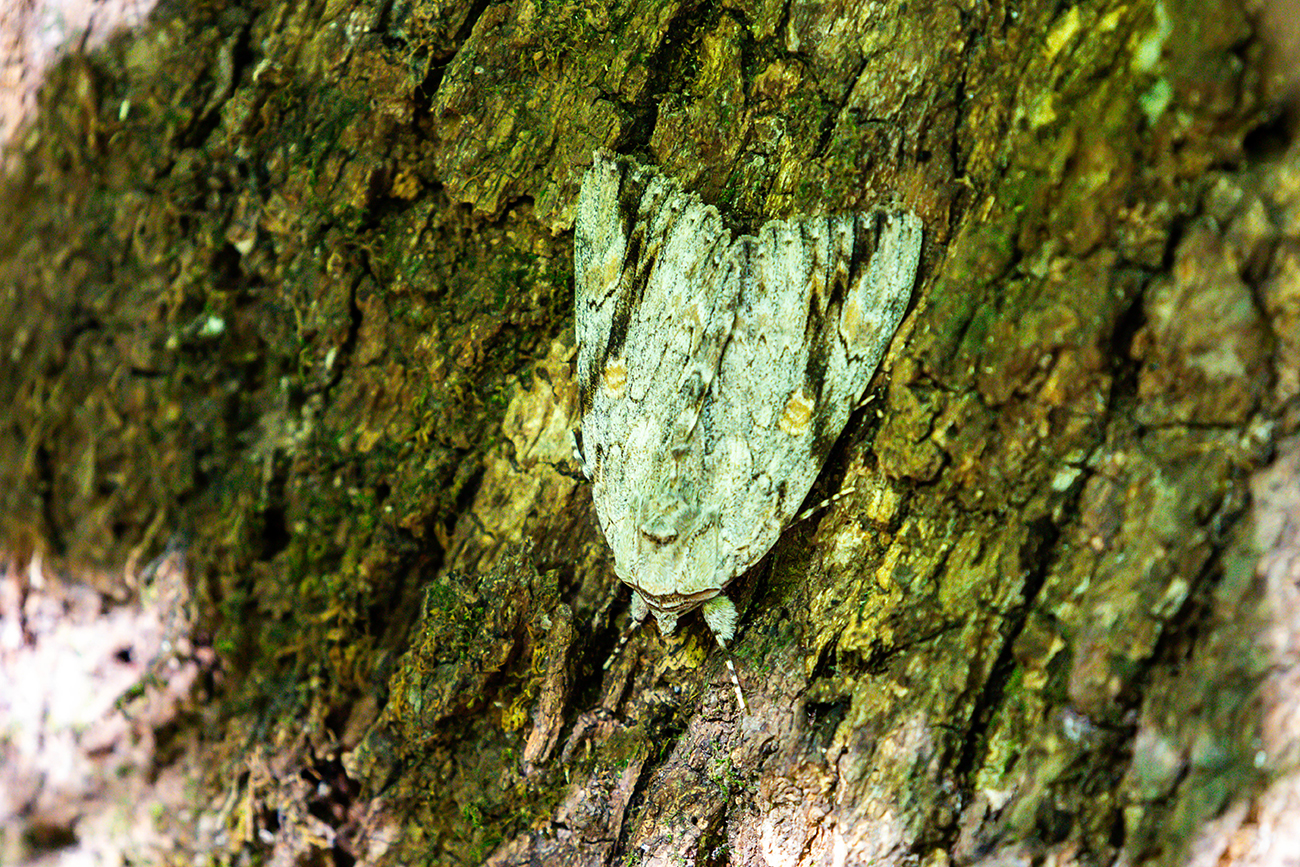
But let’s return to Overton Park. The day after my initial sighting, there were still good numbers of underwings about (including one occupying the same trunk as a tulip-tree beauty). What I found most fascinating was watching one land face-up, then rotate to look downward and methodically crawl all around the base of the tree until it found a spot where the grooves of the bark would perfectly line up with its stripes. There was even an adjacent patch of moss that formed a similar shape to the moth’s wings. “HOW DO THEY KNOW?!” I had to know.
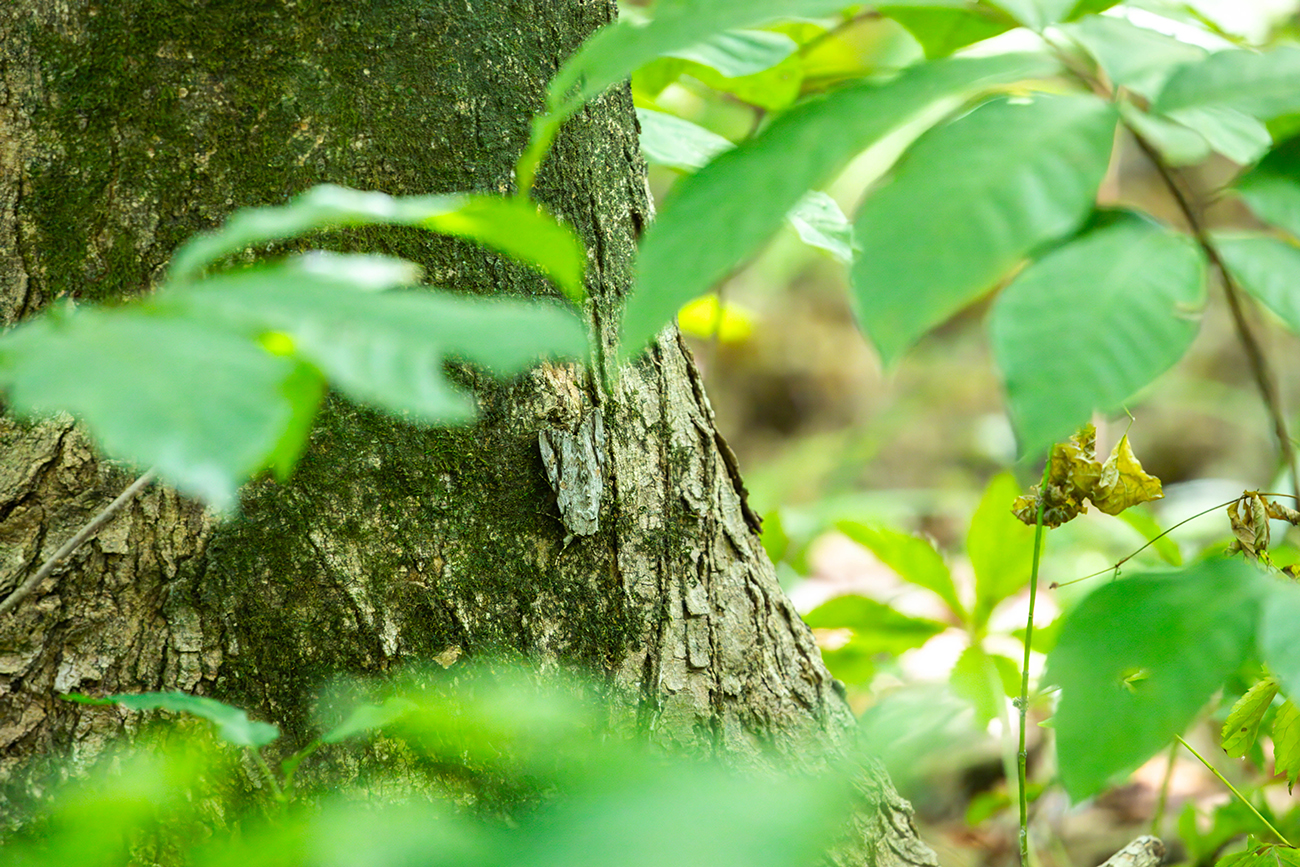
Turns out there are multiple ways to achieve crypsis–the phenomenon of blending into the background to avoid detection by a predator. The sad underwing was employing two strategies, one a very long game and one an immediate tactic. Over the centuries, the species has evolved disruptive coloration to disguise parts of its body. Those dark stripes that not only extend to the edge of the wings but curve around? Because these moths have lived their lives alongside our native trees, their wings evolved to mimic the grooves in the bark, which don’t follow a perfectly straight line.
The most famous example of this is the evolution of the peppered moth during England’s 19th-century Industrial Revolution. When pollution was heavy, a dark-colored form of the moth occurred more frequently, but after clean air legislation was enacted, a light-colored form became more prominent. When the moths were coming to rest on dark, polluted surfaces, the darker form could hide more effectively from predators, so those genes began to dominate the local gene pool. But when the surfaces became lighter again, the dark moths became obvious predator targets and the lighter moths reclaimed their genetic advantage. It was one of the earliest examples cited to support Darwin’s theory of natural selection.
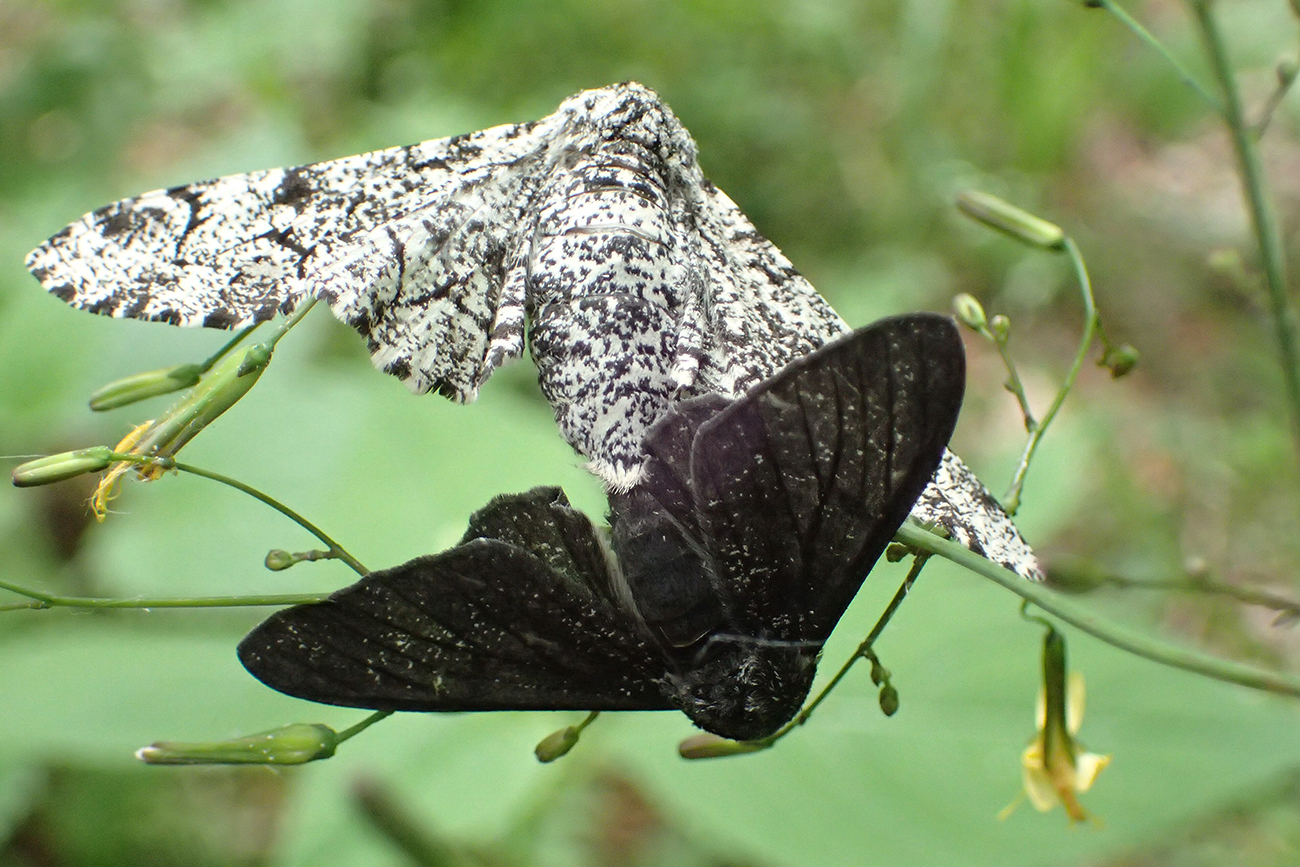
(Peppered moth photo by Siga on Wikimedia Commons)
But the sad underwing I saw crawling on the tree was also employing a behavioral strategy by choosing a specific body orientation for its resting spot. The behavioral component is a more recent area of scientific study. A 2012 paper focused on two species of moths that belong to the tulip-tree beauty’s taxonomic tribe (a category between family and genus that means these organisms share an ancestor). The researchers found that by walking and turning their bodies while lifting and lowering their wings, the moths positioned themselves in ways that made them significantly less detectable by humans. (Birds could not be reached for comment.)
I’ve noticed some pretty spectacular camouflage in moths for a long time (this isn’t even the first time I’ve written about it), but I’d never confirmed with my own eyes that body positioning is a deliberate part of the con. It’s got me looking back at old photos and assessing how good a job the moths did. Chalk carpet? A+ hiding on this concrete wall. Looks uncomfortable, though.
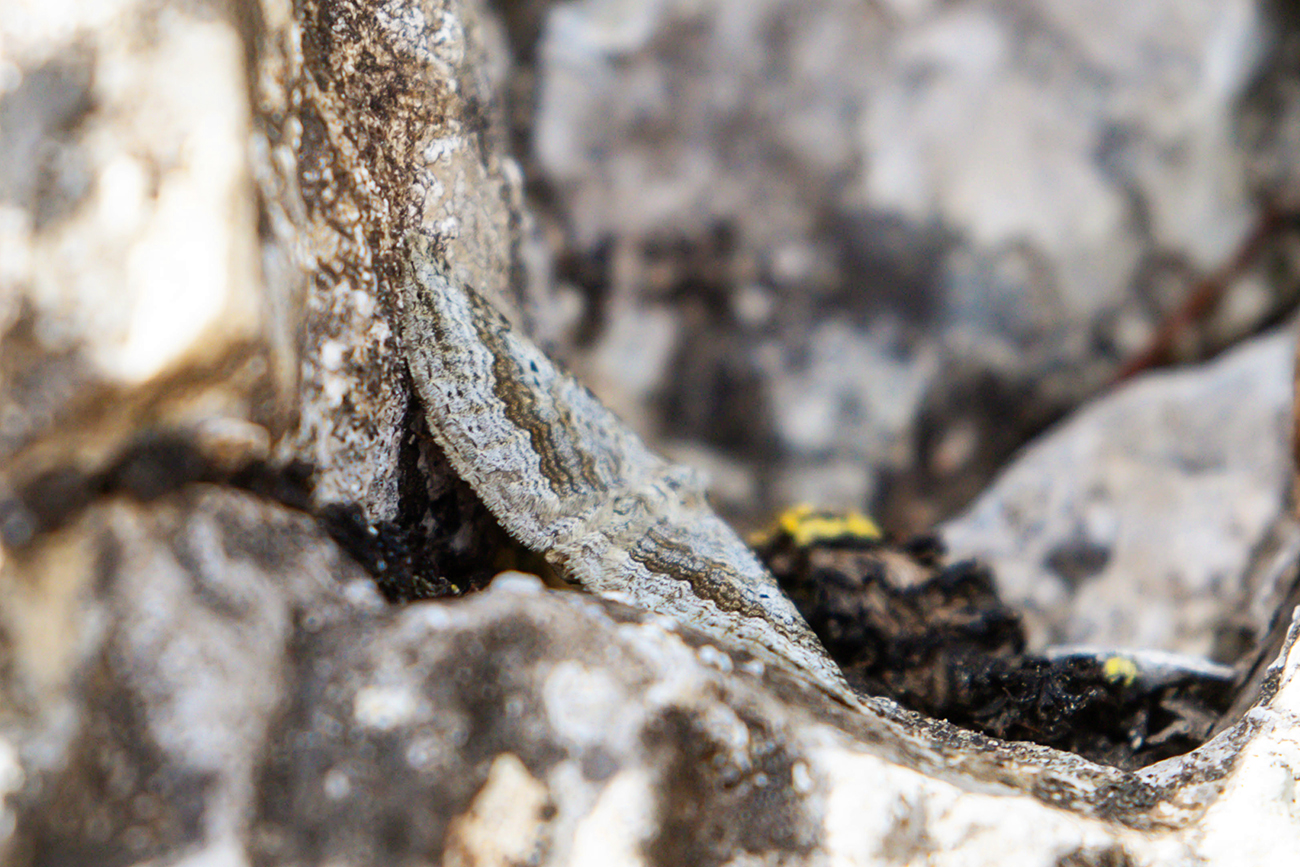
Wee Apotomis albeolana on decaying material? You’ve chosen beautifully, but if you scooched a couple centimeters to the left, you’d completely vanish.
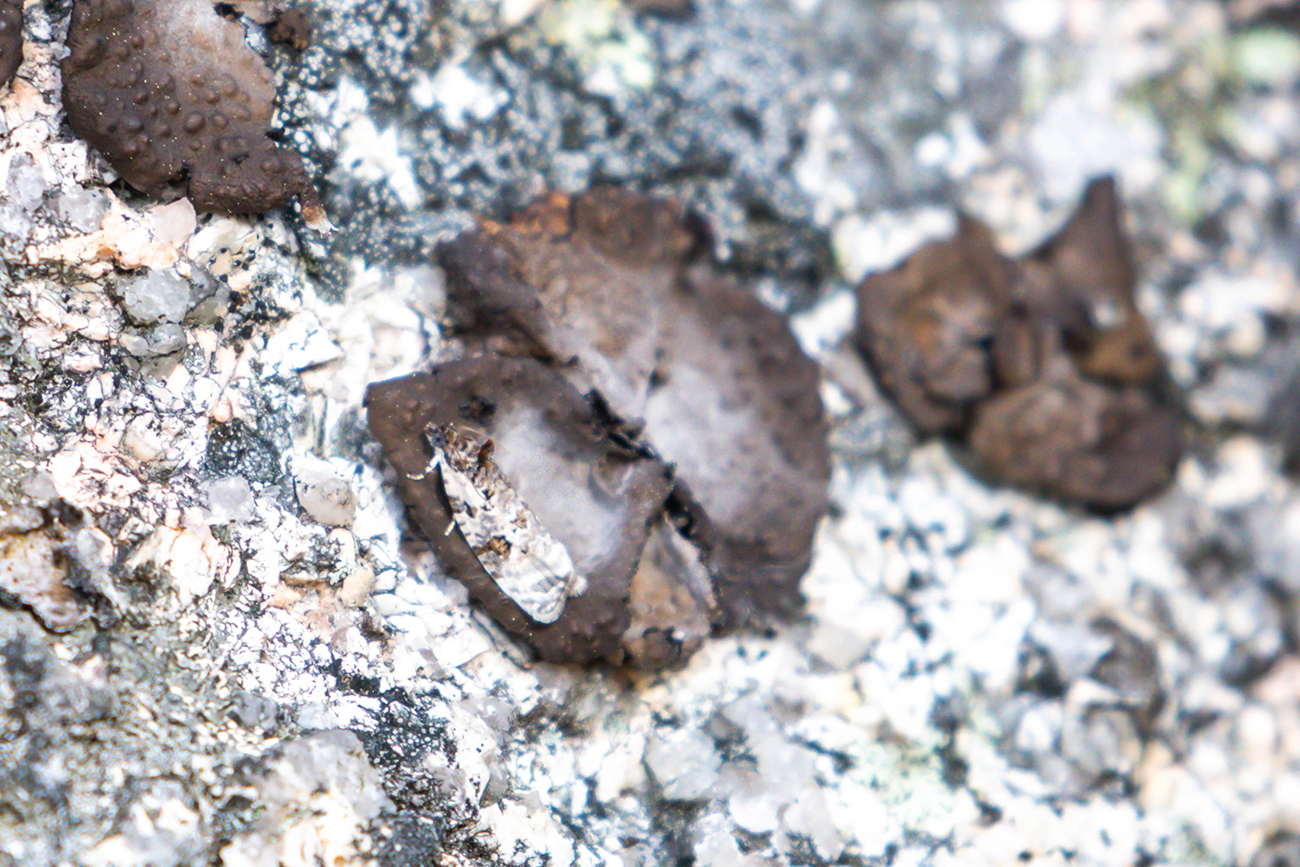
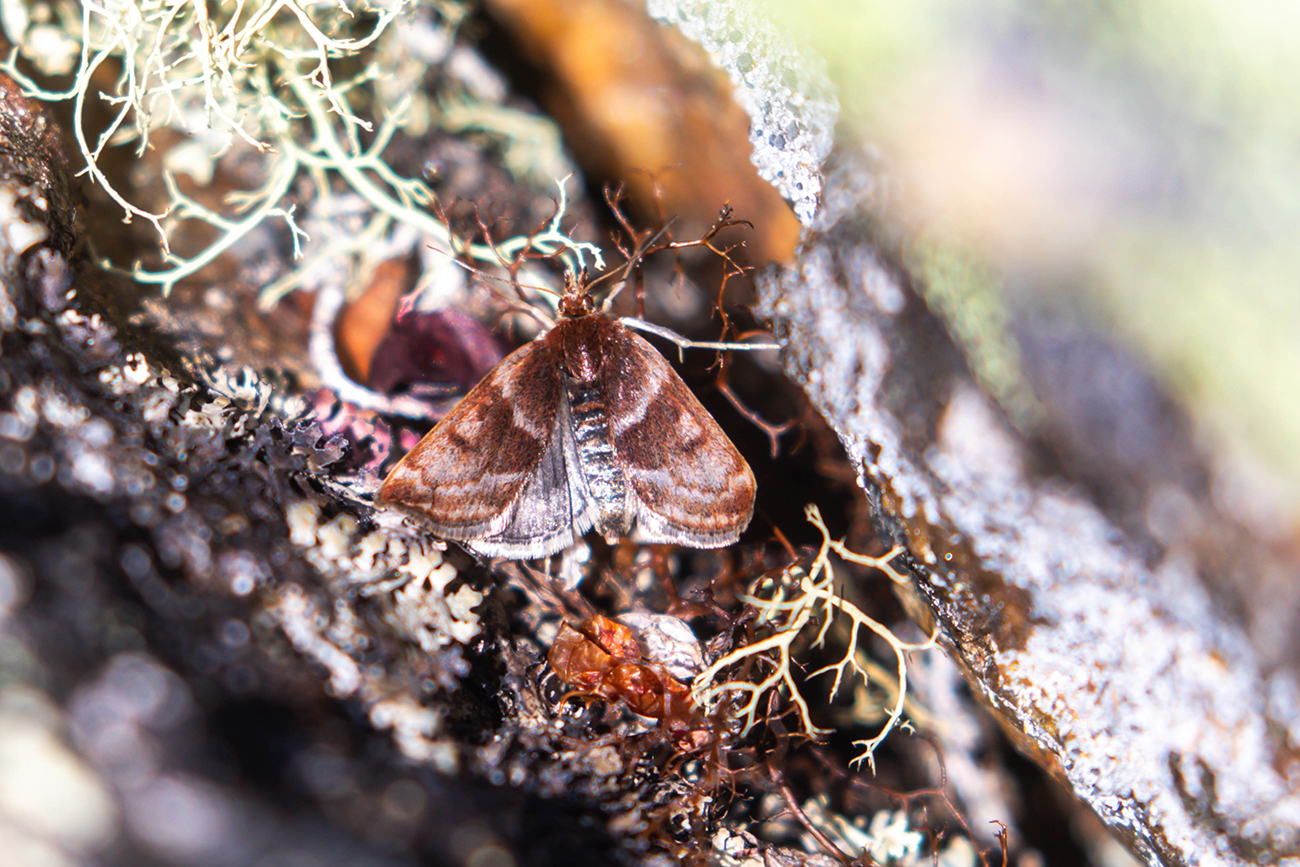
Lovely crambid snout moth hailing from the tribe Odontiini and exploring the wild lichens of Norway? You’ve found the correctly-colored lichen, but I need you to shift a bit to the right and slide into that darker pocket.
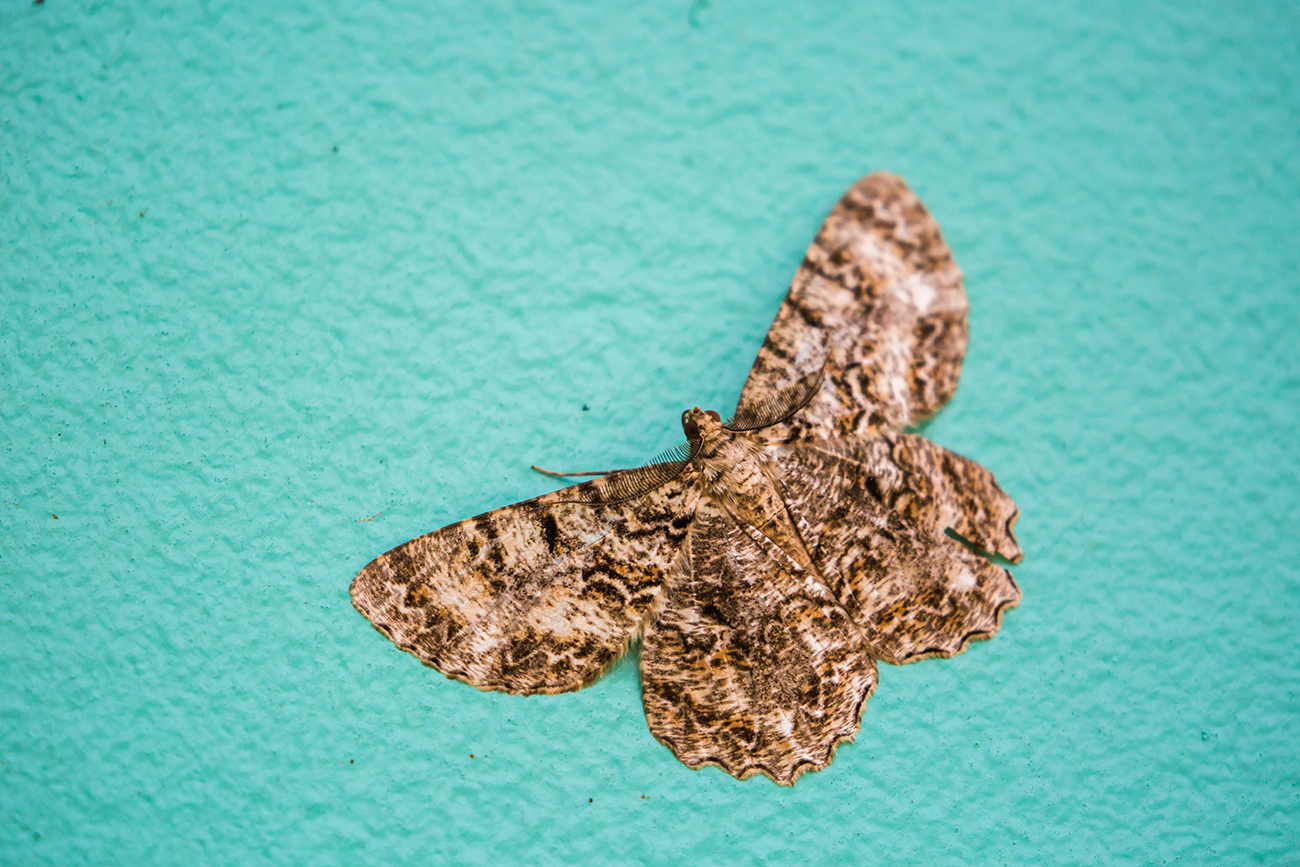
And finally, tulip-tree beauty on the tulip-shaped gate at Overton Park? F-minus to you, sir, and good luck not becoming the daily special for a passing flycatcher.
As always, thank you for coming on this journey with me to understand more about the creatures with whom we share our forest and our planet. Now go out and try to find yourself a moth in exactly the place it doesn’t want you to look!