words and photos by Melissa McMasters
Eastern tiger swallowtails are probably second only to monarchs in being the beloved butterflies of our Memphis summers. Every spring, I look forward to seeing the first ones flitting high overhead, looking for mates in the tops of the tulip poplar trees where they lay their eggs. But for up-close looks, you can’t beat the season we’re in now, when the summer’s last brood flies low to seek out nectar.
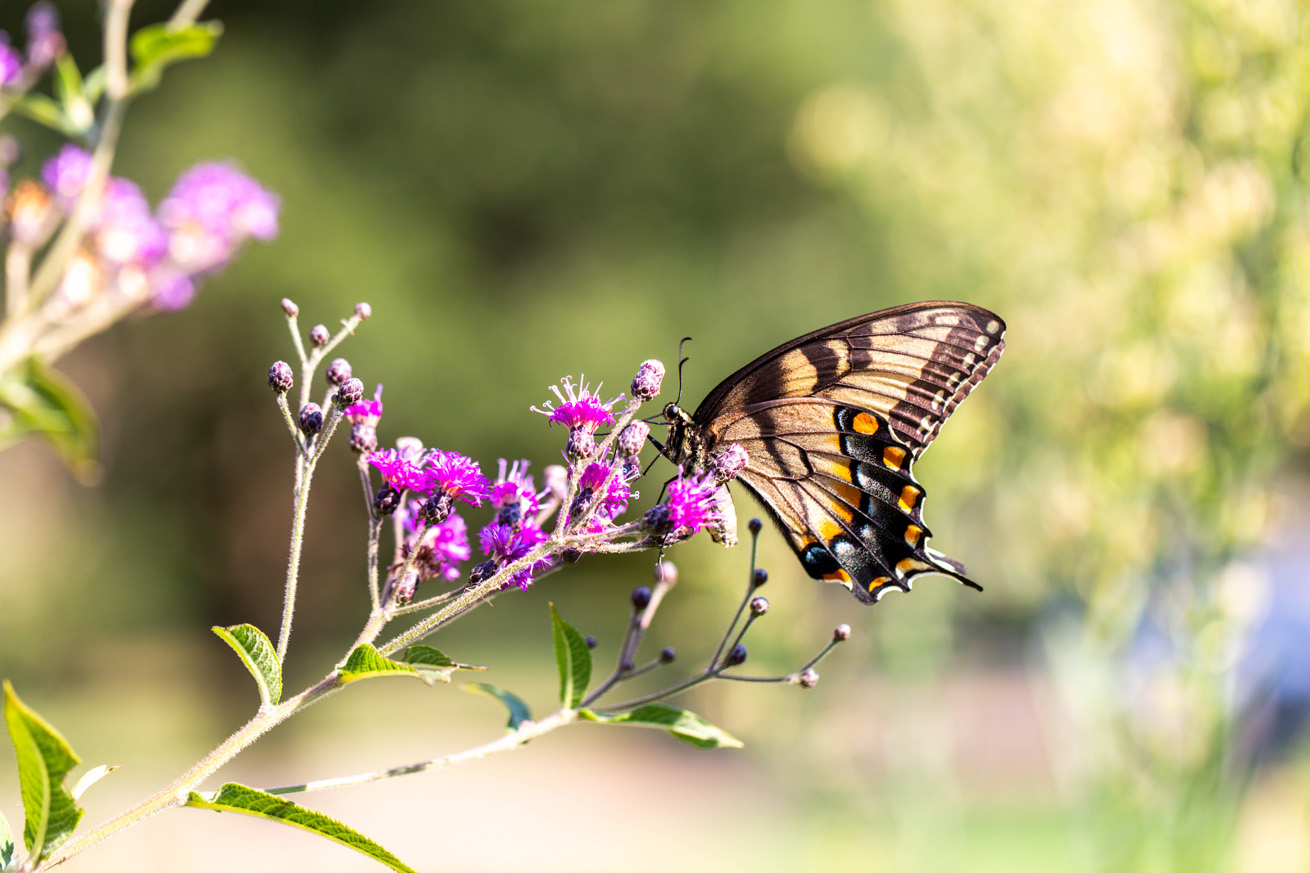
Somehow, despite having seen thousands of these butterflies, our pollinator garden has found a way to make them new for me. A couple of weeks ago, I had about five minutes to drop by the garden before an appointment, and I spotted a tiger swallowtail that looked different than any I’d seen before. It seemed to be carrying its shadow with it on its wings rather than shining with sunny brightness.
Here’s where I back up and mention a key fact about Eastern tiger swallowtails: while all the males are yellow, females can be either yellow or black. Dark-morph females are more numerous in the southern part of their range, where that black coloration allows them to mimic the worse-tasting pipevine swallowtails.
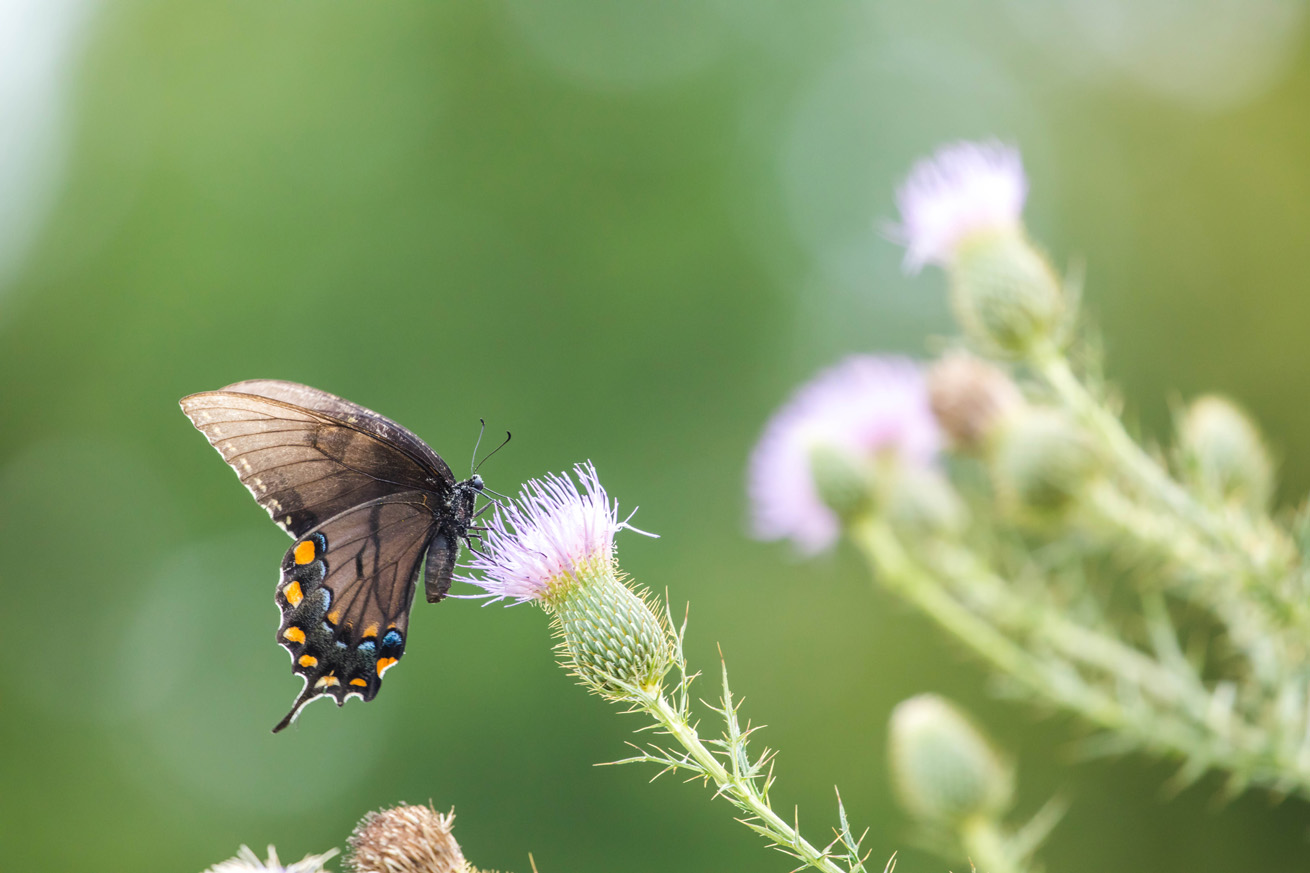
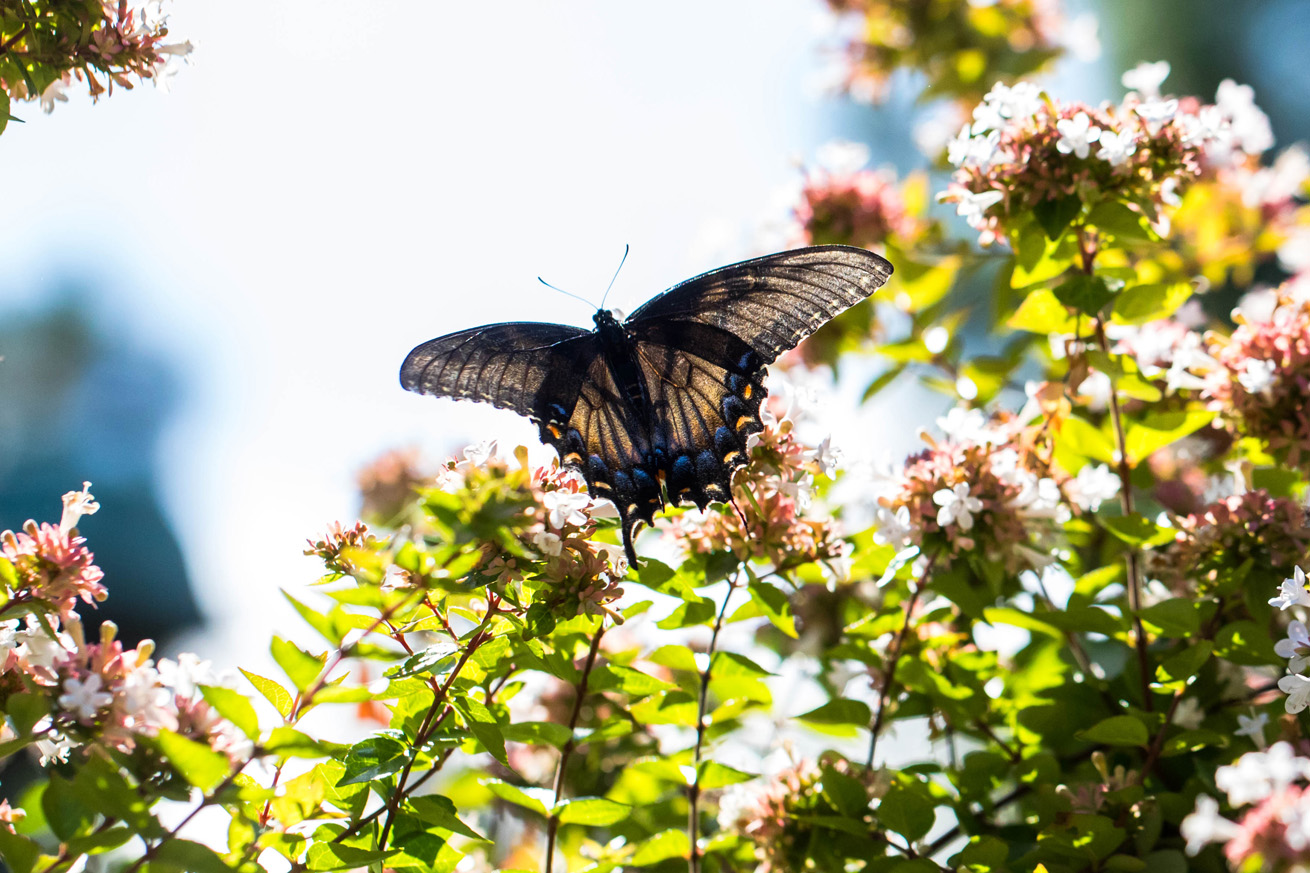
A typical dark-morph female
I wondered at first if my eyes were playing tricks on me, and maybe the light in the garden was throwing me off. But then the butterfly opened its wings, and it was unmistakable–this was somehow both a light and a dark morph all at once.
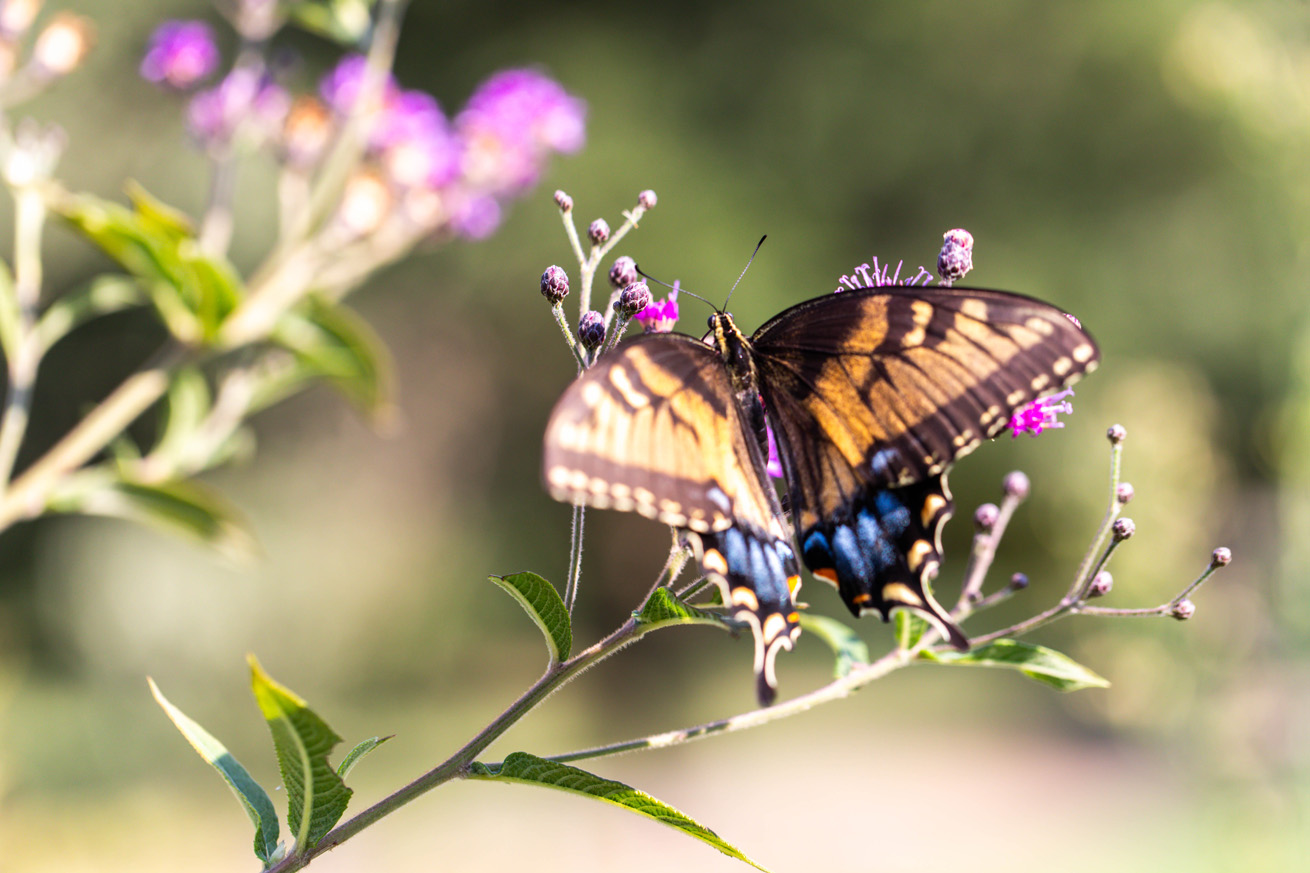
The dominant color was still yellow, but the wings had a dusky cast, like they’d been sprinkled with ashes. And the dark markings on the wings were more extensive in the area around the body than on a typical light-morph female. Compare to the photo below, where there is no black triangle surrounding the butterfly’s thorax and abdomen.
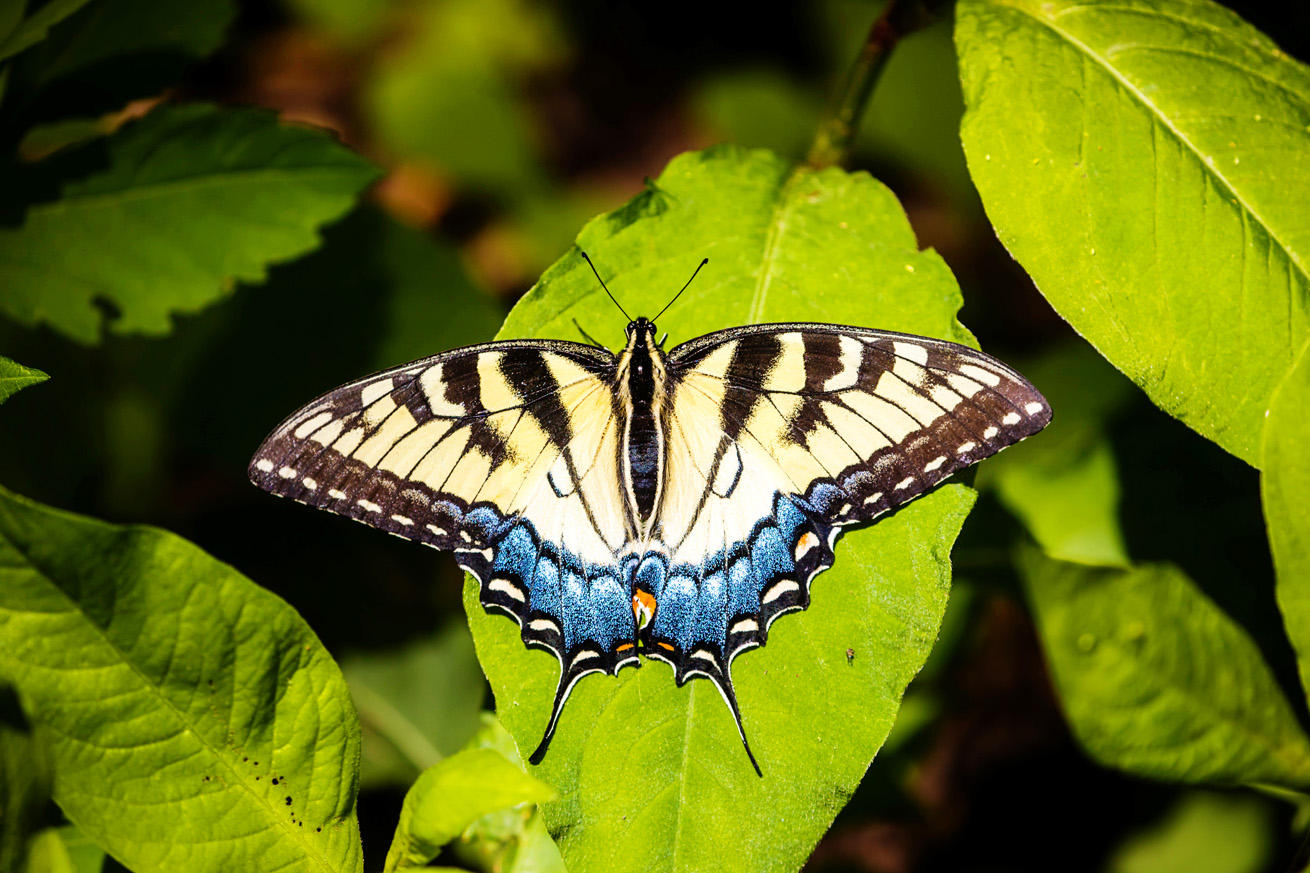
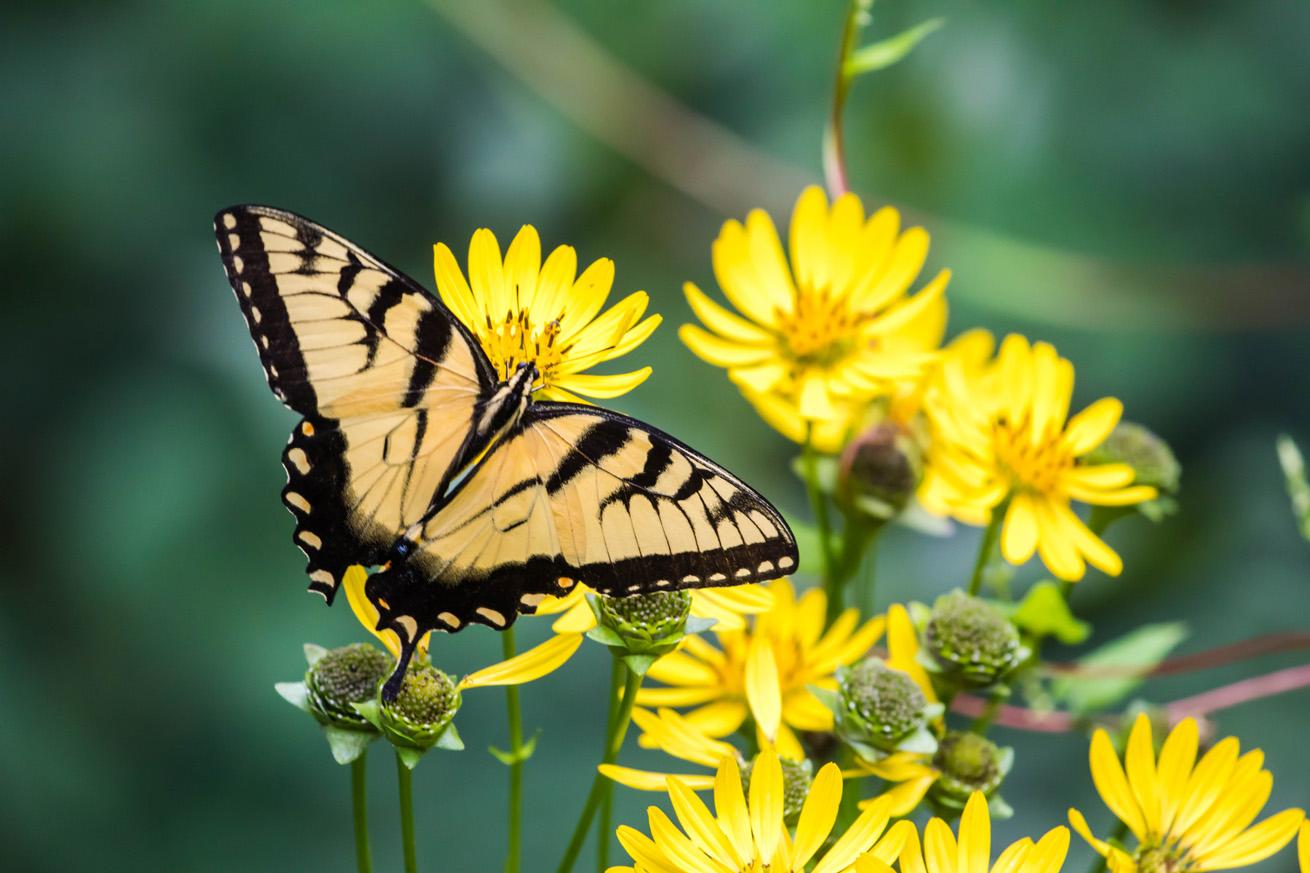
(Pro tip: you can always tell a male from a light-morph female tiger swallowtail by the presence of blue on the wings. The butterfly at the top of this post is a male, and this one is a female!)
Now that I’d seen this gorgeous oddity, I had to learn more. At first, I wondered “What’s the Punnett square on that butterfly?” Had a tiger hybridized with a spicebush to create such a pattern? But that night, I found a research paper that presented a theory for how these intermediate morphs came to be. The author studied Eastern tiger swallowtails for nine summers, and only during the ninth summer did he begin seeing intermediate morphs with this triangle pattern. Other regional butterfly observers were seeing them that summer, too. So what was the difference? It was no hybridization or genetic mutation–it was the heat!
Through his own observations and a review of past experiments with tiger swallowtails, the researcher concluded that when temperatures are unusually high while tiger swallowtails are pupating, some of the dark-morph females do not fully flush their wings with melanin. Cells that would ordinarily turn black during the pigmentation process turn yellow instead. This results in a variety of intermediate wing appearances, of which the triangle-patterned butterfly I saw was the least common (about 0.2% of the local female population in this study).
I saw this butterfly on August 19, when the temperature reached 101 degrees after a stretch of days that almost hit the century mark. Because tiger swallowtails only live for a week or two, and this one was pretty fresh, she obviously went through her metamorphosis during some extreme heat!
I thought this was a single bit of serendipity, but the following week Fields sent me a picture of a smoky butterfly she’d seen in the garden that morning.
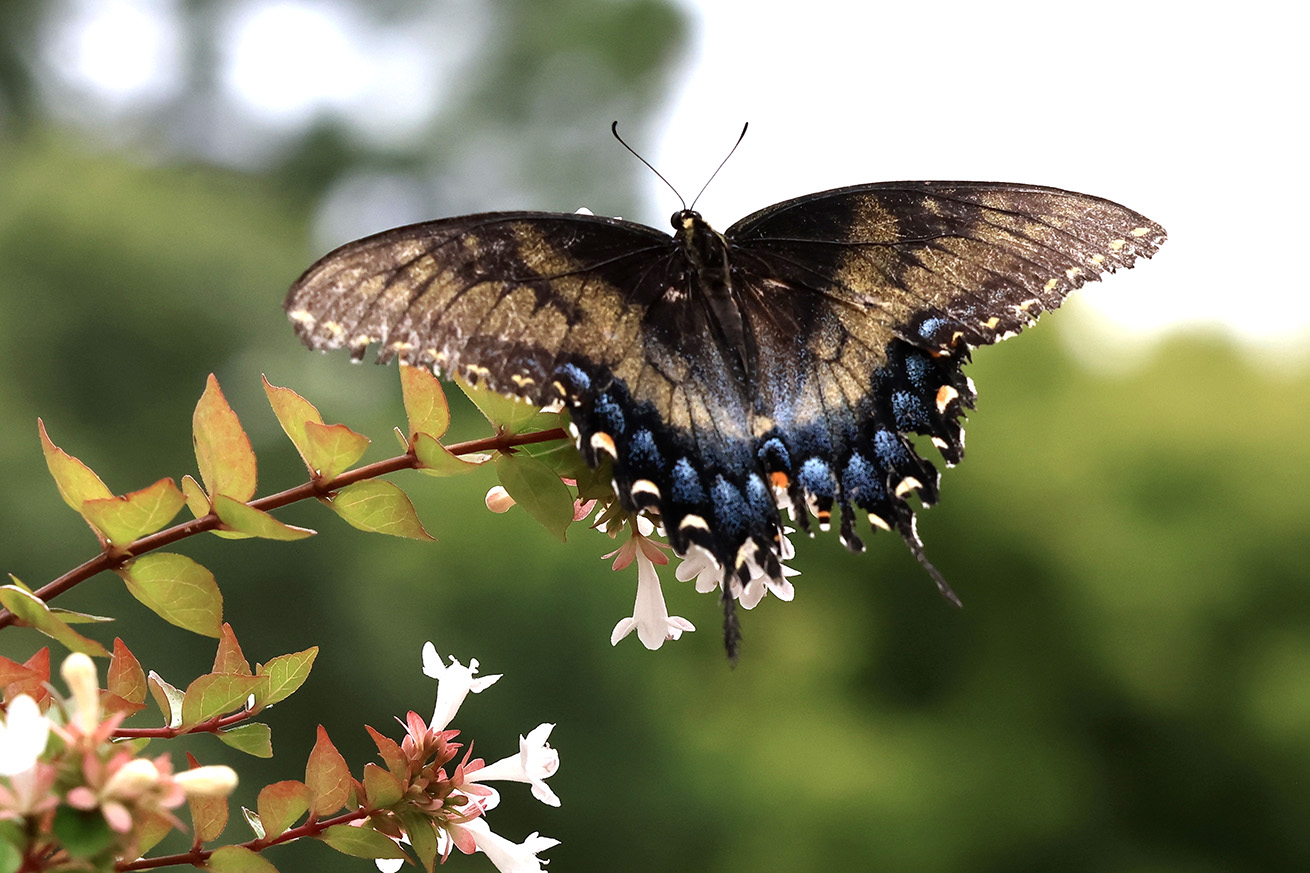
This one was distinctly darker, but she still displayed the triangle pattern around the body. A fellow-traveler!
This past week, I’ve seen at least three other intermediate individuals. None are as light as the initial one I observed, but they still display a clear difference depending on the angle of the light. This one, spotted on August 30, lacked the triangle but showed both base colors.
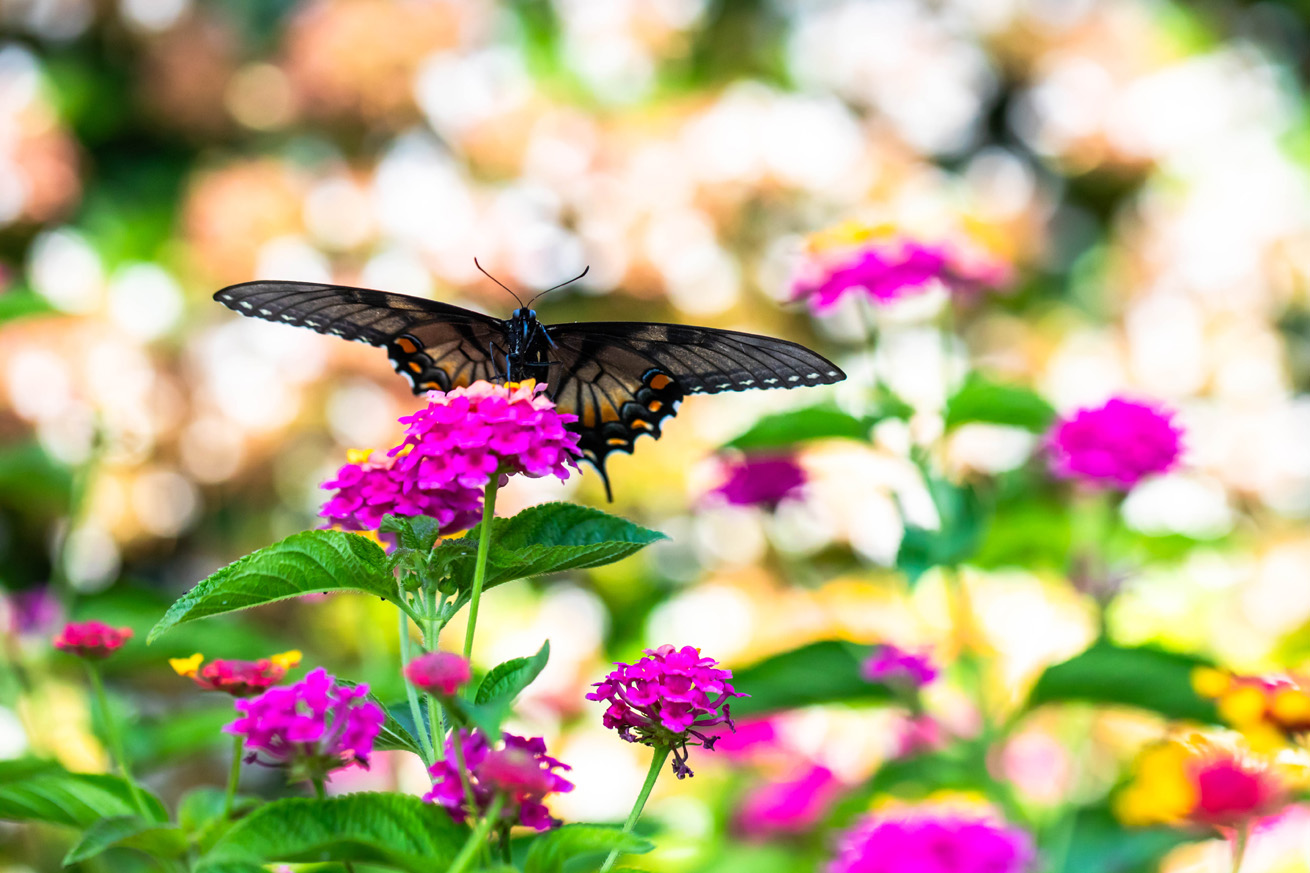
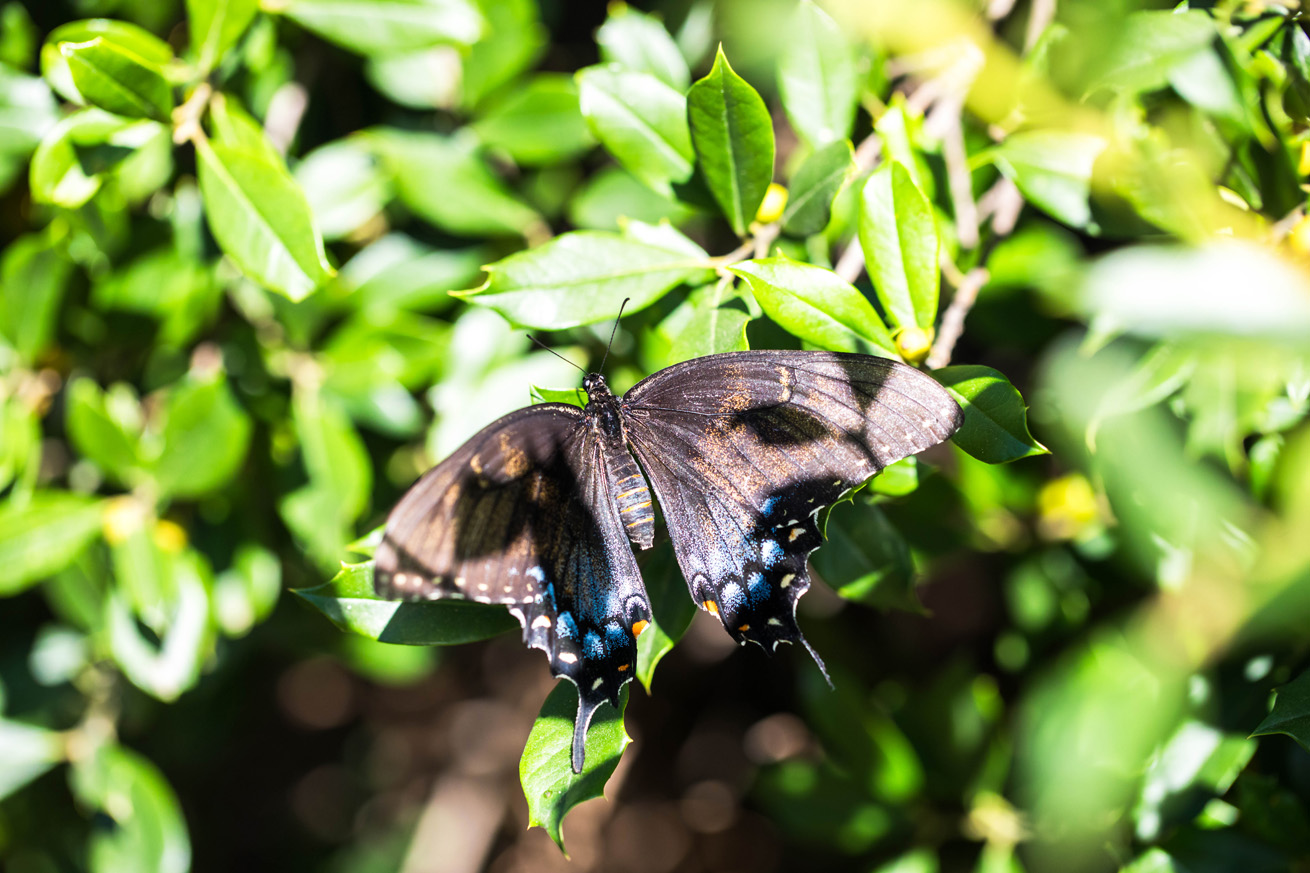
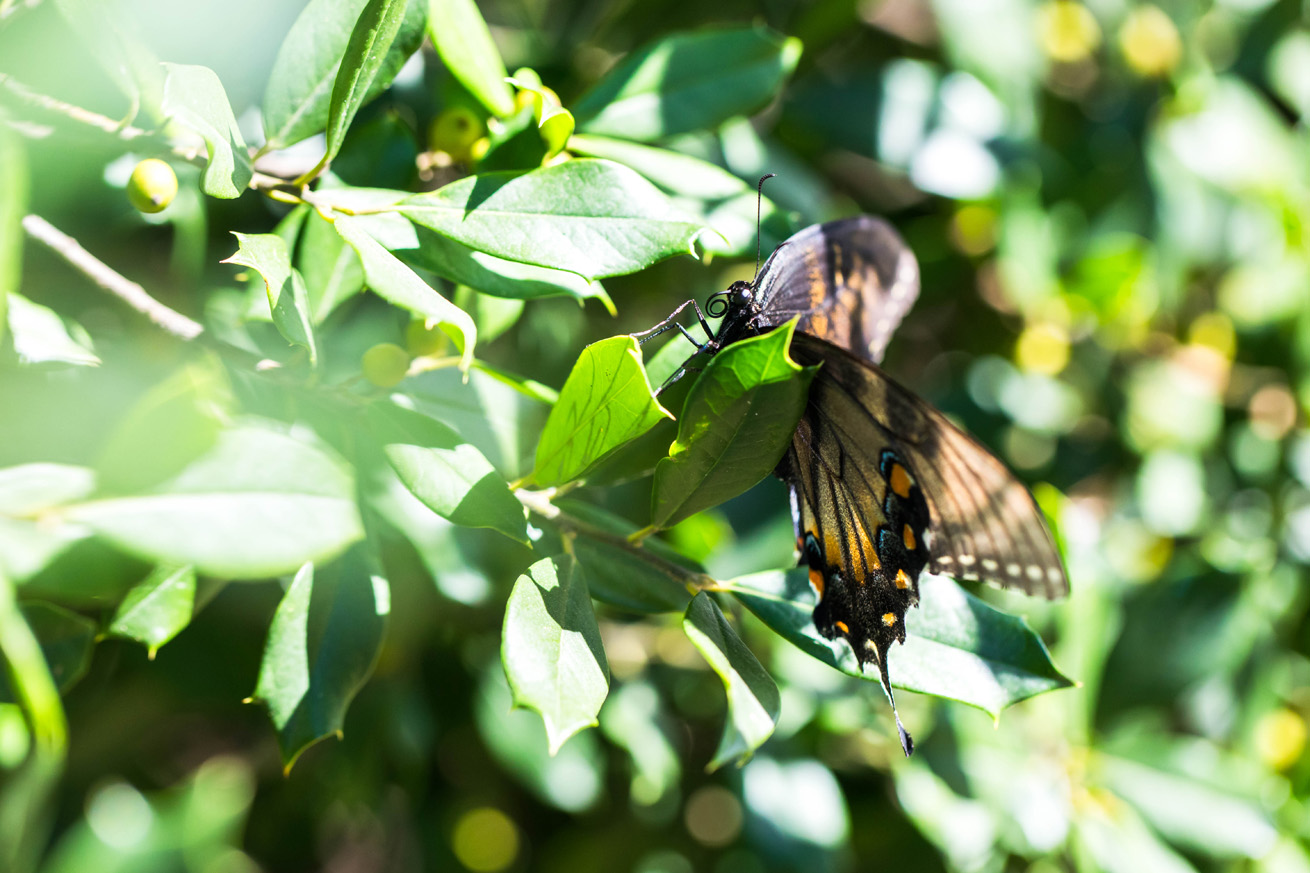
These mostly-dark intermediates are more common than the triangle form, because as genetic dark morphs, it doesn’t take as much extreme heat to produce the more limited yellow cells that they display.
So…are these butterflies all sisters from the same mother? Despite my alliterative title, it’s not likely. The butterflies I’ve seen this week are pretty fresh, and would be more ragged in appearance if they had emerged from the same brood as the one I saw back on August 19. It’s also unlikely that five members of the same brood would survive into adulthood, given that only 1-2% of butterflies make it all the way there. But in a spiritual sense, as ladies born from the heat of this brutal Memphis August, they are sisters indeed.