words and photos by Melissa McMasters
In last month’s NatureZen, we dove into the lives and loves of the Old Forest’s red-shouldered hawks. Since then I’ve been spending a lot of time watching them go about their nesting activities, and I can confirm: there will definitely be a second episode of our soap opera, and it will involve a case of mistaken identity. The drama continues!
But in between trying to locate hawk nests, I’ve had plenty more to observe. I always say that I love spring the most because it’s different every day. A patch of green bursts into pink flowers overnight, bees emerge from their underground nests, and suddenly the forest is filled with birdsong. It truly never gets old.
So let’s take our customary annual survey of how March has unfolded in the Old Forest, shall we?
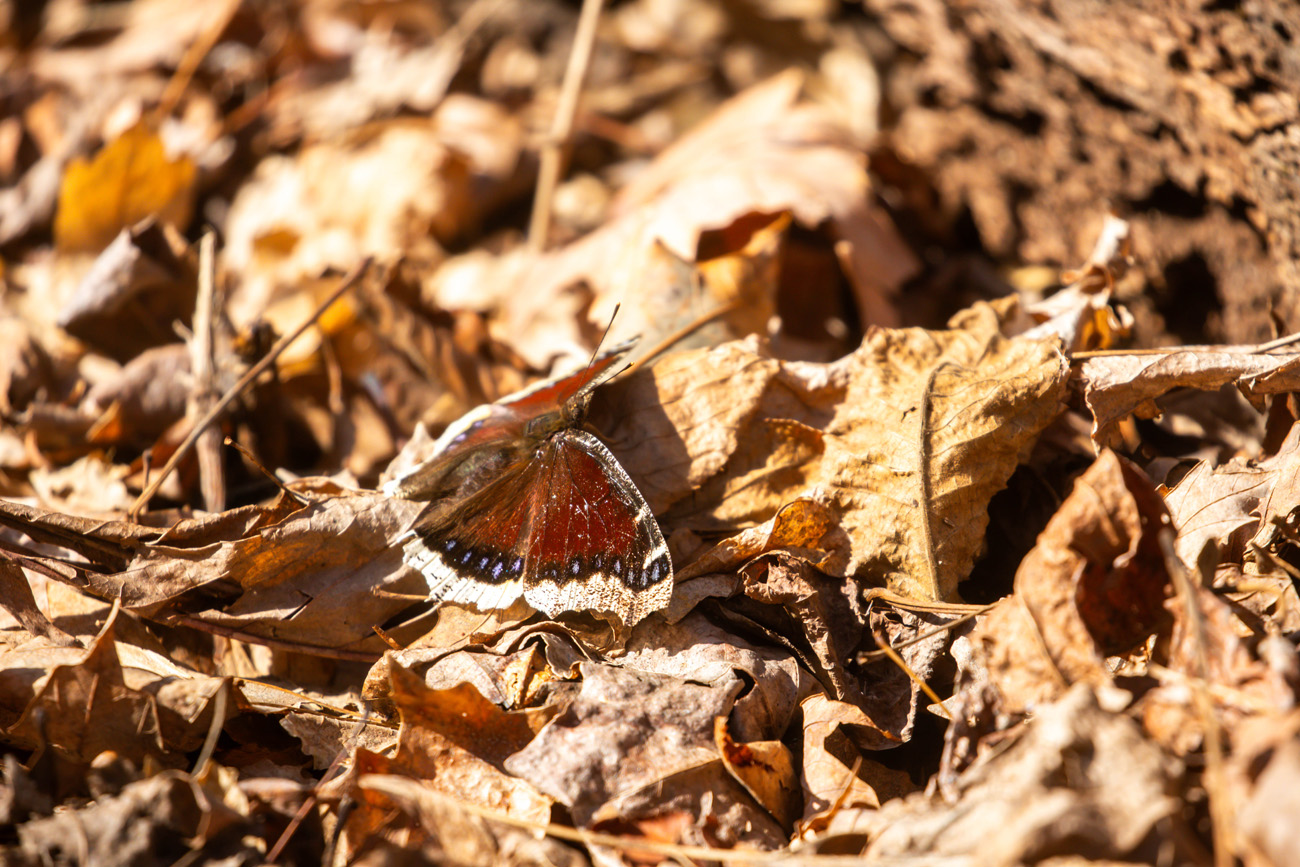
The month began with our three species of overwintering butterflies–the mourning cloaks, Eastern commas, and question marks–emerging from their shelters beneath the bark of trees to take in the sun. For the second year in a row, we’re having a banner season for mourning cloaks, with patches throughout the forest where males are holding territory and looking for females.
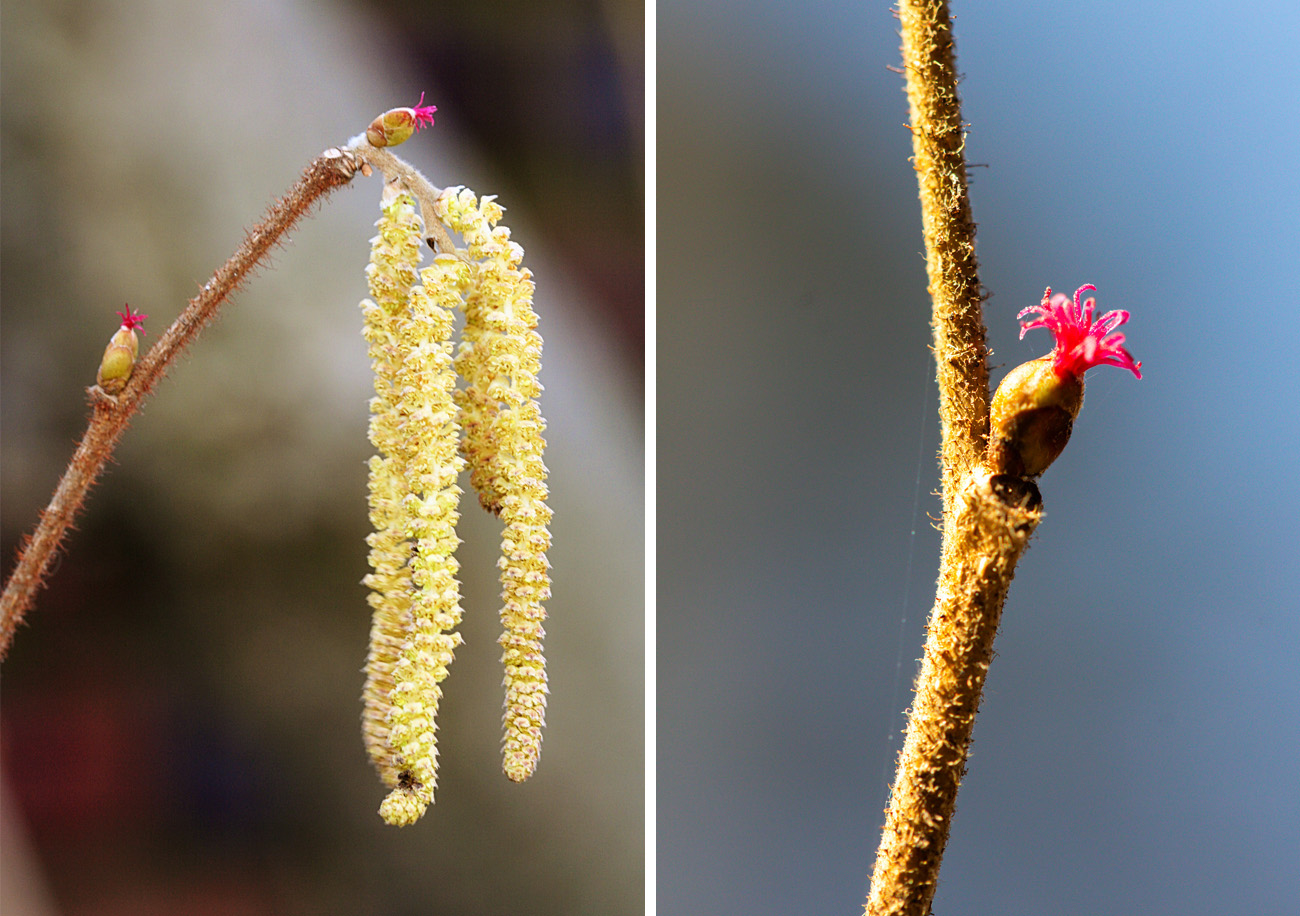
Before most of the plants of the forest are in bloom, the American hazelnut is displaying its showy male flowers, which look to me like tiny popcorn garlands. But look closer and you’ll see that the same branch may also have hot-pink female flowers! A single shrub will not pollinate itself, but it can reproduce via wind carrying pollen from one plant to another. I recently learned that this plant is a host for the caterpillars of the luna moth, which means I will be keeping a very close eye on our hazelnut patch this year!
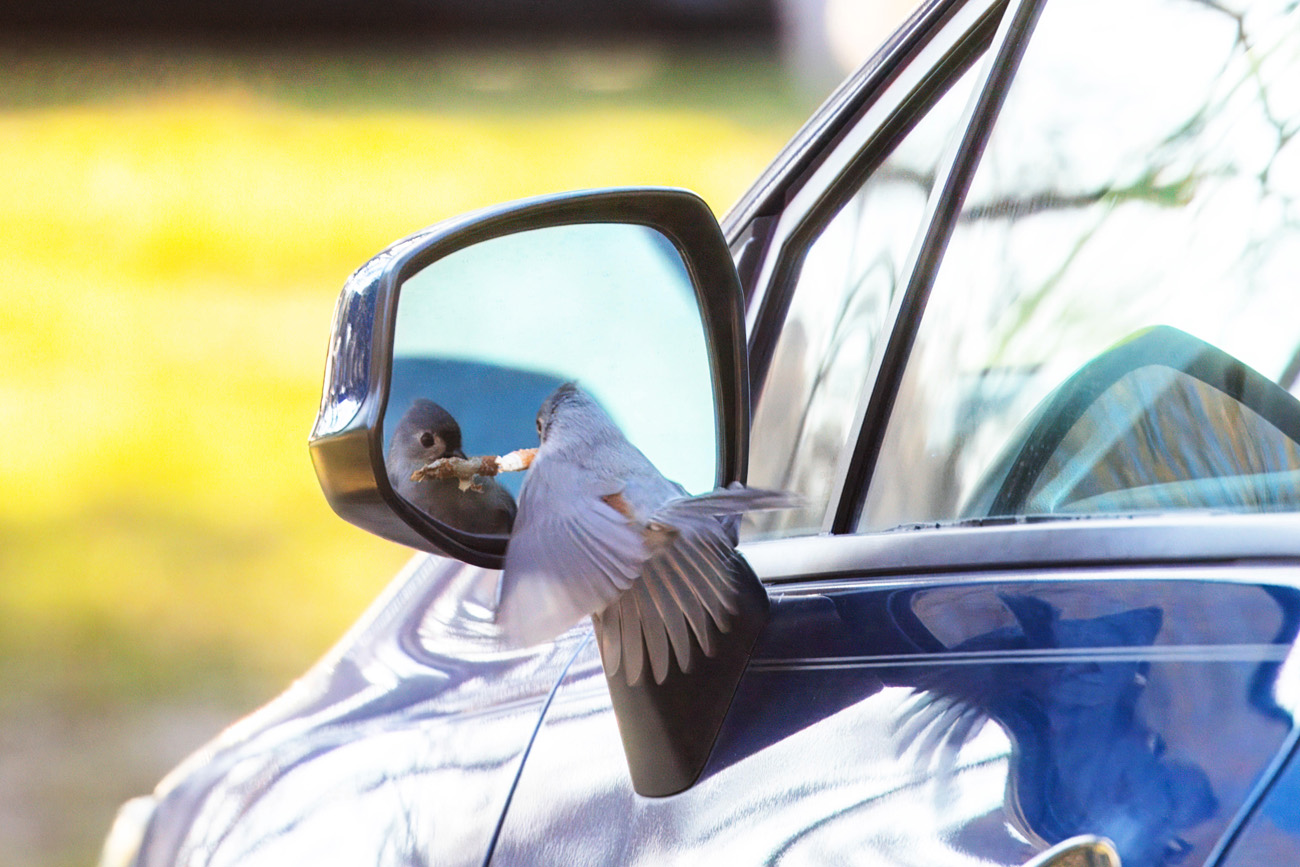
There’s no prouder tradition amongst the Conservancy staff than vying for who can have the best encounter with the tufted titmice in the Rainbow Lake Playground parking lot. Each spring they become either infatuated or infuriated with their own reflections in our side mirrors, but this is the first year I’ve seen one take up smoking. I wrote this off as an unfortunate consequence of nesting in an urban park, but then the New York Times published this article about a study of birds that use cigarette butts as nesting material to ward off parasites. And wouldn’t you know…it’s birds in the titmouse’s family whose chicks seemed to benefit from the toxins. Maybe our not-so-bright titmouse is smarter than we thought.
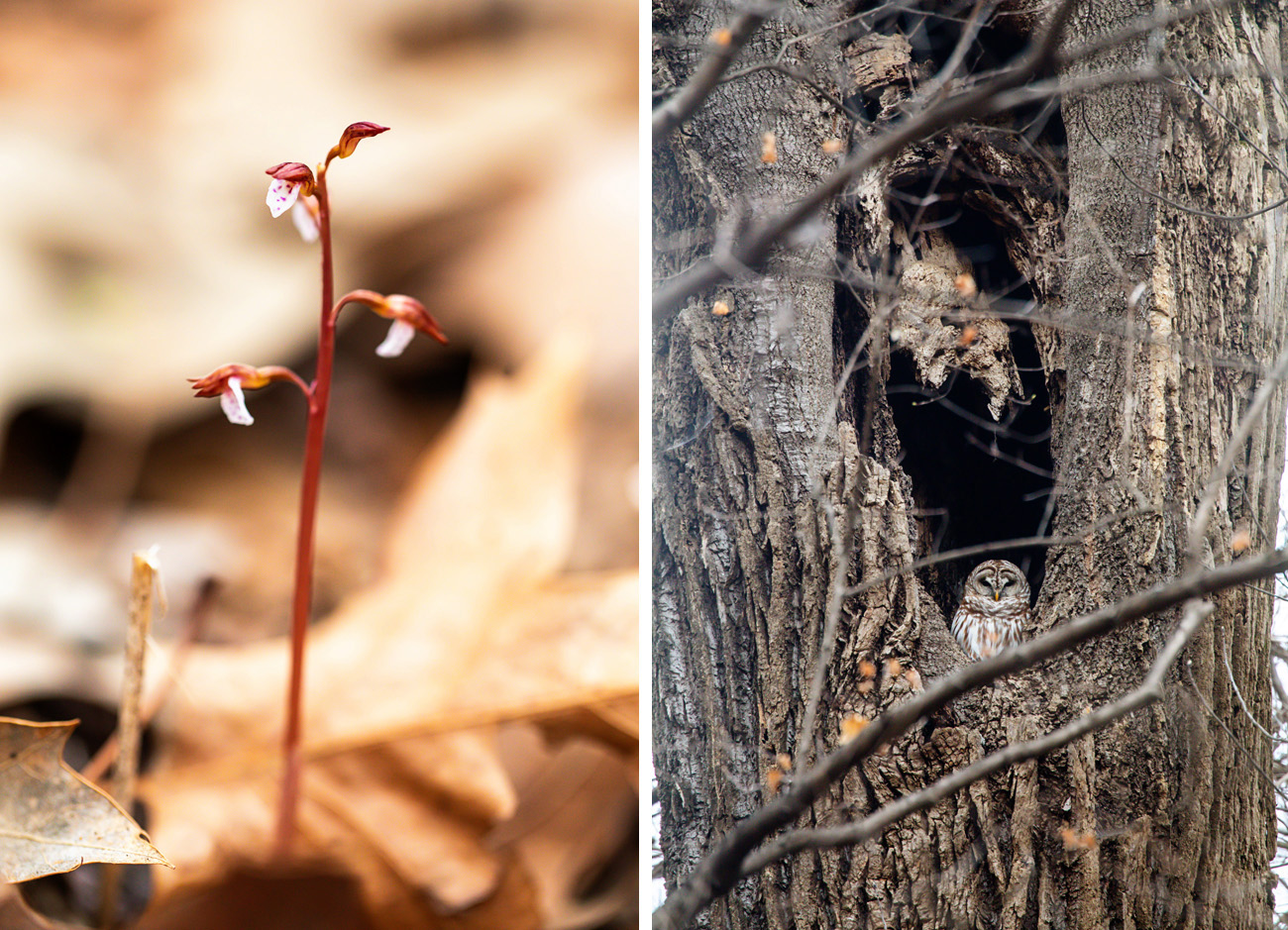
One morning, crunched for time, I decided I’d check and see if our small patch of spring coralroot was blooming this year. These orchids mostly lack chlorophyll and get all their nutrients from fungi, so they require a highly specific mix of soil and fungi to germinate. A wetter spring means more fungal activity, which means more orchids–which is to say that I only saw a few flowers during this dry March. Once I had enjoyed those, I was headed back to my car to get to a meeting when Kim called from the opposite end of the forest to tell me she thought she’d spotted a barred owl in a nest. This is not something one passes up, so I speed-walked over and sure enough, there was our owl in a perfect cavity for raising little ones. We haven’t seen her there since, but I imagine the cavity is deep enough to hide a lot. I know where I’ll be looking for owlets in the next few weeks.
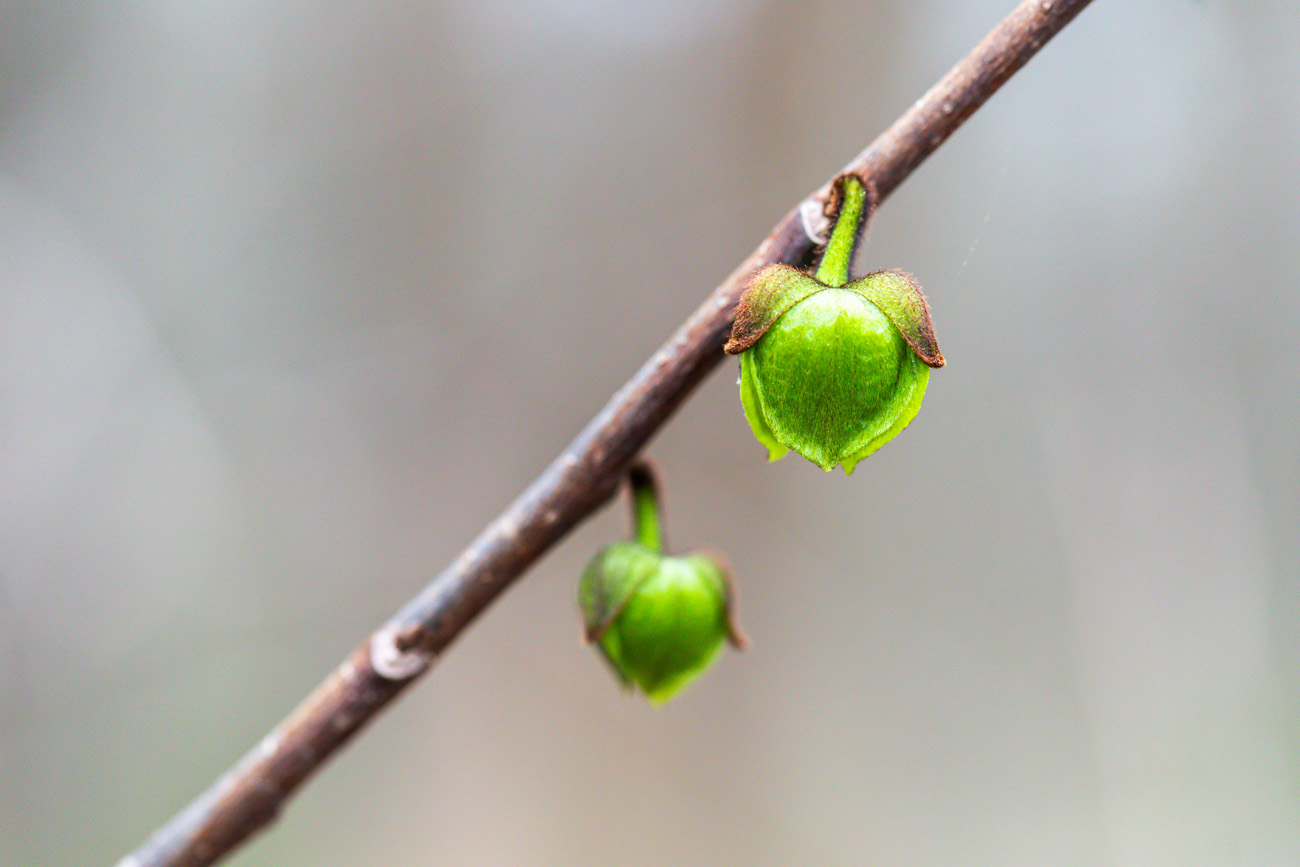
The freeze/boil cycle of our March weather hasn’t been especially kind to the plants. I’ve seen a lot of common pawpaw flowers that shriveled up in the most recent freeze before they had a chance to bloom properly. But plenty of them made it through just fine, and as always I spent a lot of time gazing adoringly at their fuzzy green phase before they assumed the wine color that dots the forest right now.
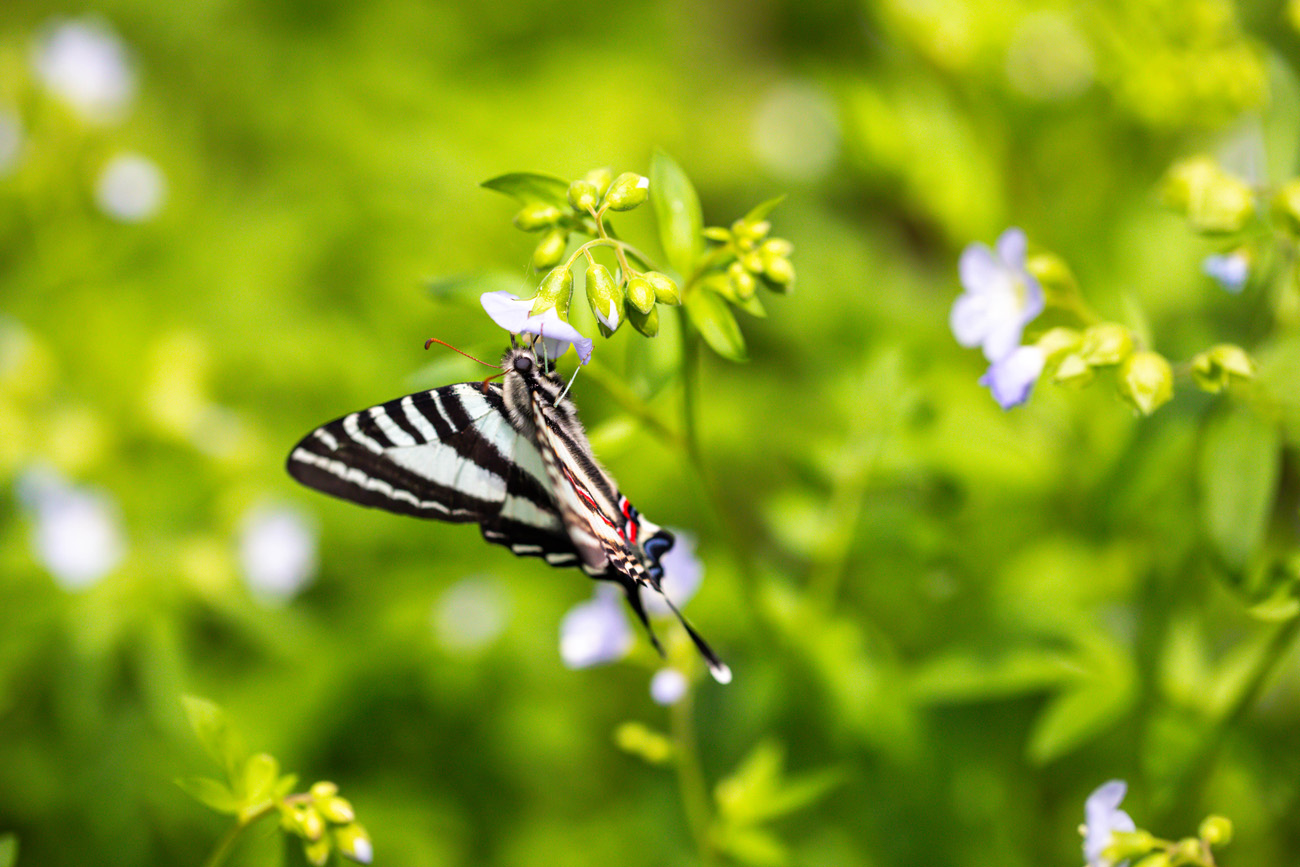
Just as happy to see the pawpaws are the zebra swallowtails, who flit amongst the fresh leaves to lay their eggs. They can also be found nectaring from Jacob’s ladder plants, particularly the ones that have had some shade from last week’s blazing heat. The ones in full sun went to seed very quickly this year, while those in the cooler, shadier microclimates are still in bloom.
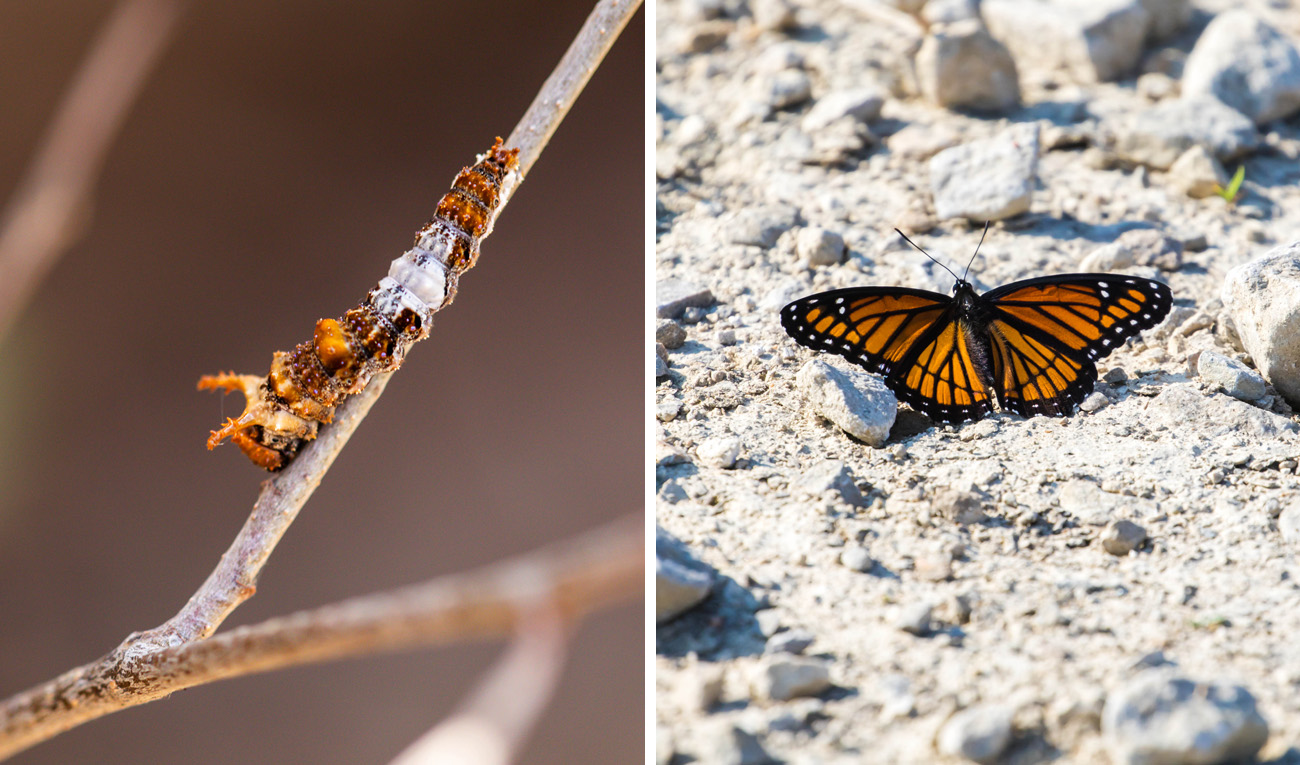
Not all the butterflies have assumed their final form yet. One day I passed a cherry tree that had a suspicious-looking bird dropping curled around a stem. “Are those…horns?” I said. Oh, they were. As I peered at this curious shape, it unfurled to its full length, revealing a combination of bird-dropping camouflage and headwear worthy of a teen with an axe to grind. It turned out to be the caterpillar of a viceroy butterfly, a species I’ve never observed at Overton Park. I mostly see them in areas with lots of willows, their preferred host plant. But it turns out they’ll eat the leaves of native cherry trees, too, so at some point last fall a viceroy found its way into the forest and thought, “Works for me.” I hope she spread the word.
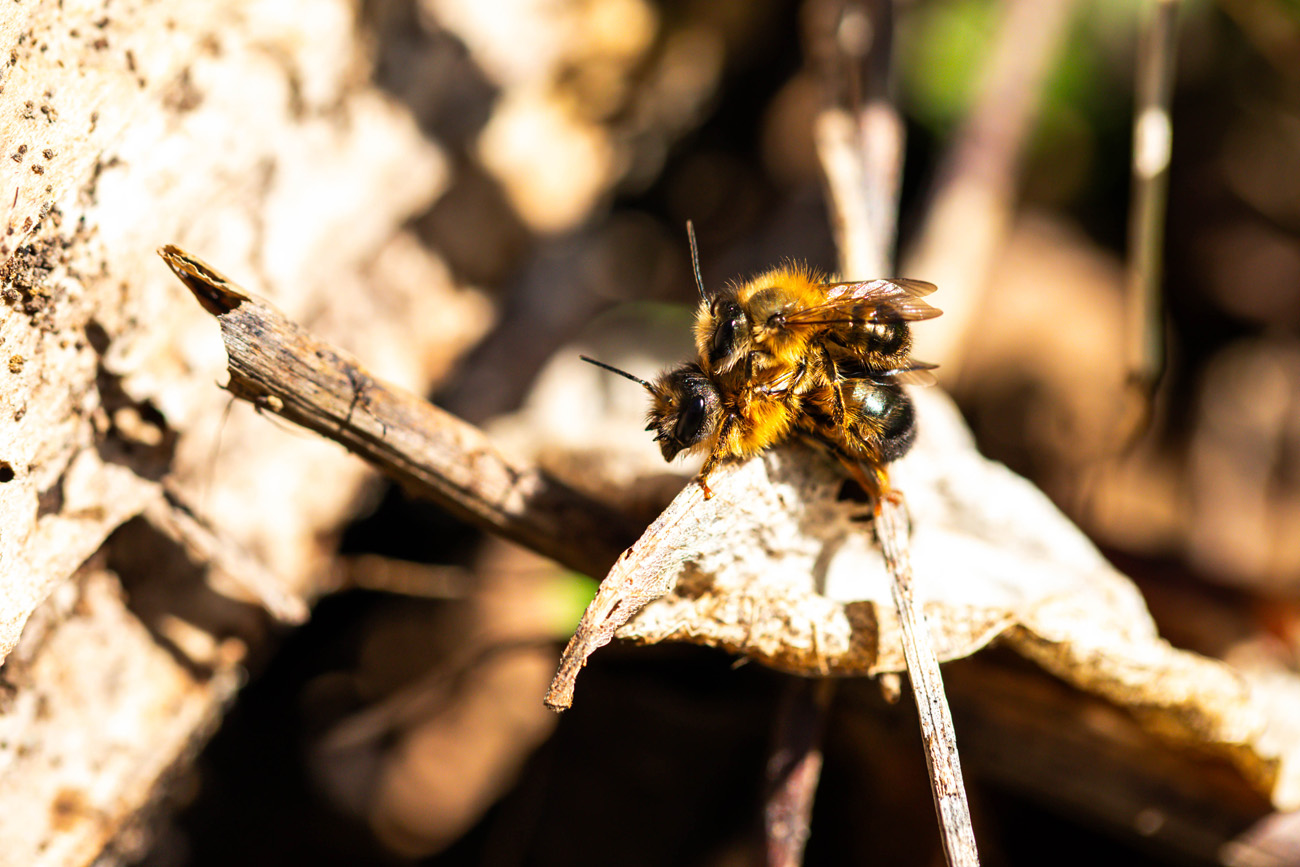
There’s no getting out of a spring photo essay without some twitterpated individuals. I caught these Taurus mason bees one Sunday afternoon near the sort of hollow stem they might decide to nest in.
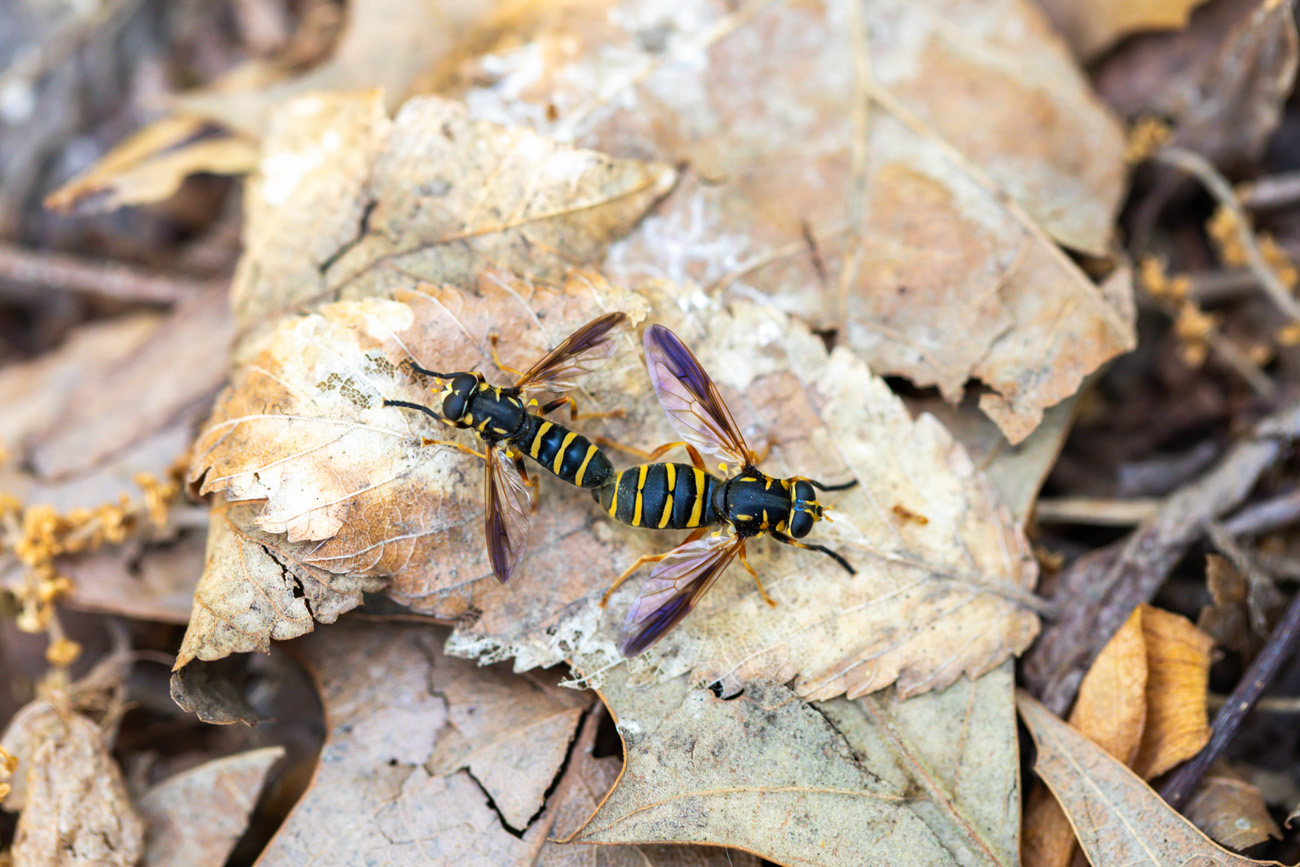
This tandem of falsehorn flies answered a question for me. Falsehorns have black front legs, and they wave them in front of their bodies like antennae to give predators the impression that they’re stinging wasps. I wondered if they still waved their antenna-legs in this defensive behavior even when mating. The answer is yes: the cosplay doesn’t stop even during an assignation. Gotta stay safe out there, kids.
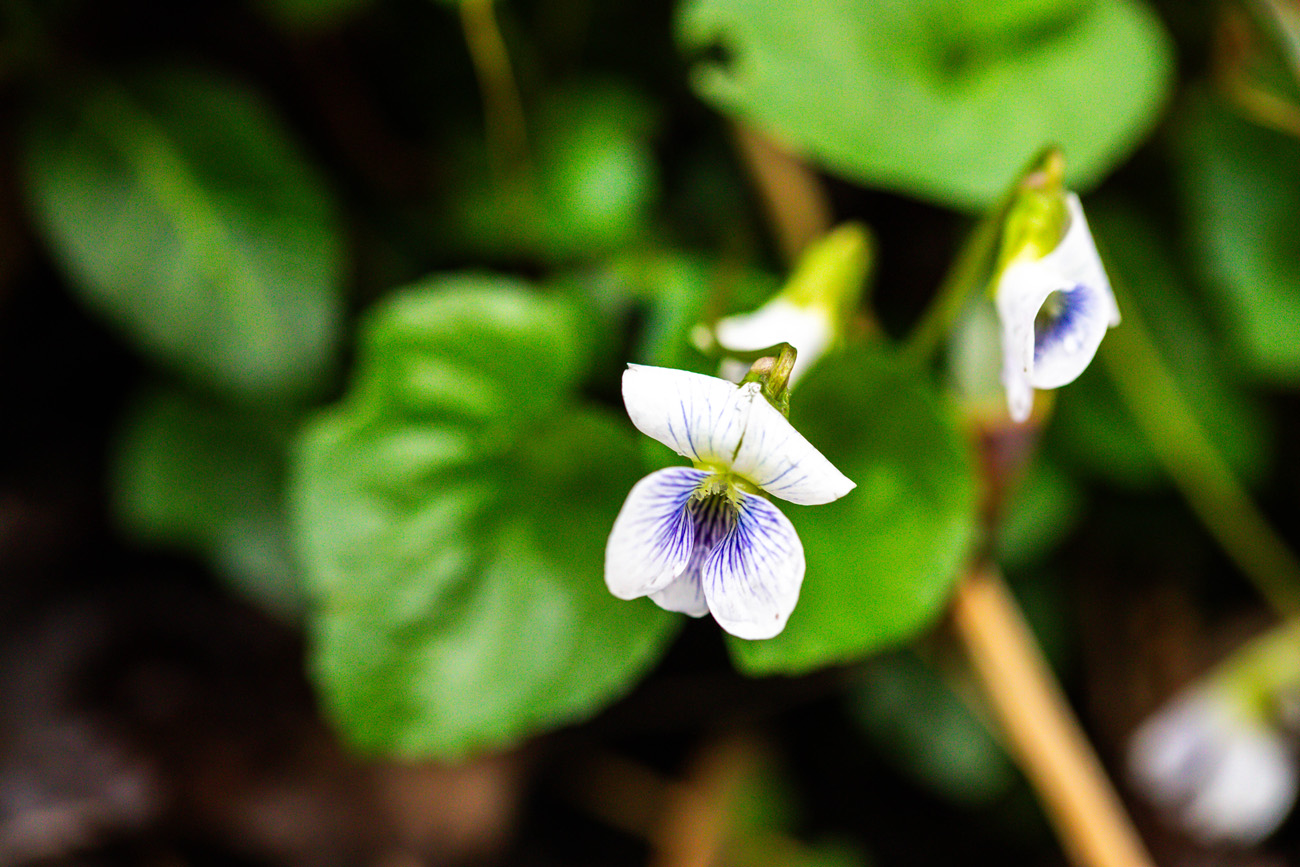
One of my favorite gems of the forest floor is this subspecies of common blue violet that’s found in the Eastern United States. Instead of having a dark purple color, this more delicate variation has a white background with the purple mottled in.
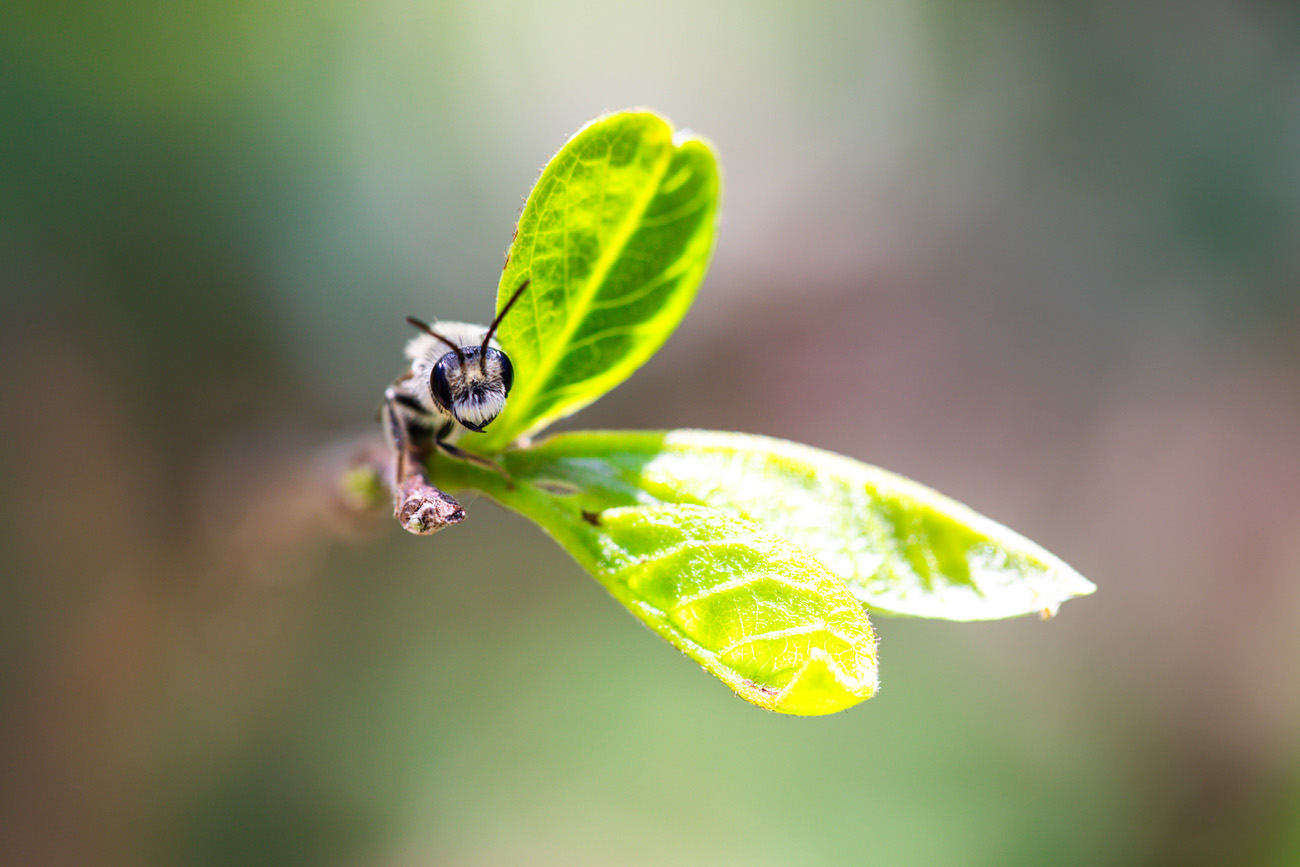
A lot of our spring plants have very small flowers, requiring the pollination of bees with short tongues. Enter the mining bees (Andrena sp.), many of whom specialize on particular plants like violets or geraniums. Males are smaller than females, but the best way to tell them apart when they’re seen on their own is to admire the robust mustaches on the males. All this one needs is a top hat and a pipe and he’ll be a proper Victorian gentleman.
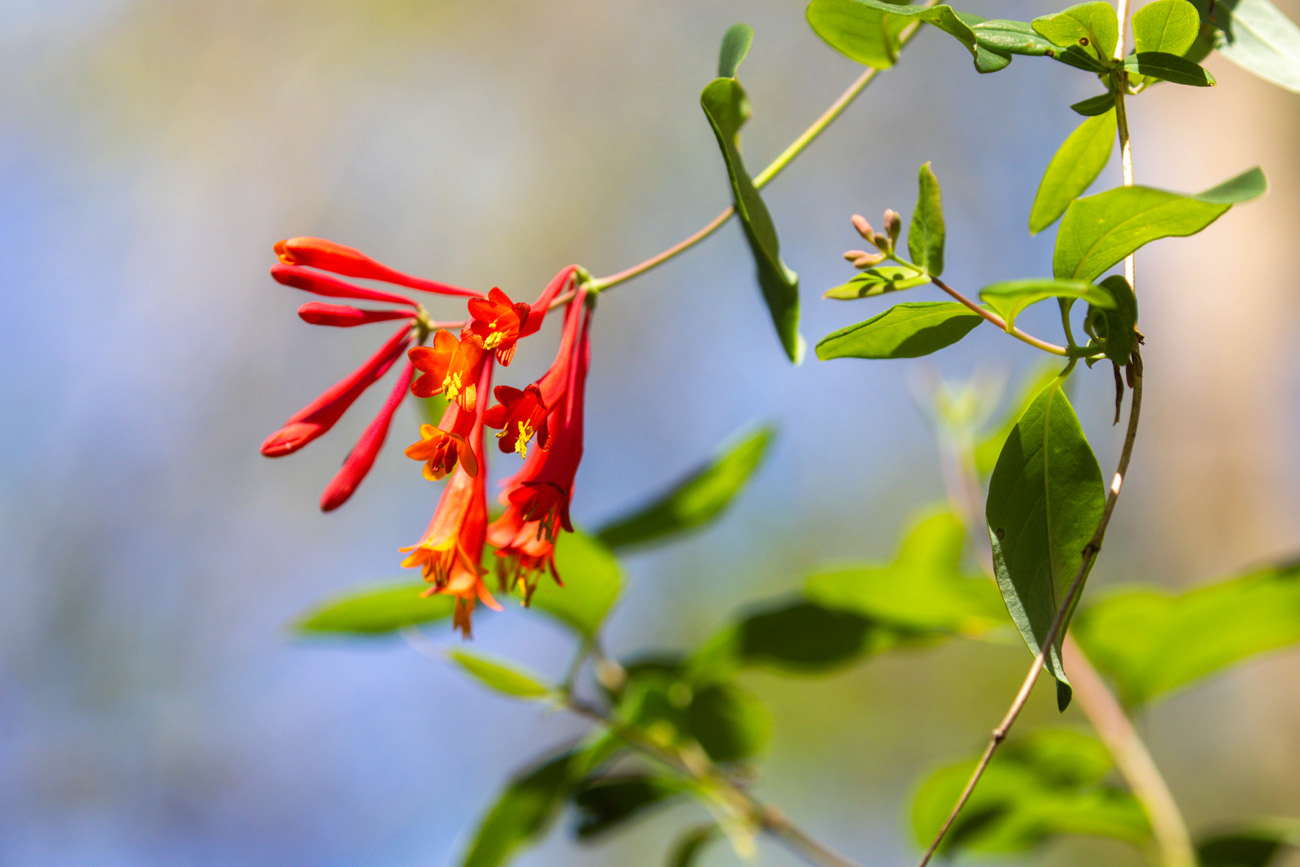
When the coral honeysuckle vines start to flower, I know that means hummingbirds can’t be too far away…
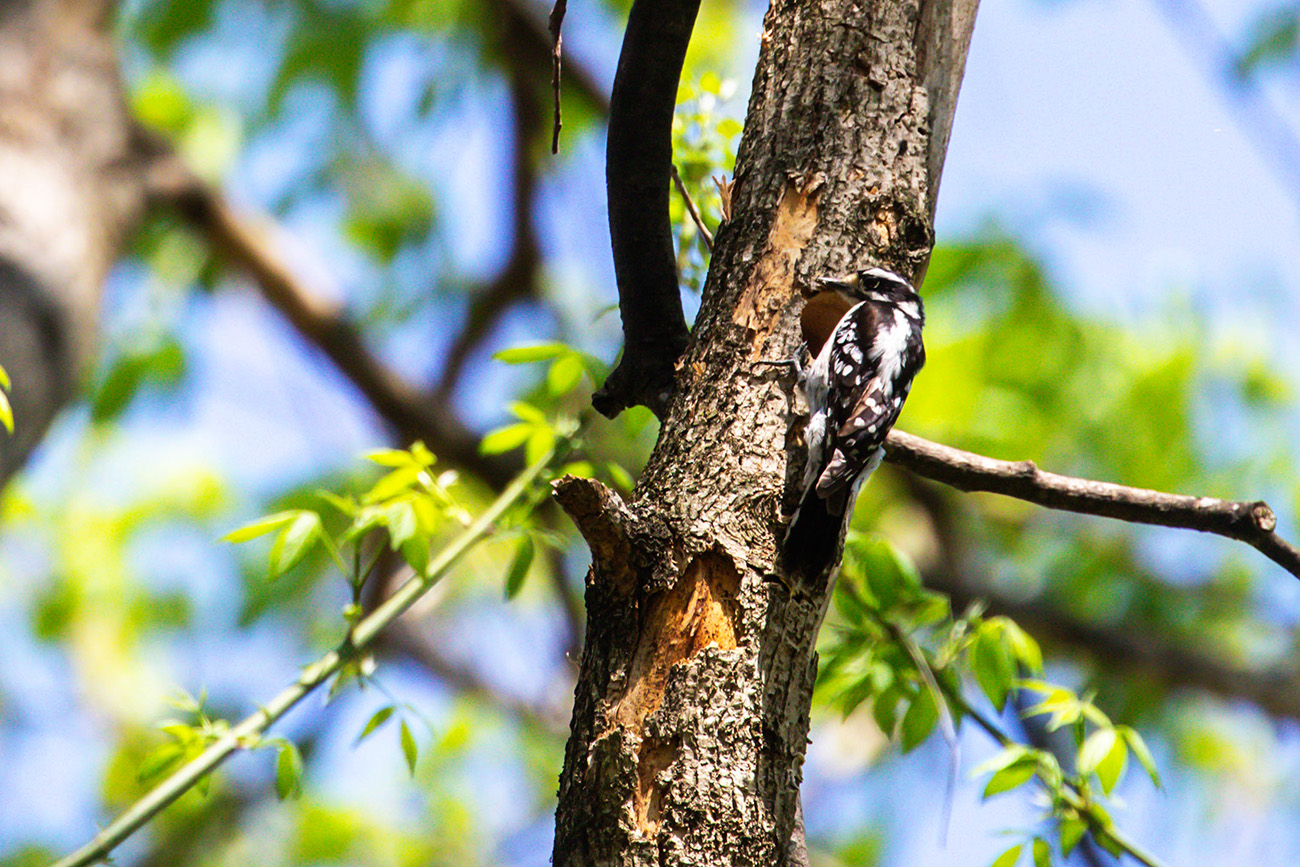
Normally downy woodpeckers punch above their weight in the noise department, drumming on trees to signal their position and to free the delicious bugs within. But we’ve spotted a few this spring going quietly about the work of creating perfectly round nest holes in dead trees. Can’t wait to see those little woodpeckers take their first flights!
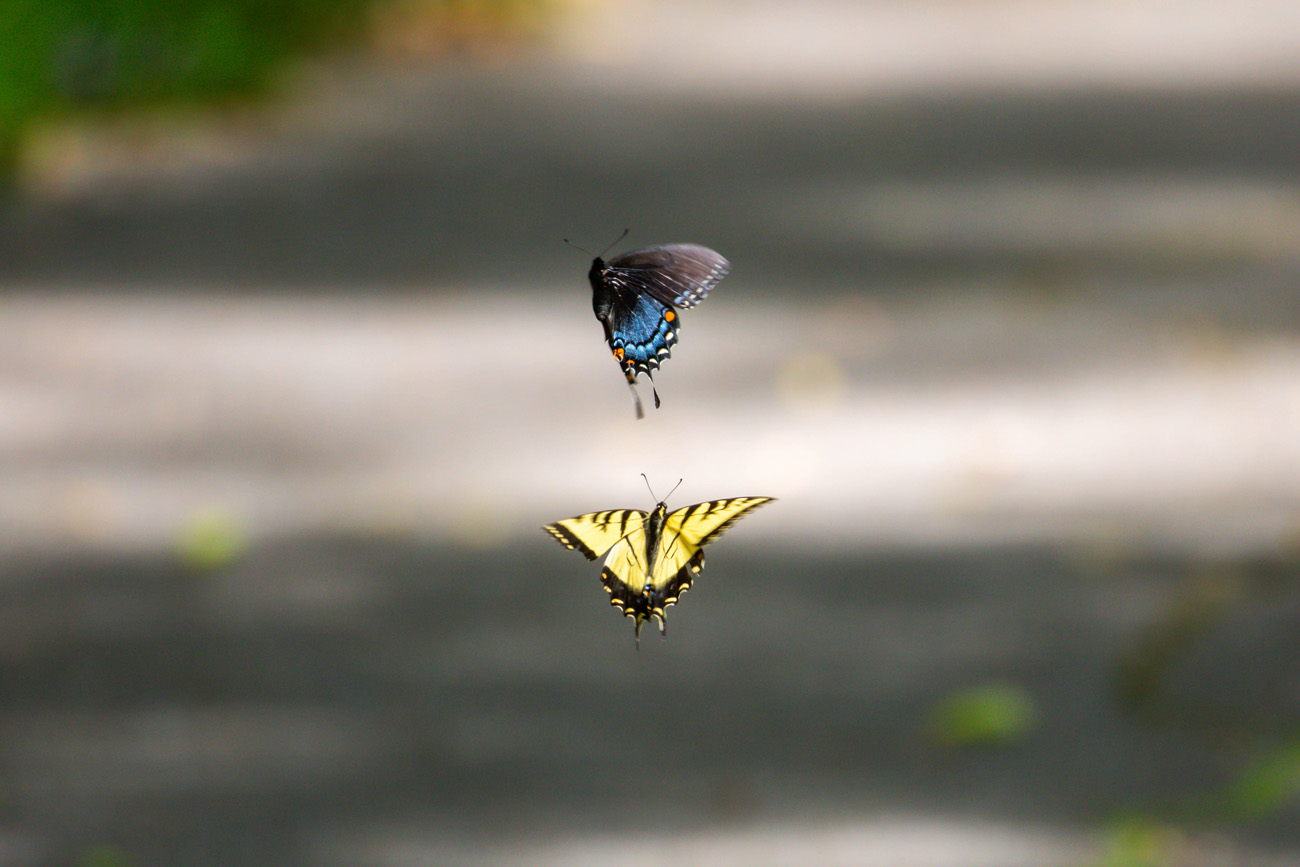
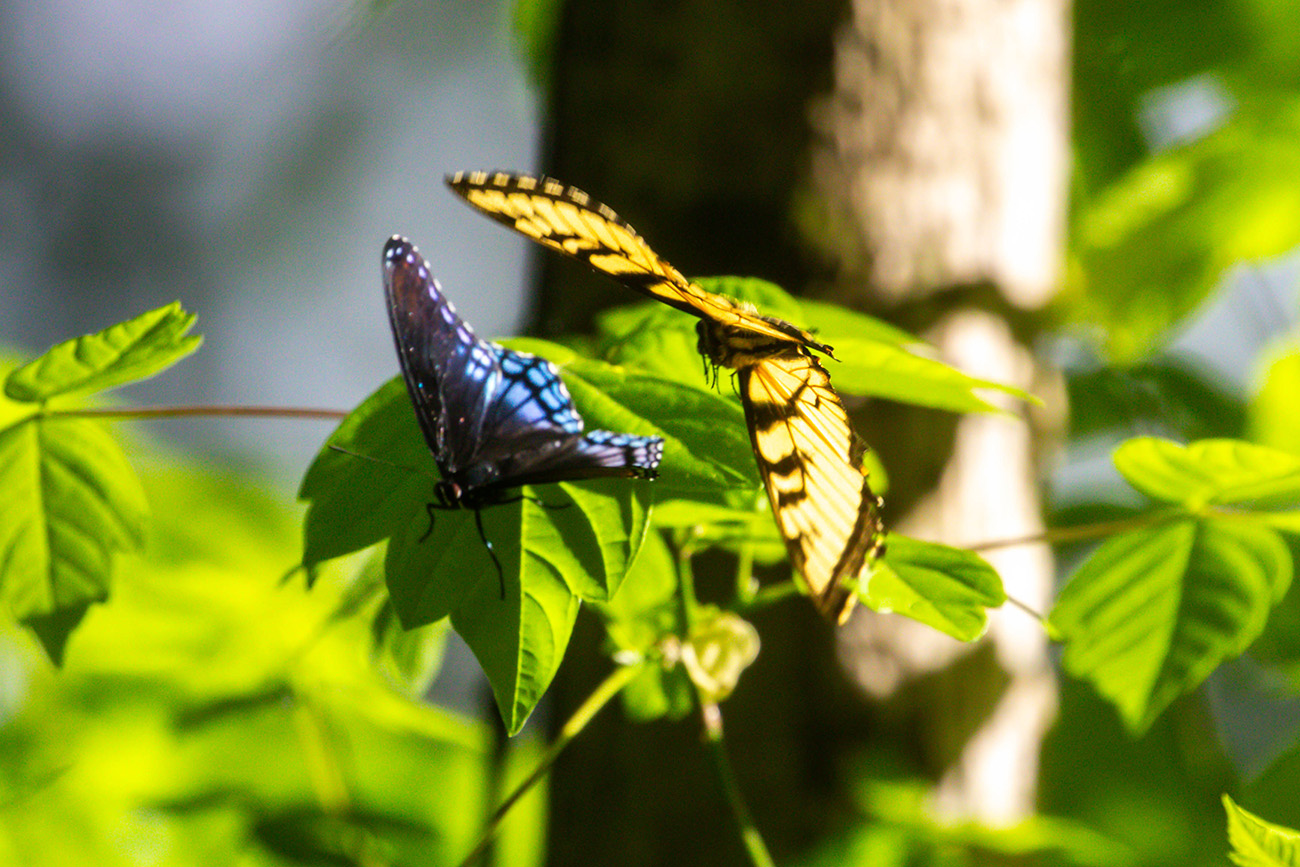
Yesterday I spotted a male Eastern tiger swallowtail (the yellow one) flirting with a female all up and down the main paved trail. Then later I witnessed another one mistake a similarly-colored red-spotted purple for his paramour. Eventually he realized he was wasting his affections on the wrong species and moved along so she could enjoy her sunshine in peace.
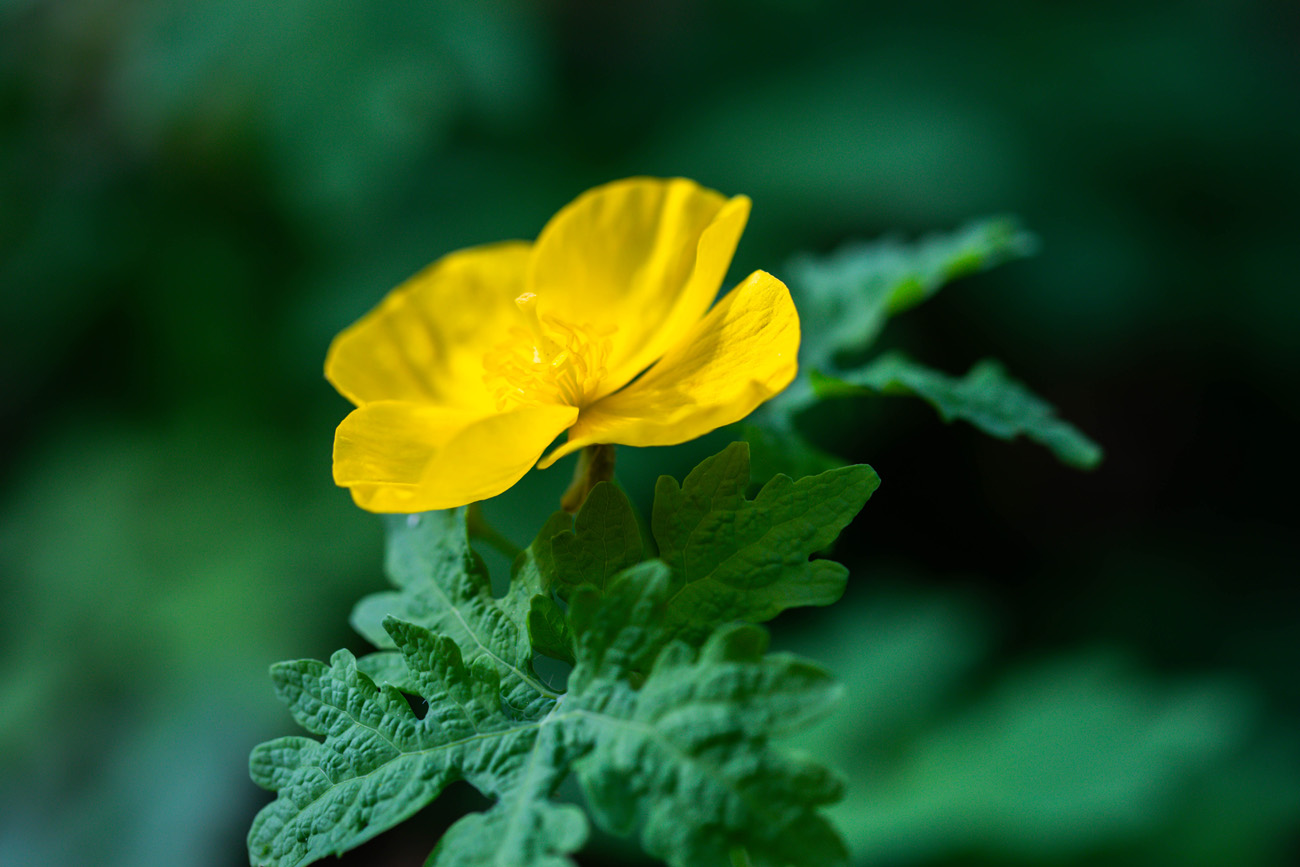
The celandine poppies are perfect right now. If you haven’t gotten out to experience the way they blanket the forest floor, you’ve got a few more days before they all go to seed. These plants are a rare find in West Tennessee, and the fact that we have thousands of them right here in Overton Park is not something I take for granted.
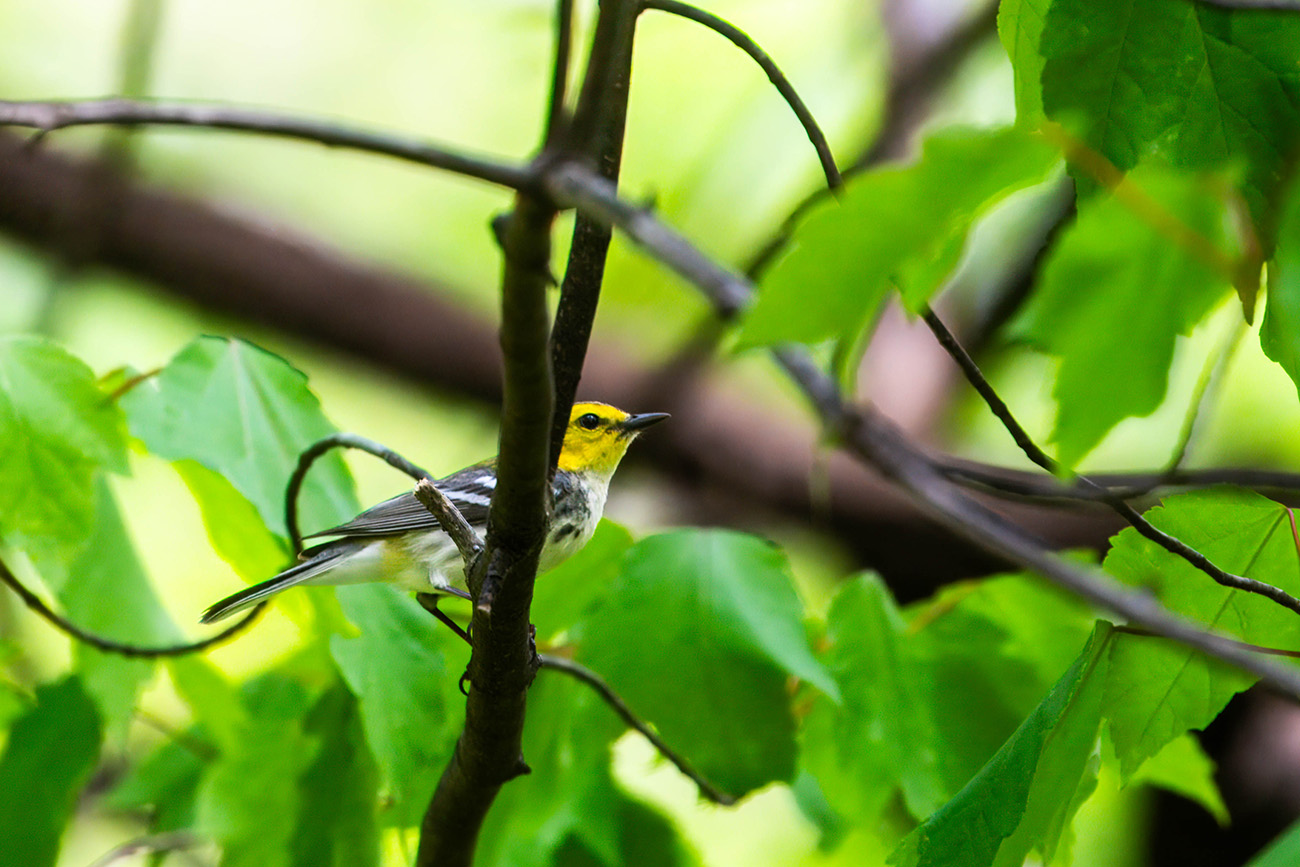
Finally, the month ended with a taste of things to come. This morning, Fields, Kim, Annelise, and I saw our first migratory songbirds of the year: a couple of chatty black-throated green warblers and some more elusive Northern parulas and black-and-white warblers. March may be the month associated with madness, but the birding free-for-all in the forest is only just beginning.