words and photos by Melissa McMasters
One of my favorite things about being a naturalist is getting to observe the behavior of animals over the long term. Watching a cardinal foraging with his mate in the winter, fighting with his rivals in spring, bringing food to a nest in summer, and going through a humiliating molt in the fall makes me feel like I’m connected to the life cycle of the place where I’ve planted myself. After 13 (!) years at Overton Park, I love anticipating the special things that occur in each part of the year.
This is why a weather curveball like last weekend’s can be so interesting: it’s a chance to observe familiar wildlife in an unfamiliar situation. How would the birds react to the compacted layers of snow and sleet that have barely budged since Saturday? Thanks to my colleague Kim’s 4-wheel drive, I was able to go check it out.
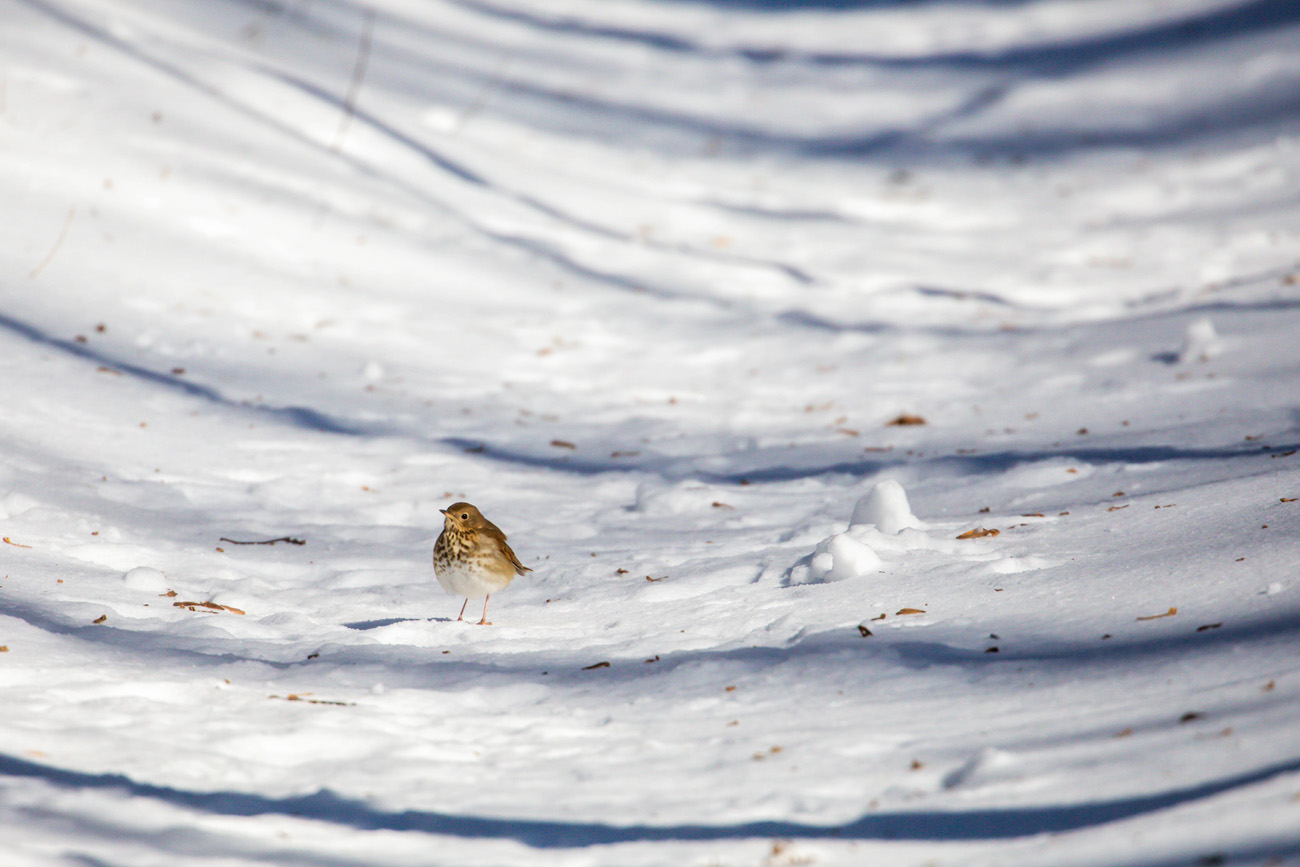
The Old Forest has been quiet this week–our boots barely made a sound (until the top layer of snow started collapsing, sending us randomly sinking with a thud every few steps). The birds were largely silent, too, but thankfully the few we saw really stood out against the snow! This hermit thrush crept toward us on the Old Forest Loop, somehow finding a small berry amidst the refuse of maple and tulip poplar seeds sent sailing to the ground by the cardinals.
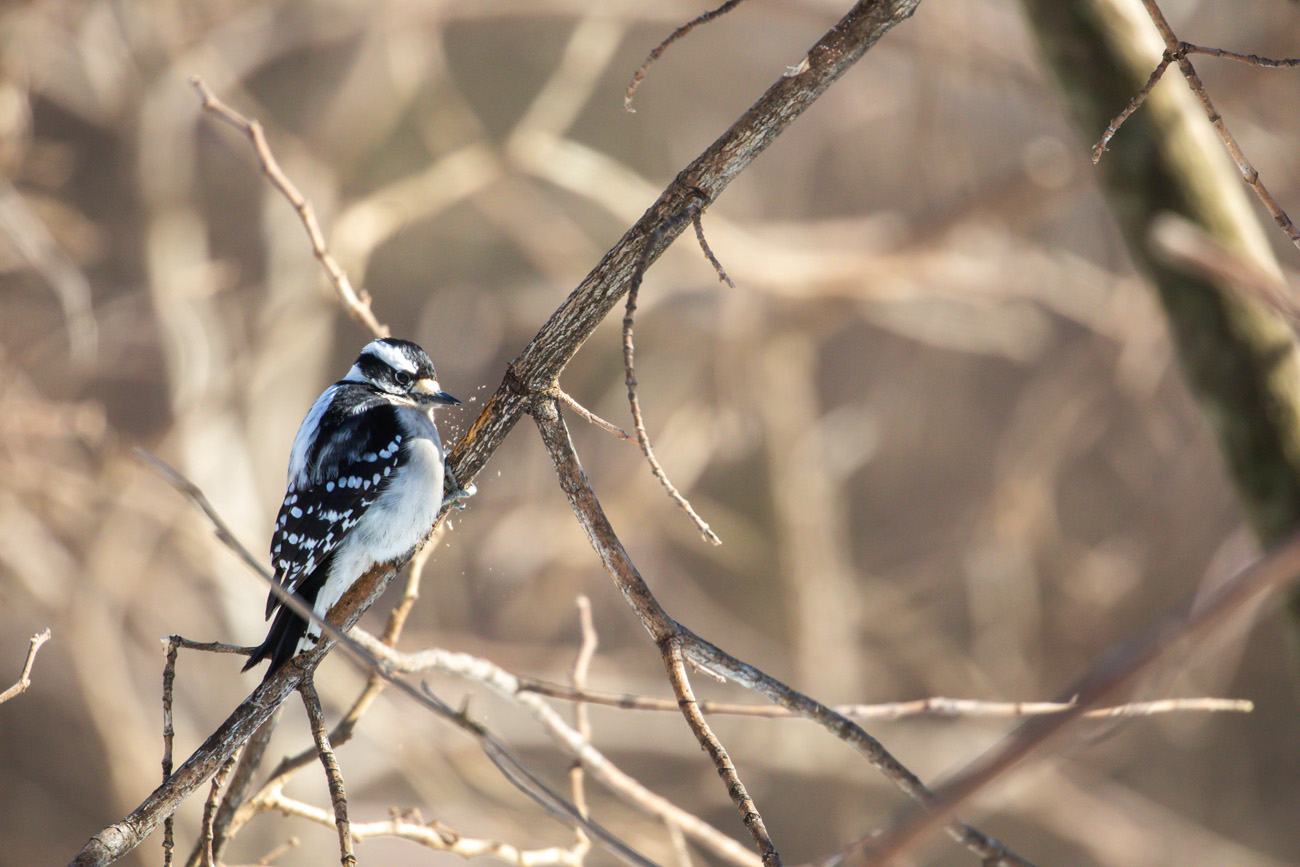
Downy woodpeckers were the exception to the no-noise rule: they’ve been whinnying continuously between chipping away at branches in search of insects that might be hiding under a layer of bark.
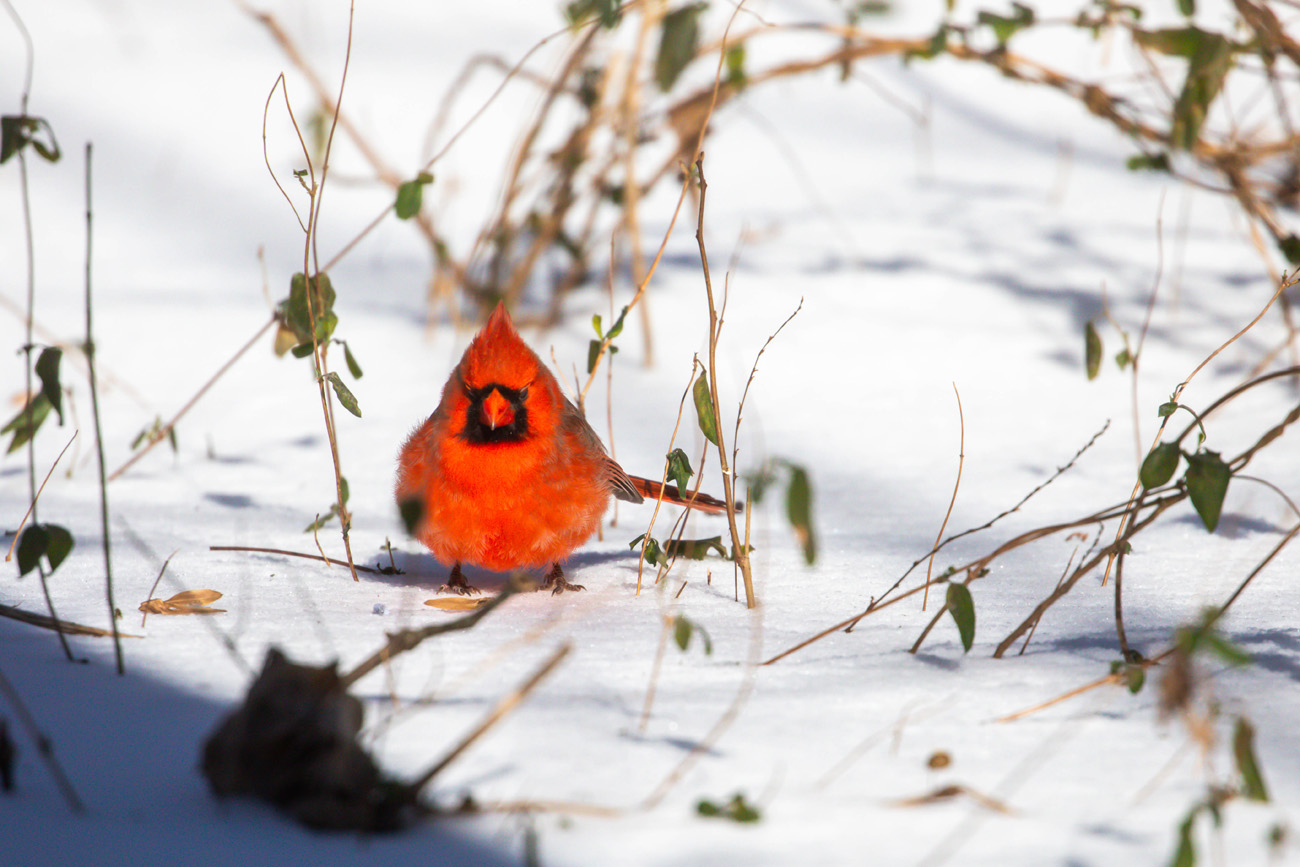
This Northern cardinal photo goes out to anyone who’s ever been Having A Day, dropped their snack on the ground, and given it a withering look before ultimately eating it anyway. A hard-earned snack leaping out of one’s mouth: the ultimate betrayal.
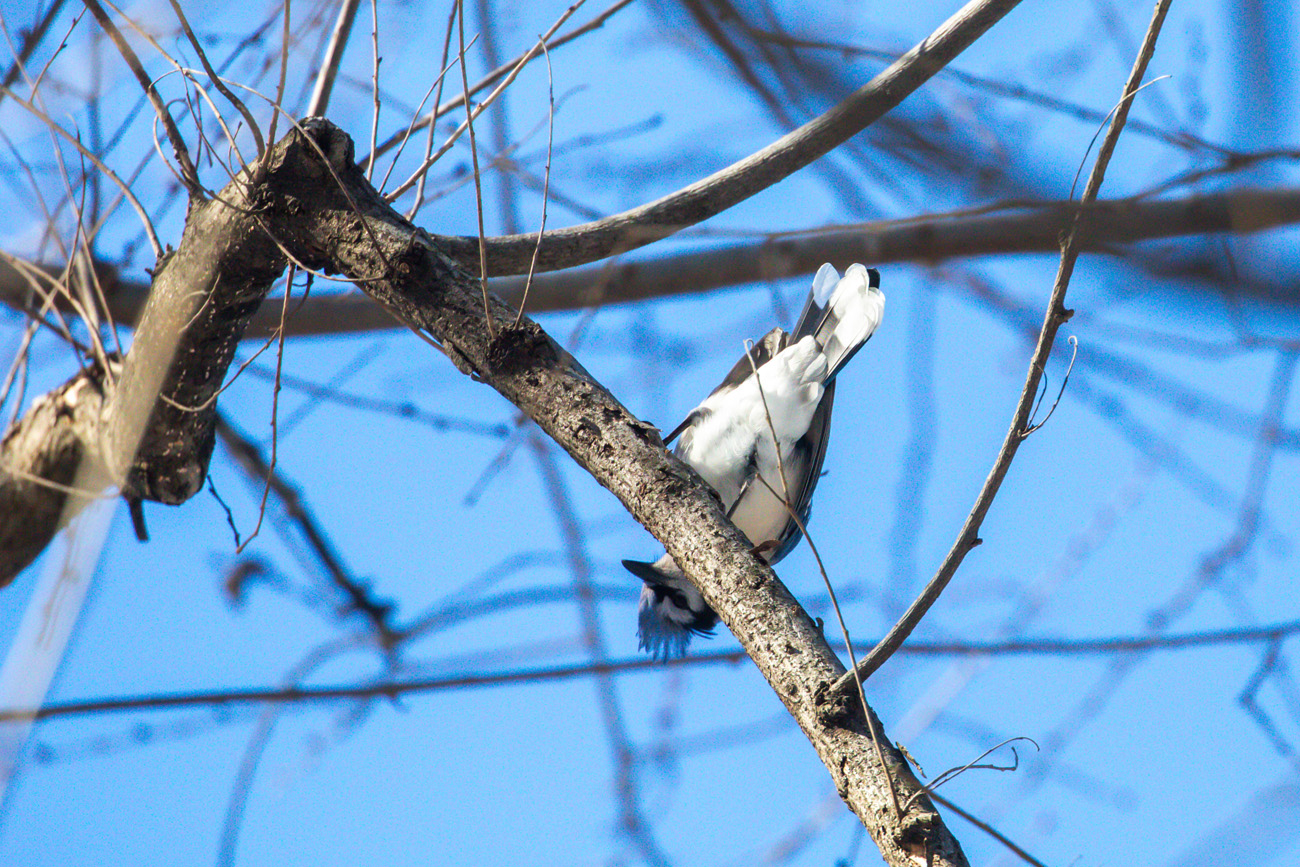
The best part about a blue jay using a tree branch as a tilt-a-whirl is the way it accentuates an already-standout hairdo.
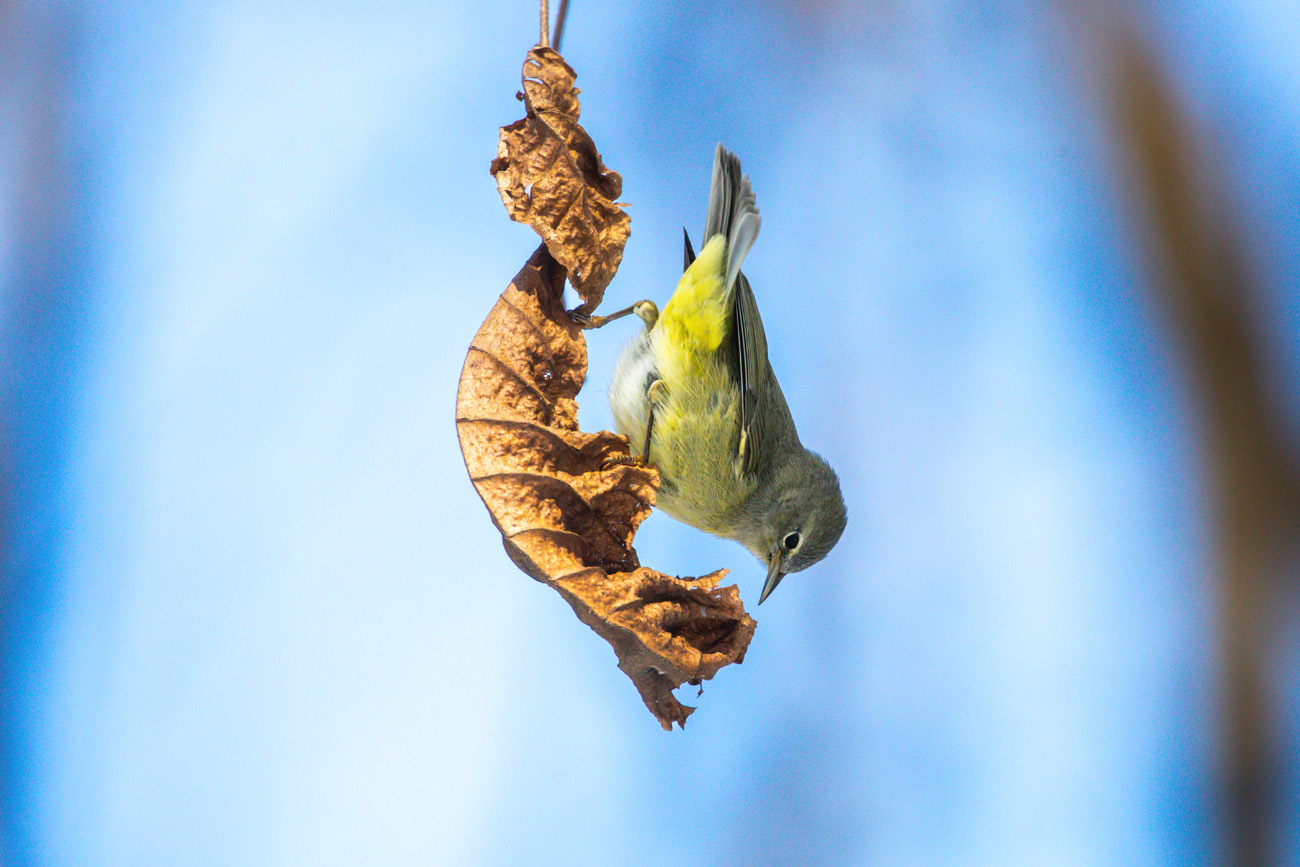
Also living in the upside-down was this orange-crowned warbler. This species’ commitment to a dry hanging leaf means that while they’re not super-easy to find, once you locate one you can lock in for a while. They’ll spend several minutes poking through all the leaves in a tree, hoping to turn up some tiny insects.
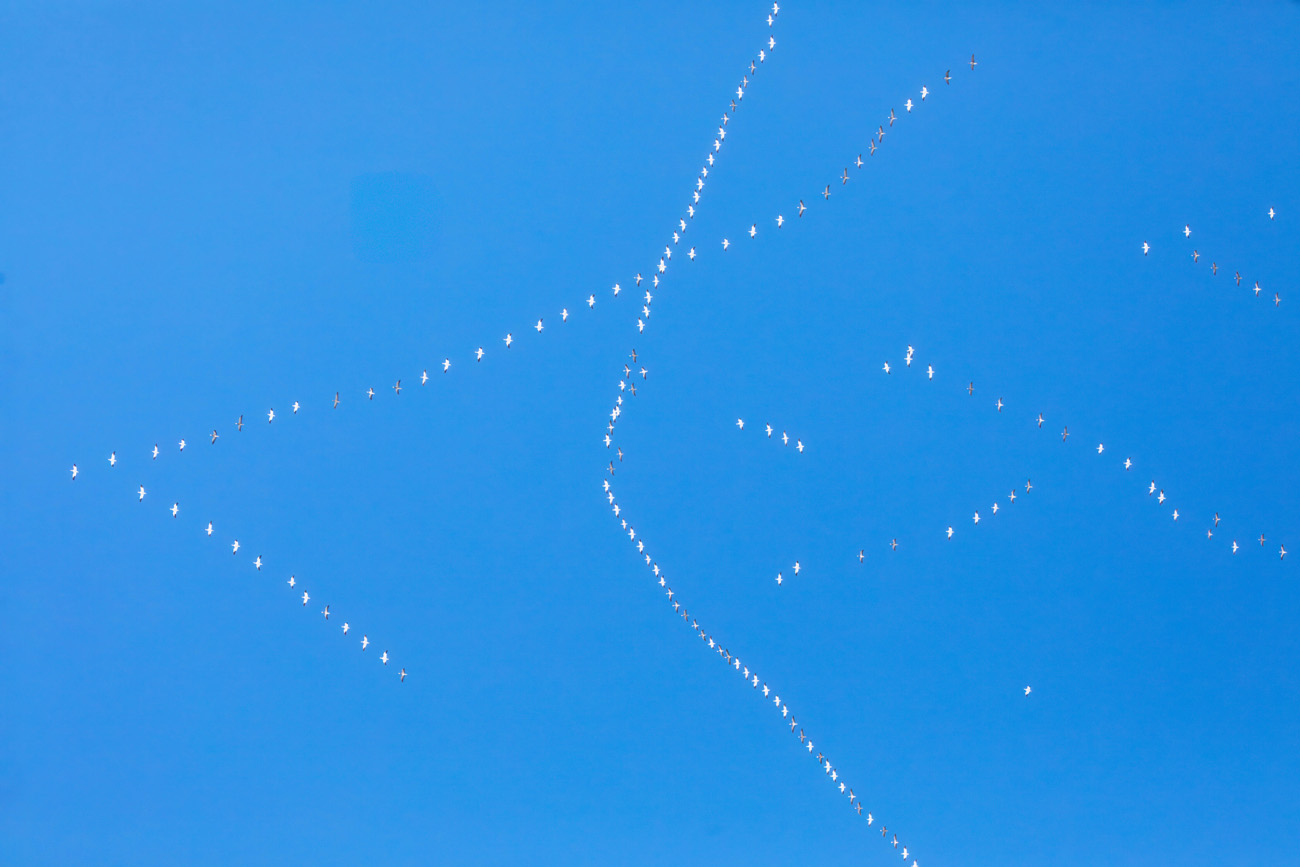
Upon stepping out of the forest and onto the Greensward, we looked overhead to see the majestic flight of hundreds of snow geese passing through. They’re not actively migrating at the moment, but they still fly out in flocks to search for either open water or unharvested agricultural fields where they can forage on grain.
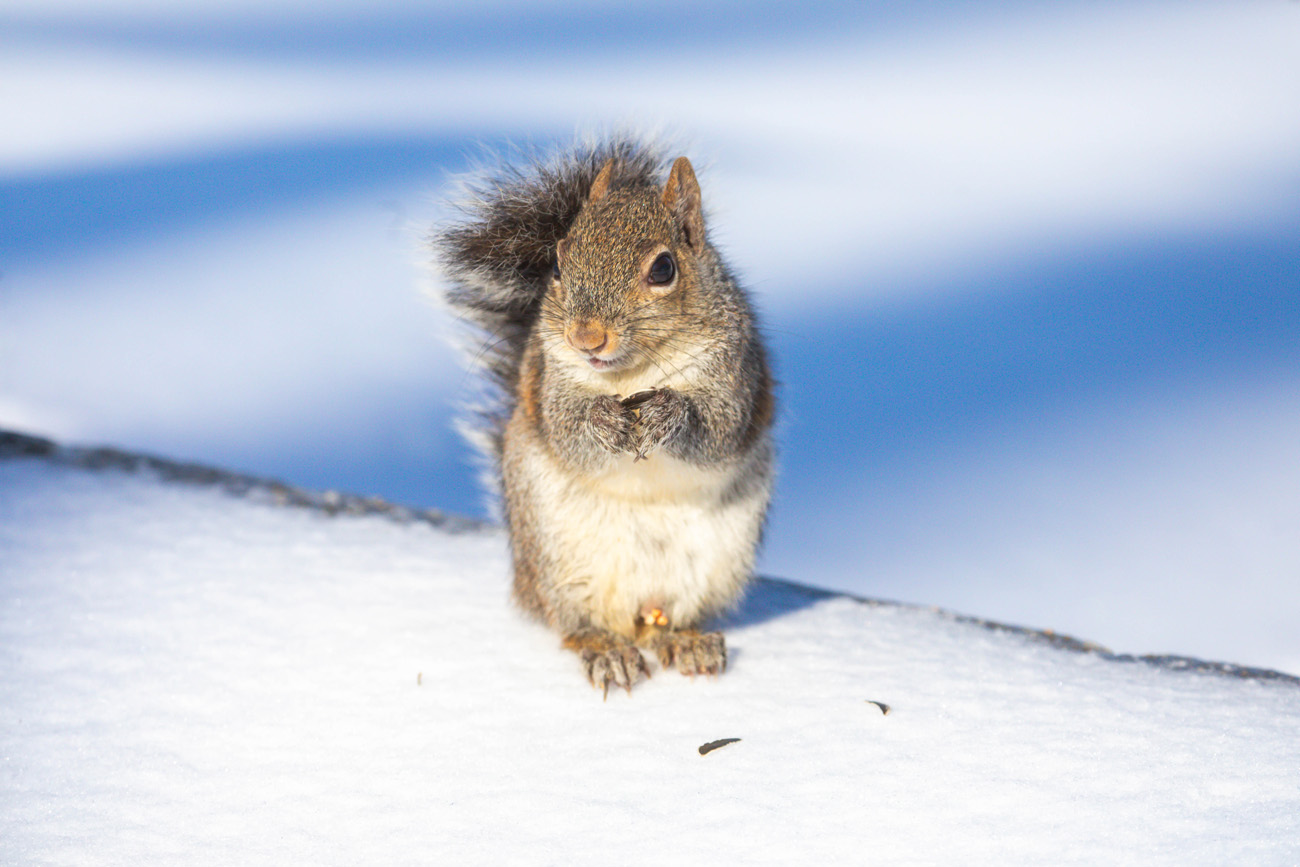
When the geese had passed through, we looked down and saw this Eastern gray squirrel attempting to be adorable and ask for food. Normally the Overton Park squirrels are fairly shy around humans, but the snow has created a bit of desperation. When you normally use a park trash can as a vending machine and there aren’t very many people throwing things away, you may have to cut out the middle-can and ask a human directly.
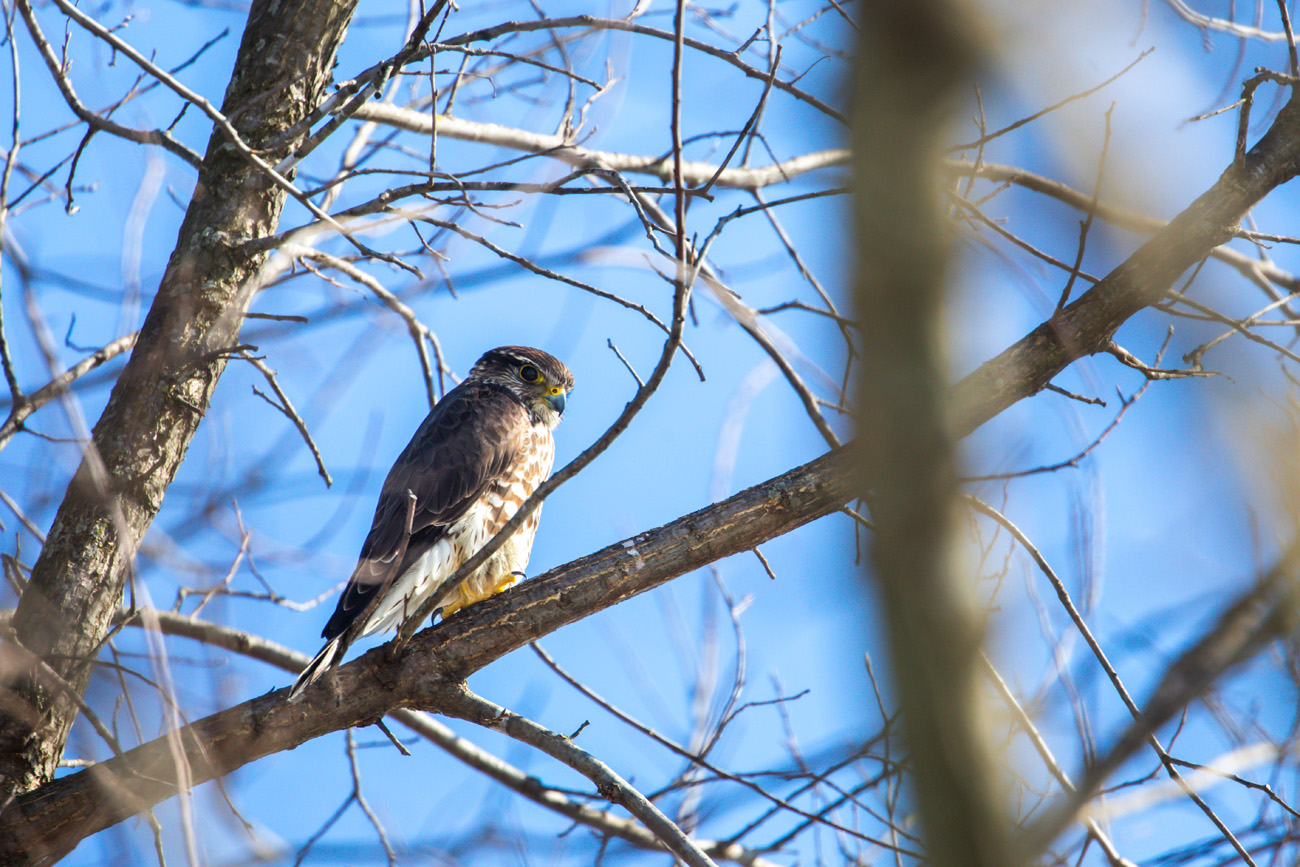
As the roads got a little better during the week, we decided to venture over to the area around Shelby Farms Park. We searched for, and did not locate, a rare tree sparrow under the watchful eye of this merlin. A compact little falcon, this bird would have happily eaten our target by using a speedy surprise attack. Let’s hope it went for a house sparrow instead.
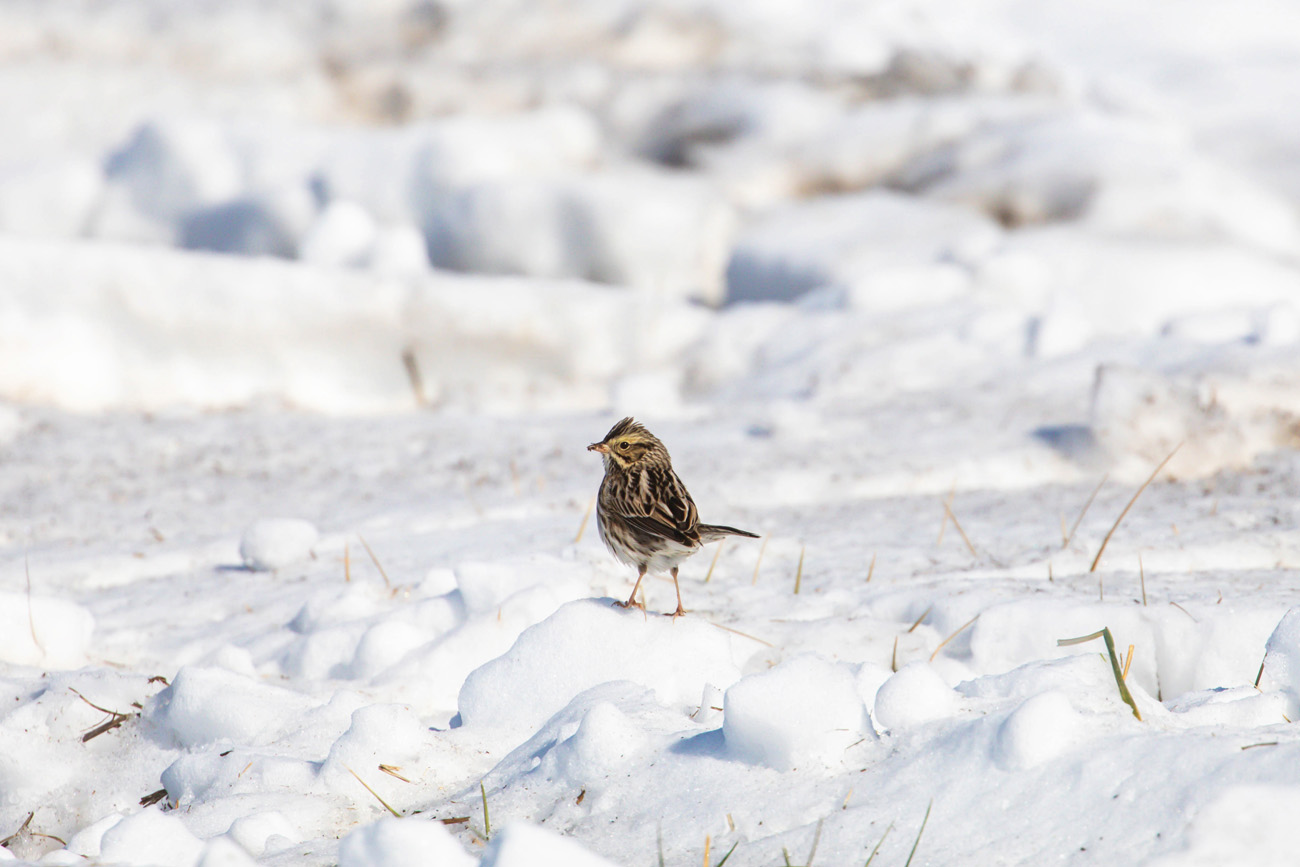
In another area bordering the park, we had a blindingly-white snow field at our disposal. I love to scan a big open area when it’s covered in snow, because sometimes it’s the only way to reveal birds that otherwise blend in with the brown grass of a field. The first bird I saw was a Savannah sparrow, which is a common denizen of this area. Better keep looking…
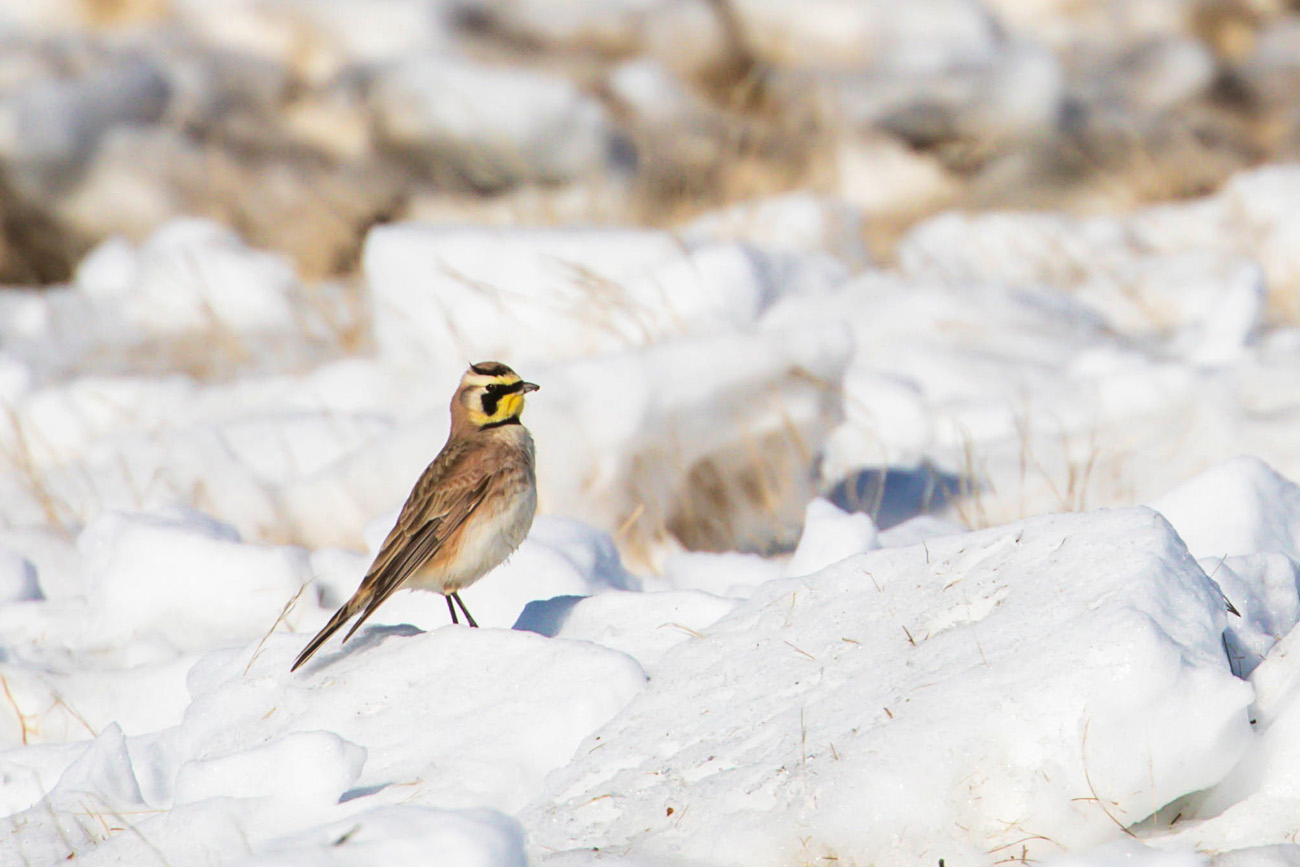
A tiny glimpse of yellow, and I knew I had something fun: the American Birding Association’s 2026 Bird of the Year, the horned lark! Although you can theoretically find these birds here year-round, I have only ever laid eyes on them when it snows. They love short grasses, which contain both seeds and insects, and they often hang out in big groups in the wintertime. They’re the only true larks native to North America, and as far as I know they’re the cutest birds with little devil horns in the world.
I’d picked out a lark or two, but the flock just kept getting bigger, as more little brown birds started to fly into a small patch of exposed grass. The warbling sound coming from the sky didn’t suggest our usual sparrows, so I waited for them to settle in hopes that they were special winter visitors: lapland longspurs!
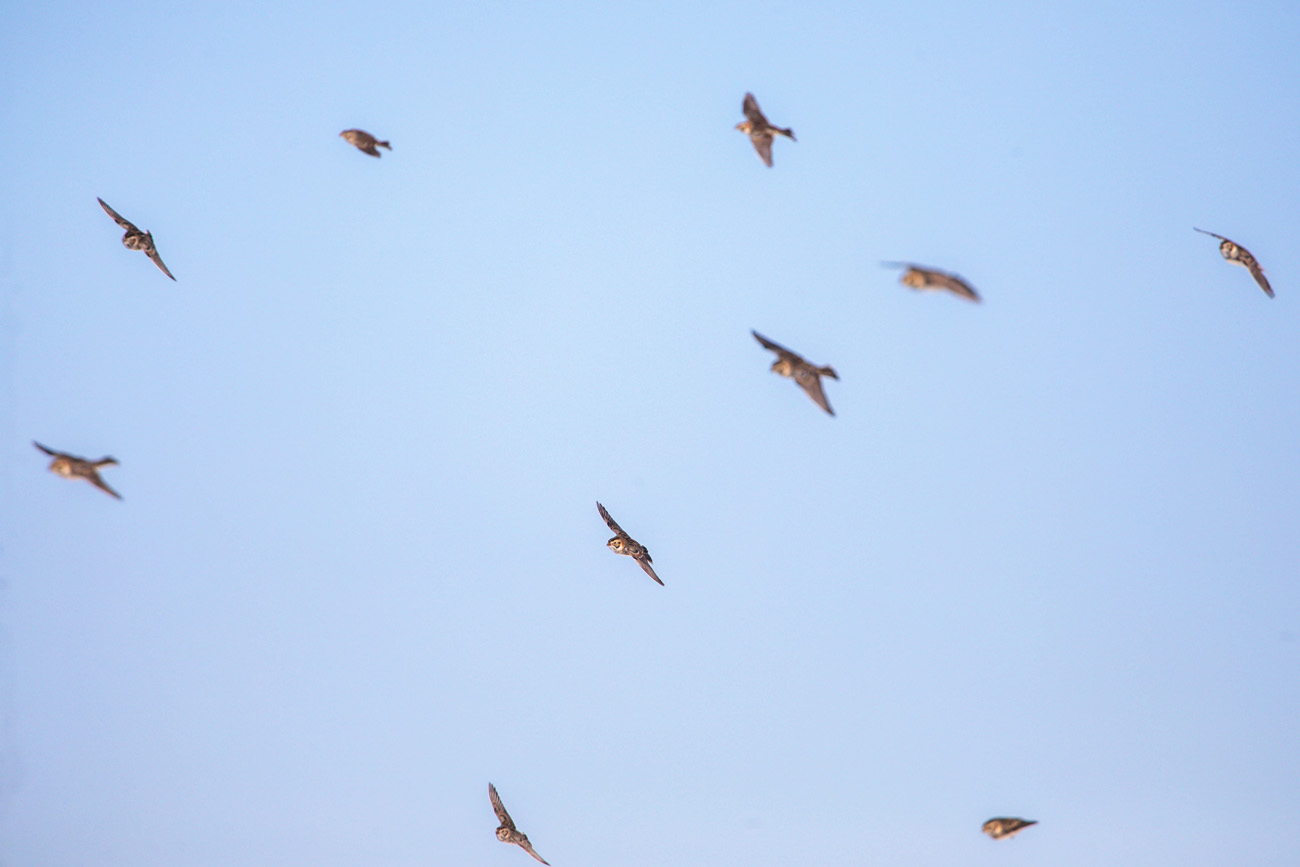
Sure enough, there were dozens of them–dozens! The small sparrow-like birds descended to the ground, many of them quickly disappearing against the mud and brown grass. They’re social birds (some winter longspur flocks have contained millions of birds), and they mixed freely with the larks and sparrows. Someday I’d love to go up north in the summer and see one in full breeding plumage, but even in winter I think they’re so lovely: a chest that looks like it’s been rendered in charcoal, a curlicue on their faces, and a pretty red neck. (This is perhaps the first paragraph in the English language that has referenced both “Arrested Development” and Sammy Kershaw’s “Queen of My Double Wide Trailer” whilst describing a bird. May I earnestly say: I hope it won’t be the last.)
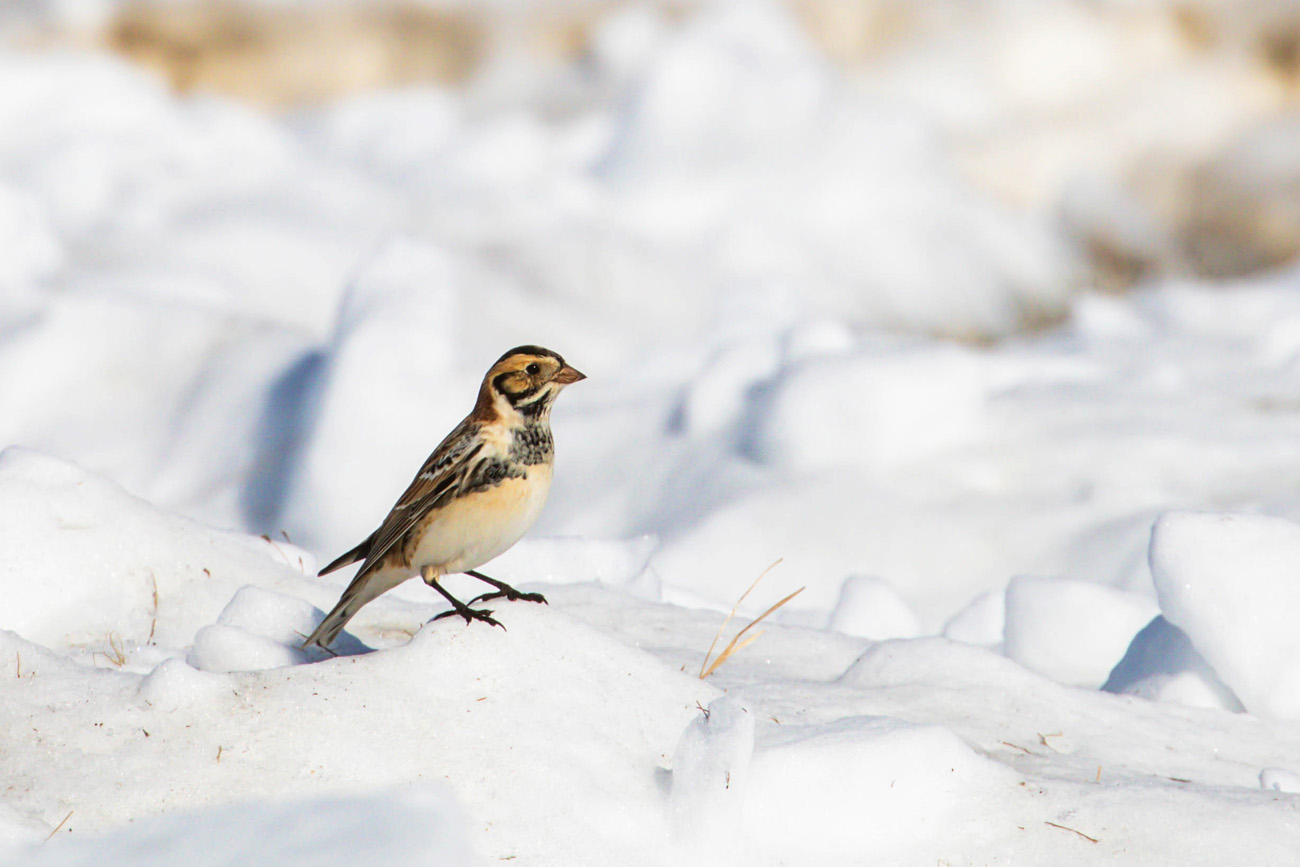
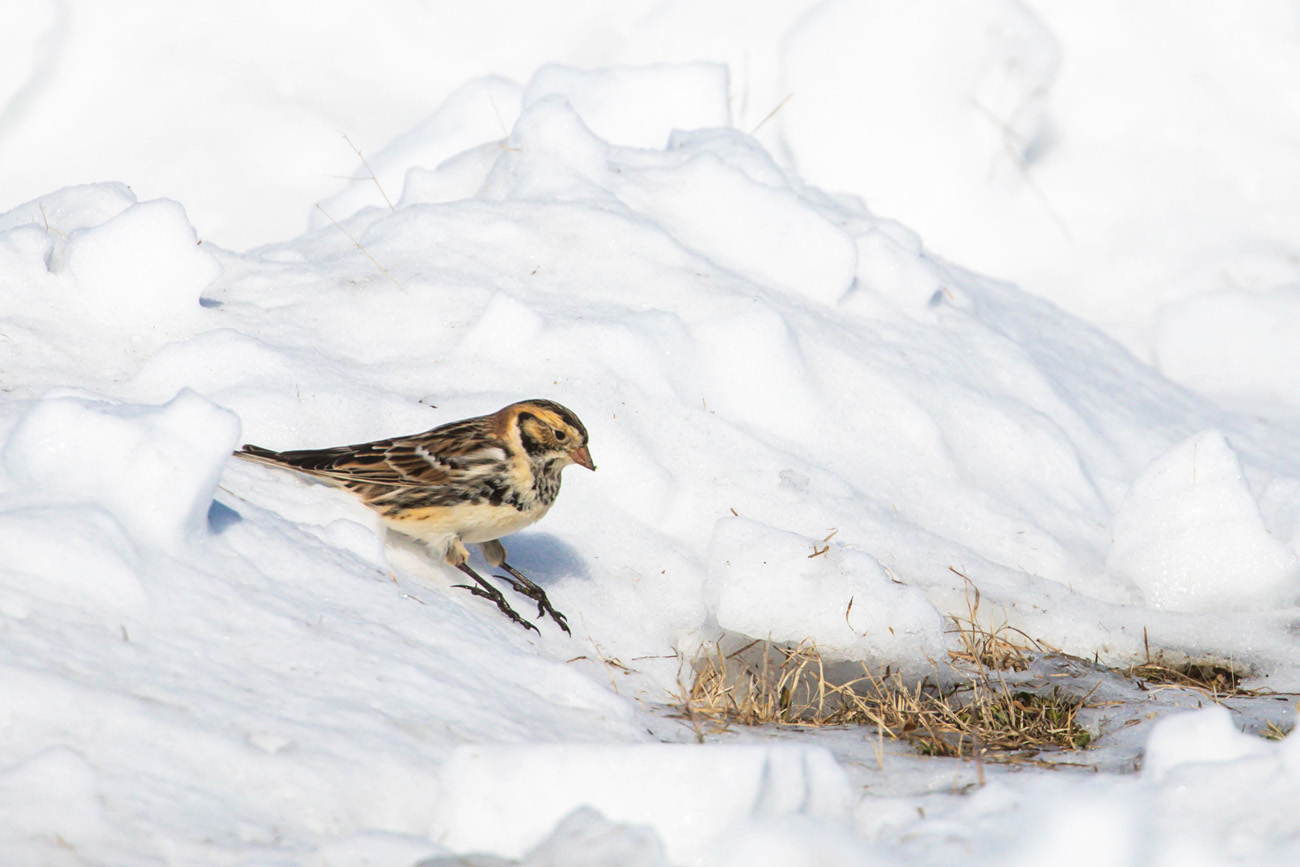
I soaked up their presence for a long time, and I learned that even a seasoned snow-foraging bird can slip on the ice–and in this case, one bird did me a favor. I’ve always wondered why they were called longspurs, and you can see in this photo that it’s because their back claws are considerably longer than their front ones. The better to catch yourself when you’re unexpectedly barreling down Sleet Mountain.
While I’m looking forward to the snow melting soon, I’ve enjoyed taking a few moments to appreciate how it exposes what’s otherwise hiding in the landscape. I hope you’ve had a chance to see something unusual over the last week too!