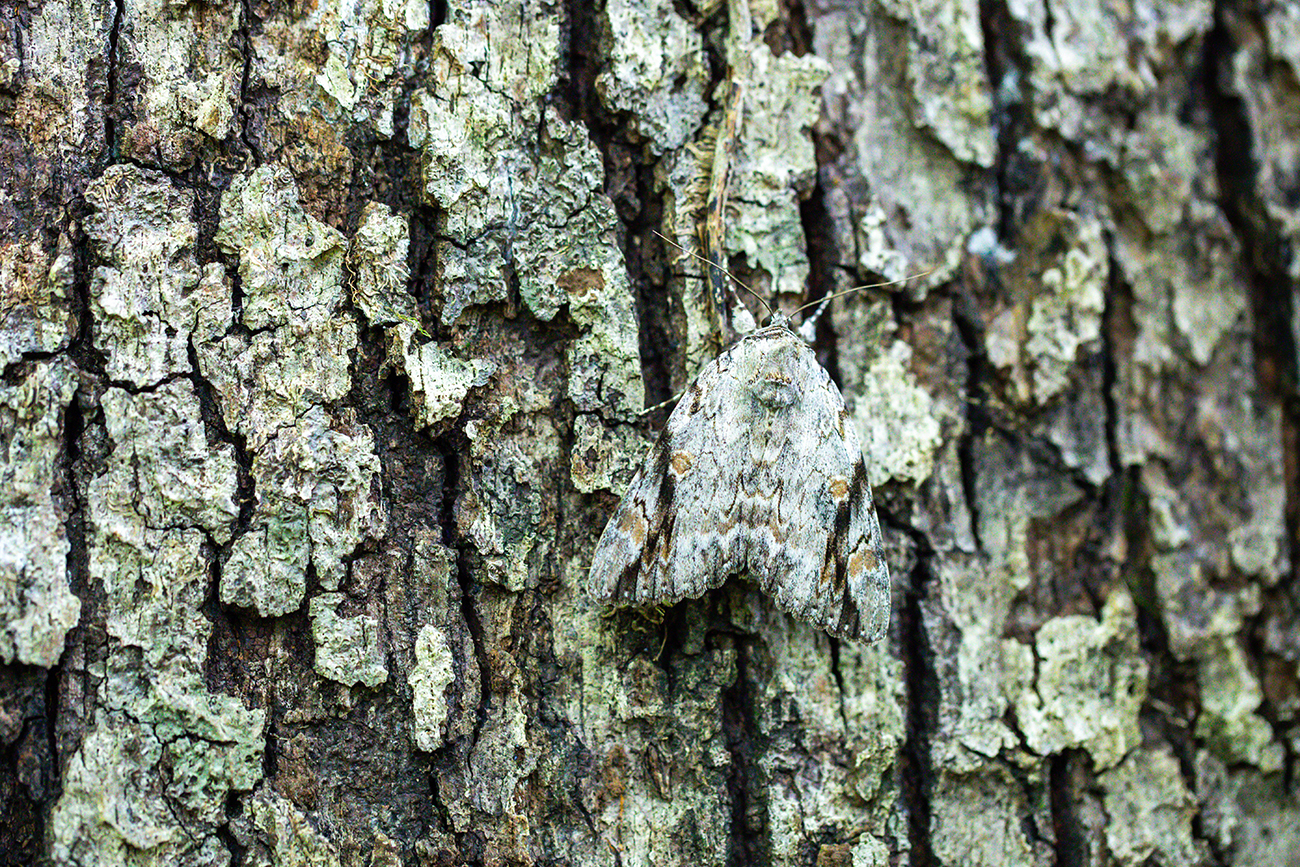
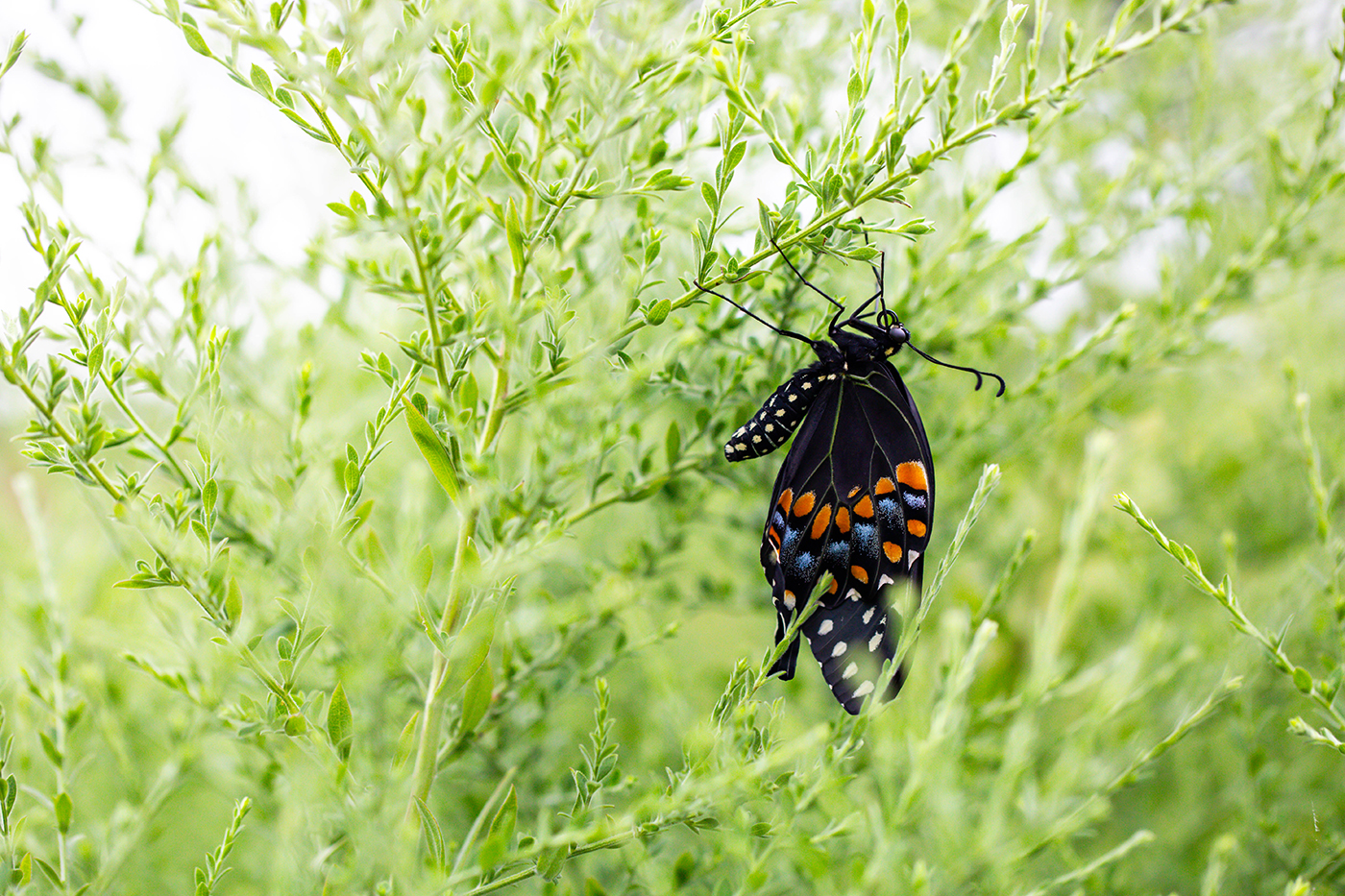
words and photos by Melissa McMasters
While we all await the reds and golds of November’s changing leaves, I’ve been immersing myself in a different set of fall colors: the pastel palette of the aster family. One of the largest plant families in the world (challenged only by orchids), Asteraceae contains more than 32,000 known species of sunflowers, daisies, thistles, goldenrods, and more…and they’re magnets for both caterpillars and adult pollinators. Entomologist and author Doug Tallamy groups asters with oaks as plants that support the greatest number of butterflies and moths.
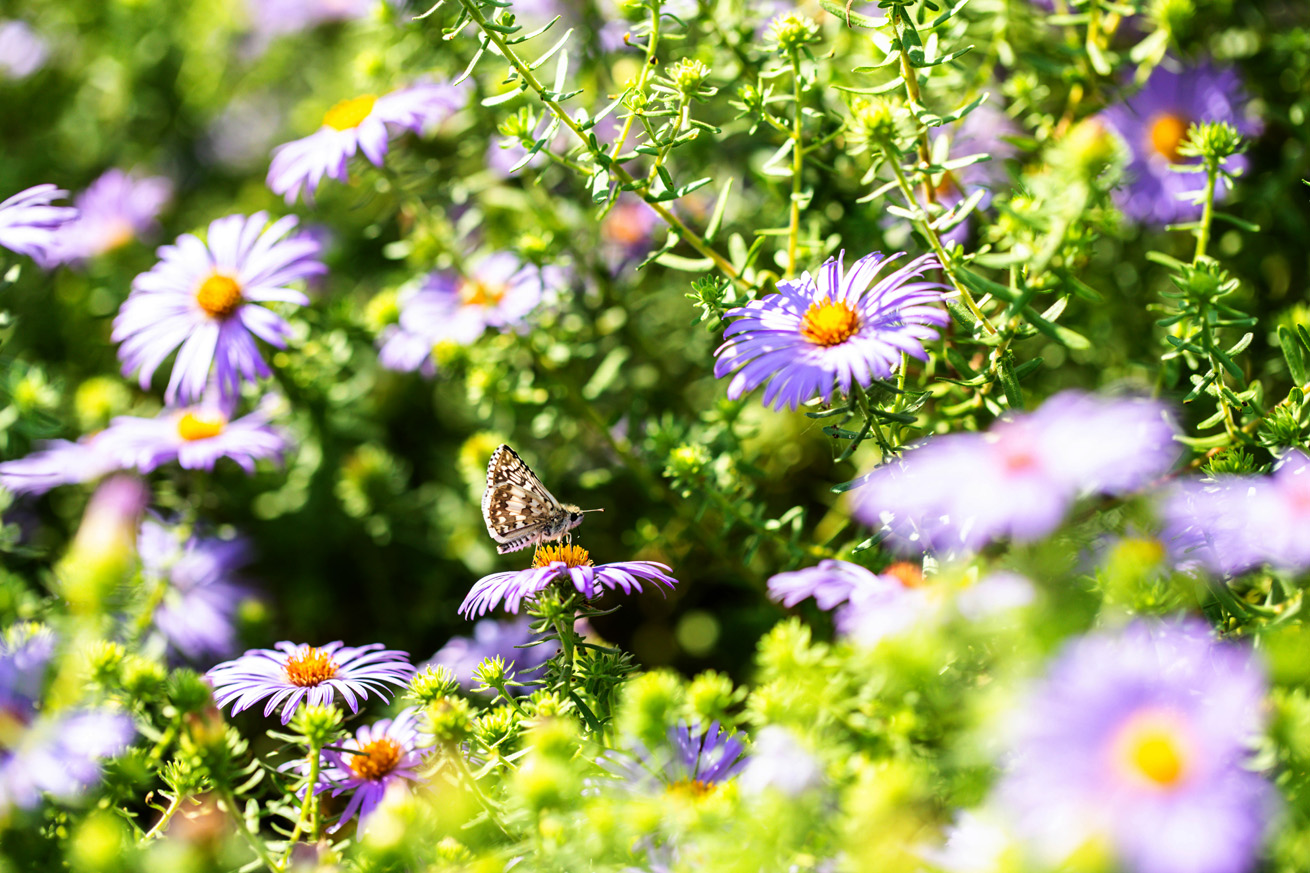
Common checkered-skipper on aromatic aster
Asters are particularly wonderful plants for a native garden because of their late bloom time. It’s why we added three species–smooth blue aster (Symphyotrichum laeve), aromatic aster (Symphyotrichum oblongifolium), and hairy white oldfield aster (Symphyotrichum pilosum) to the beds at Veterans Plaza. After the milkweeds and fennel have gone to seed, these cheerful flowers are just getting ready to open, providing a nectar source for insects that are still scrambling to stock up on food that will allow them to survive the winter.
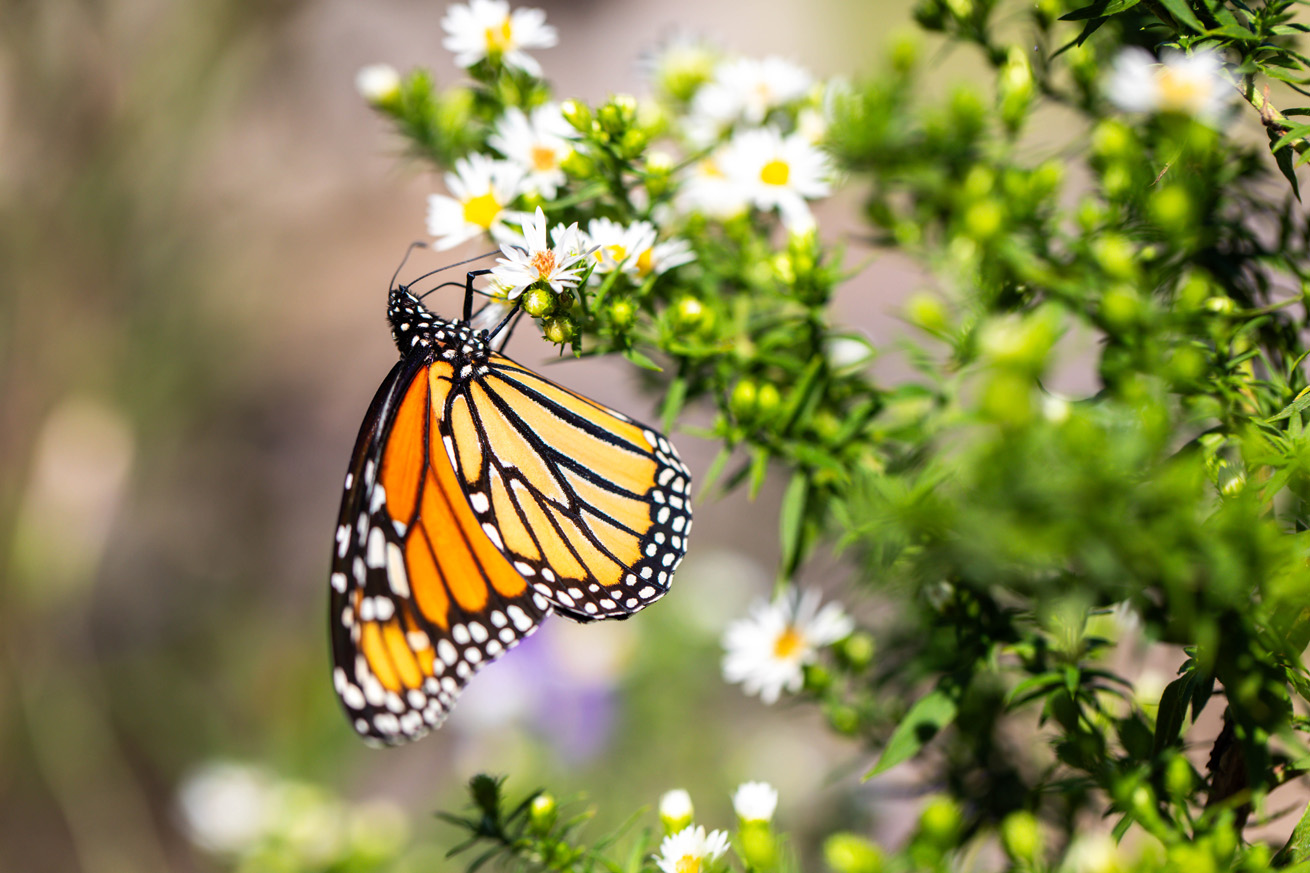
This monarch, on its way south, will need fuel for the journey and to store as fat that it can use to stay warm if temperatures drop on its winter grounds.
Some bees specialize on flowers in the Asteraceae family, feeding their young pollen almost exclusively from these flowers. Like the bees that we find in springtimevisiting the short-lived blooms in the Old Forest, these bees are dependent on finding specific flowers. This reliance on a particular variety of pollen means that specialist bees have a tougher time surviving than those that can use a wider array of flowers. So when we plant asters, we’re having a big impact on some gorgeous little bees: in Tennessee, nine of the top ten types of plants that support specialist bees come from the aster family.

Male long-horned bees, like this tooth-bellied long-horned bee on smooth blue aster, are the ones with the showy antennae. The ladies have shorter “horns” but much more bodacious thighs (see below).
Smooth blue aster was the first of our three Symphyotrichum species to bloom, and they were flooded with tiny male tooth-bellied long-horned bees. But after a week or two, the two huge aromatic asters started to bloom, with dozens of flowers doming up to form what looked like shrubs. And then a new species of long-horned bee, generally the last one of the season, flew in. Curiously, where I saw only male tooth-bellieds, I’ve seen only female Drury’s long-horned bees. The only action happening at our aster patch right now is at the buffet.
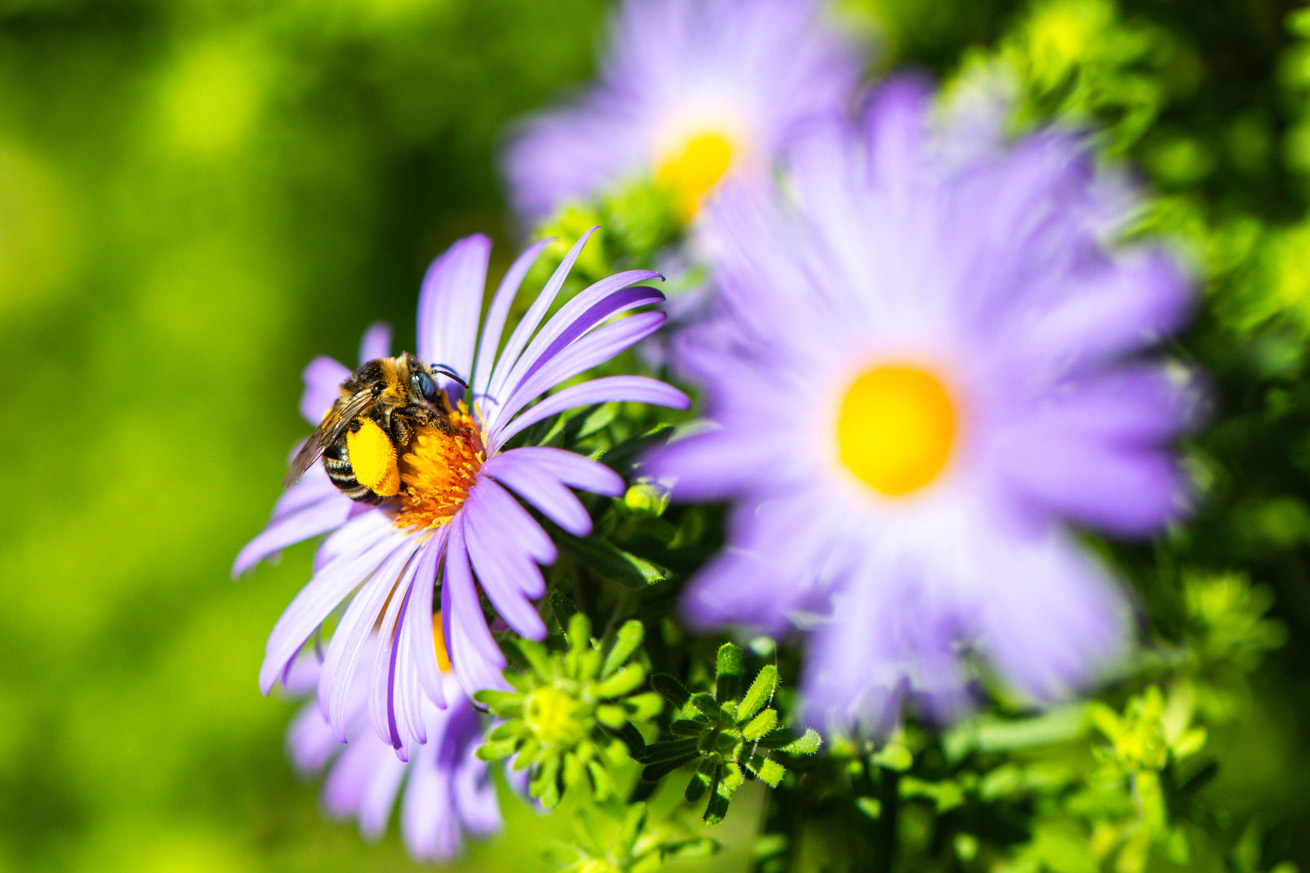
Female Drury’s long-horned bees have a winning combination of electric-blue eyes, a cinnamon stripe between their heads and the black hair on their backs, and yellow pollen pants that are visible from space.
It’s not just the specialist bees that love asters. The most abundant bee at the gardens right now is the common Eastern bumble bee. Although it’s the smallest bumble bee in our area, it’s also the hardiest; these bees emerge early in the spring and hang around after all the other species have disappeared for the season.
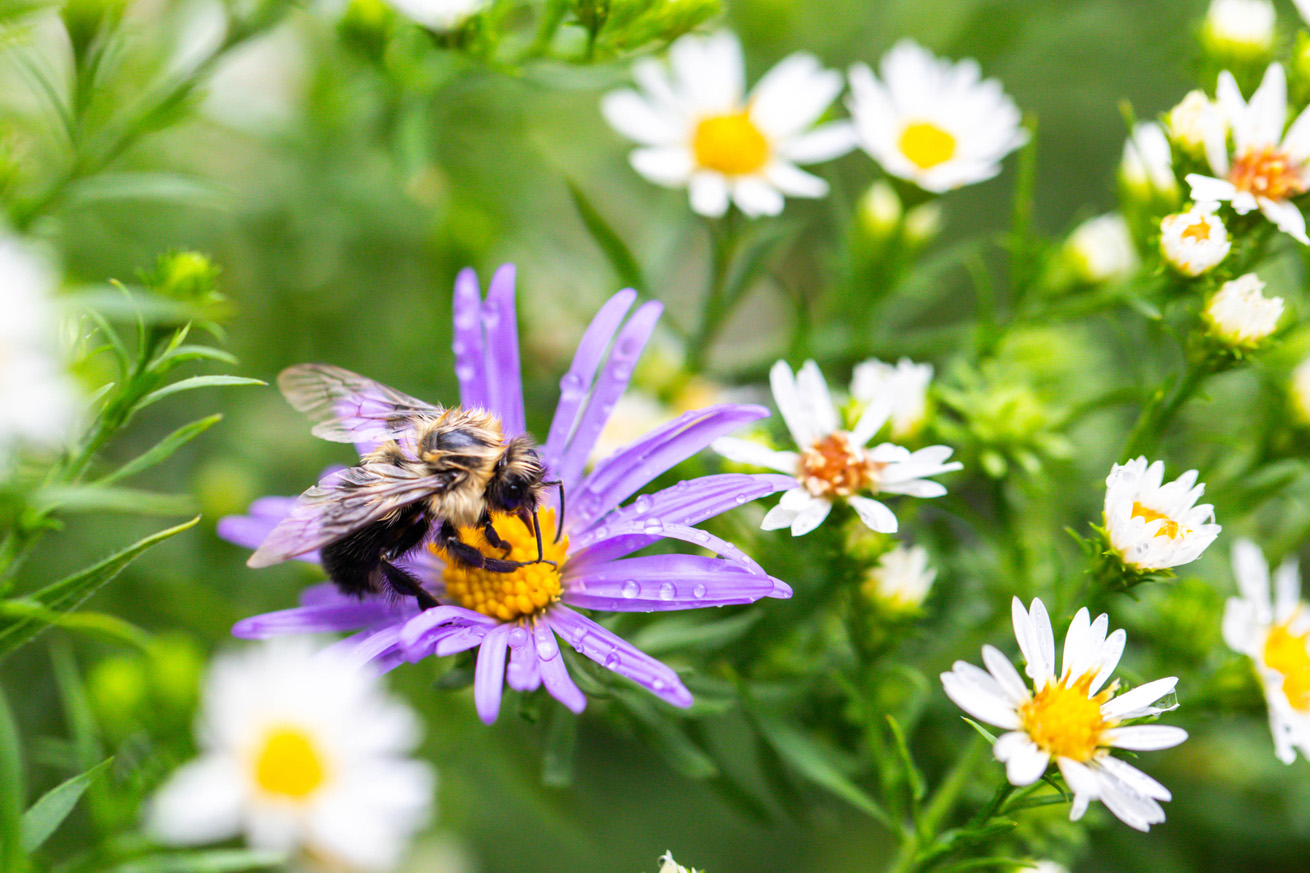
Can I be forgiven for saying I think this rained-on bee with its mussed hair looks a bit like ALF? Or a member of an early-aughts boy band?
The common Eastern bumble bee’s counterpart on the butterfly side may just be the gray hairstreak: wide-ranging, smaller than most of its peers, on the wing from early spring through late fall, and happy with just about any food source. Because both adults and caterpillars feed from a wide variety of plants, this butterfly can be quite a successful breeder, with three or more generations each year. That explains why this October individual on hairy white oldfield aster is so fresh and shiny: it’s brand-new!
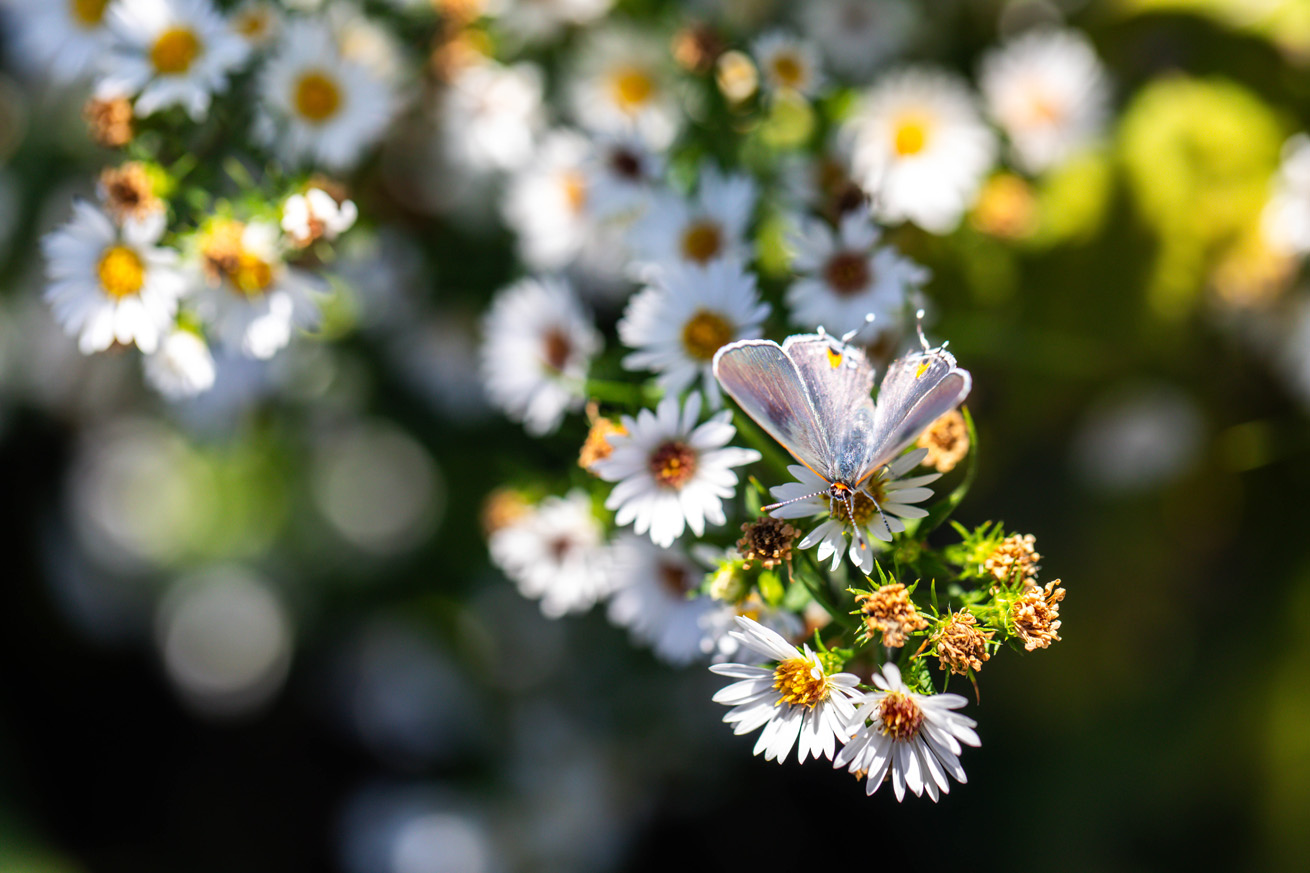
I don’t often see hairstreaks with their wings open, but the morning was a bit chilly so this one was sunbathing while drinking. Asters: the all-inclusive beach resort for landlocked butterflies.
The aromatic aster plants each have so many flowers that they begin to run together, but one day I noticed an unusual bloom that looked like two flowers had fused together. This is due to a genetic anomaly called fasciation, in which some cells flatten and stretch while a plant is developing. This can manifest as twinned flowers like I saw, but also as coiled stems, bunched leaves, or fan-like crests. Fasciation can be caused by various factors that interrupt a plant’s development (like bacteria, insects, or mechanical damage), but it doesn’t actually damage the plant and it’s not likely to occur year after year. But I’ll definitely be watching next year to see if there are any other blooms this display this odd shape!
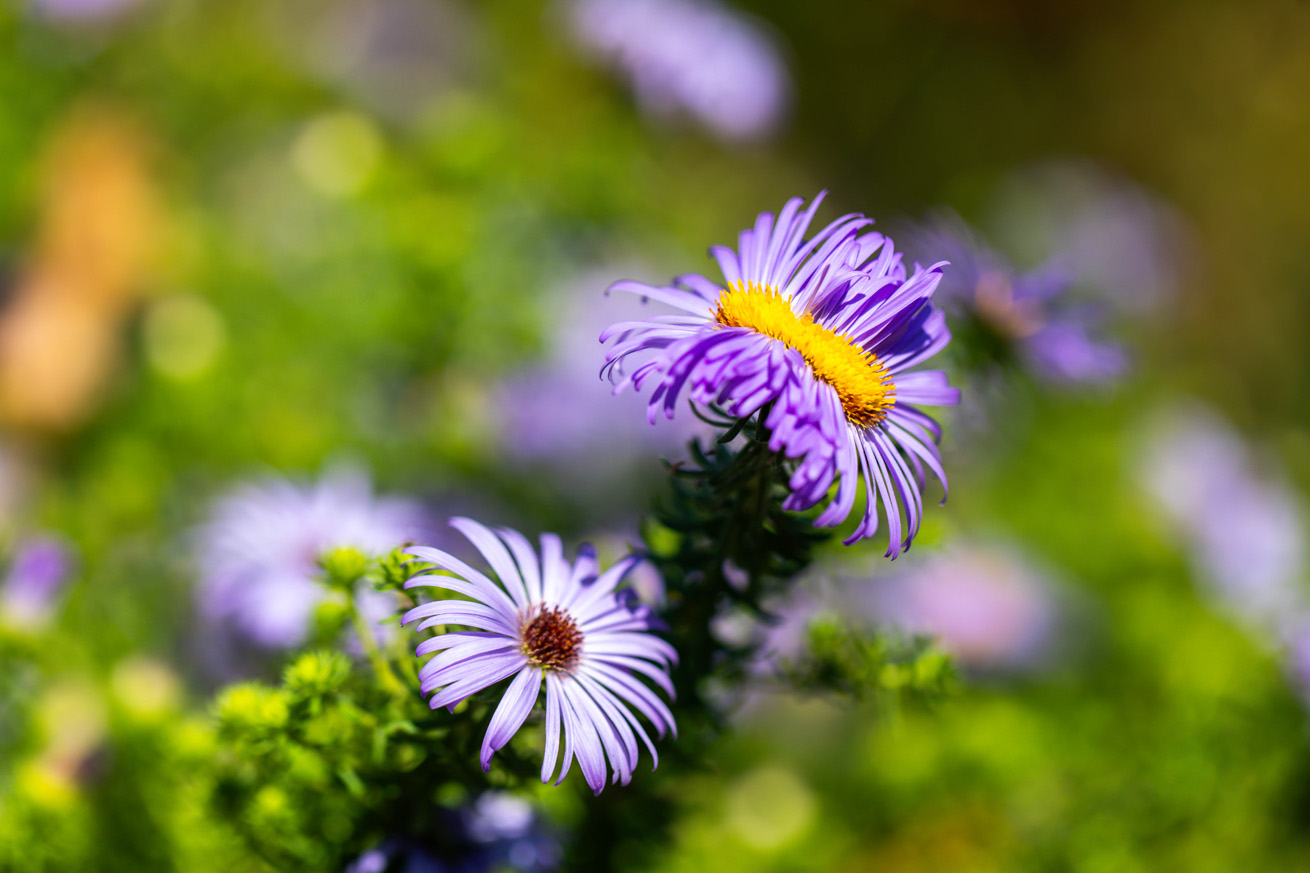
Aside from the occasional fasciation, another thing I love about aromatic aster is that some of its blooms clench up like frilly little fists when they’re done for the year.
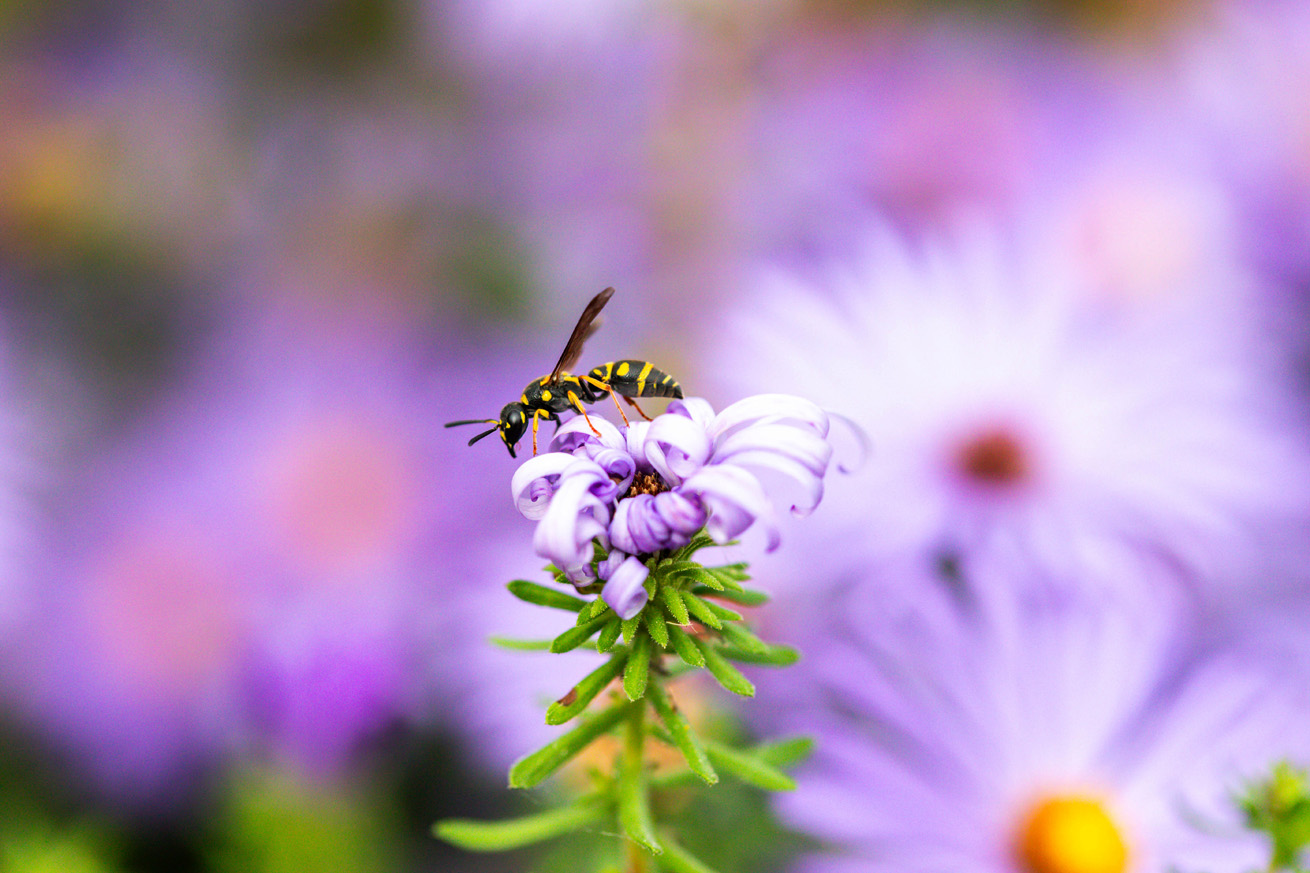
This potter wasp makes its nests inside twigs, so when the garden stops blooming, we’ll leave some stems and leaves so it can overwinter.
Just a few aster plants in our small garden space have kept countless bees, butterflies, wasps, flies, and beetles happy in a time when other food sources are in short supply. They’re a great choice for your home garden, with species that tolerate both shade and sun, and most varieties will come back year after year. Pop by the pollinator garden this week if you need convincing–you might just run into me inspecting a tiny bee on a blossom!