words and photos by Melissa McMasters
It seems like just yesterday that I was walking through the lush spring greenery of the Old Forest, trying to distinguish between the tunes of tanagers, grosbeaks, and robins. Male birds sang these melodies to attract females, pairs formed, nests were built, and a few weeks later, the forest was full of fledgling birds taking their first flights. Now, breeding season is over, birds are already beginning their southward migration, and this summer’s babies are starting to look just like their parents. They grow up so fast!
I lucked into encounters with lots of baby birds this summer, both at home and on vacation. Please enjoy these Awkward Family Photos of the avian variety!
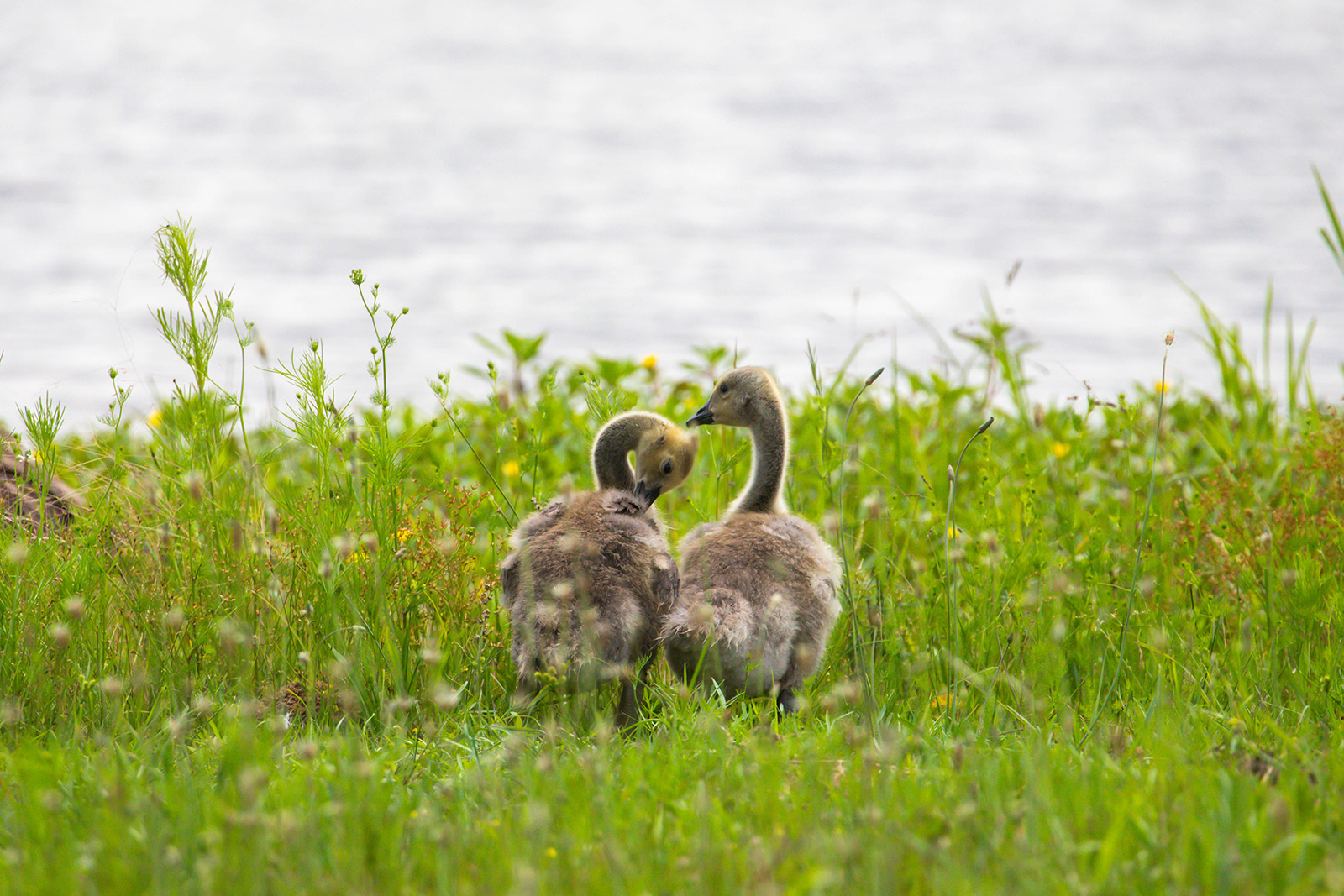
Almost without fail, the first baby birds I see each year are Canada geese at Shelby Farms Park. I’m always amazed at how these golden-headed birds wind up rendered in black and white in adulthood!
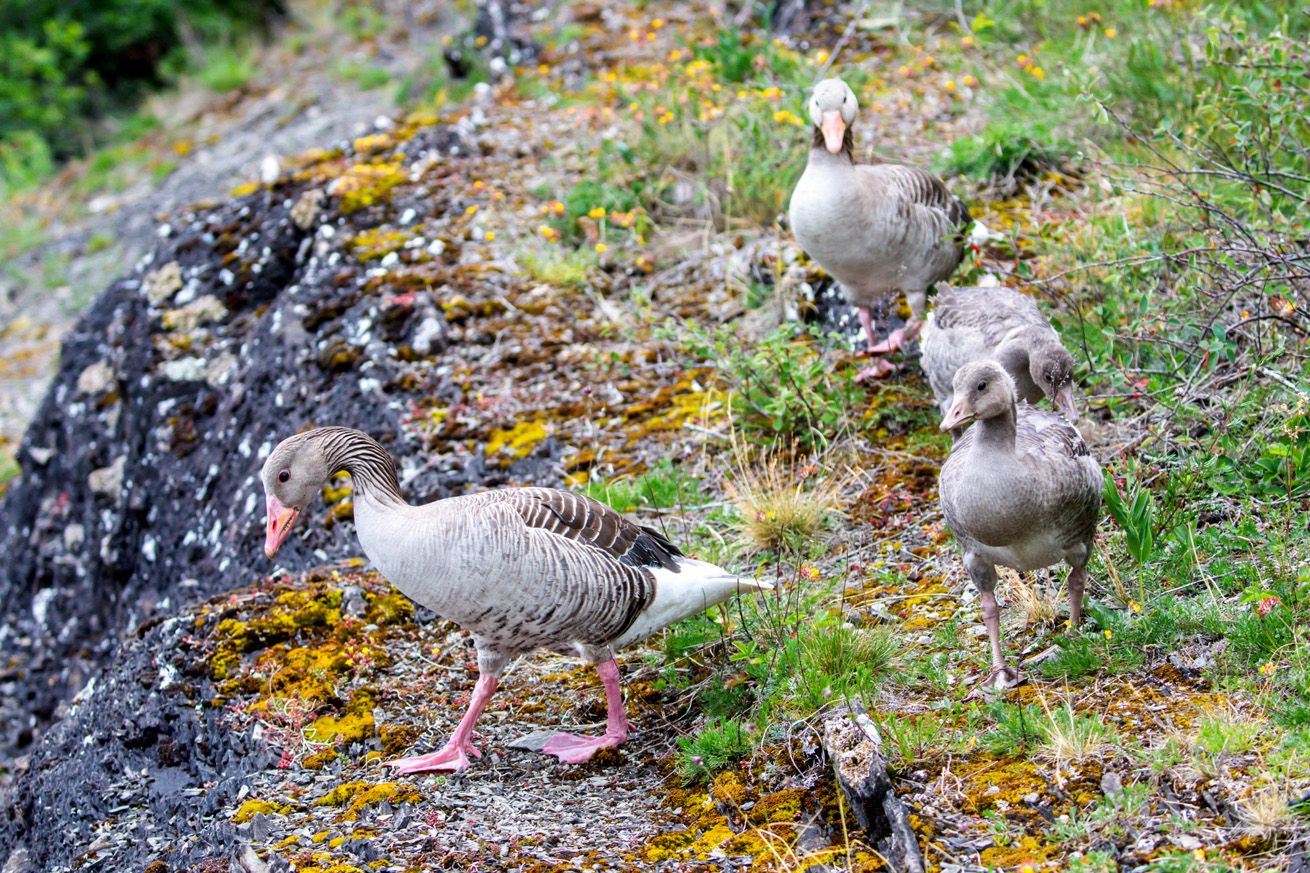
In Norway this summer, I hopped off a ferry onto an island that was inhabited only by me, an increasingly insistent rain shower, and a bunch of geese. These graylag geese (Mom, Dad, and two teens) approached me almost silently before shuffling down a hillside toward the shore.
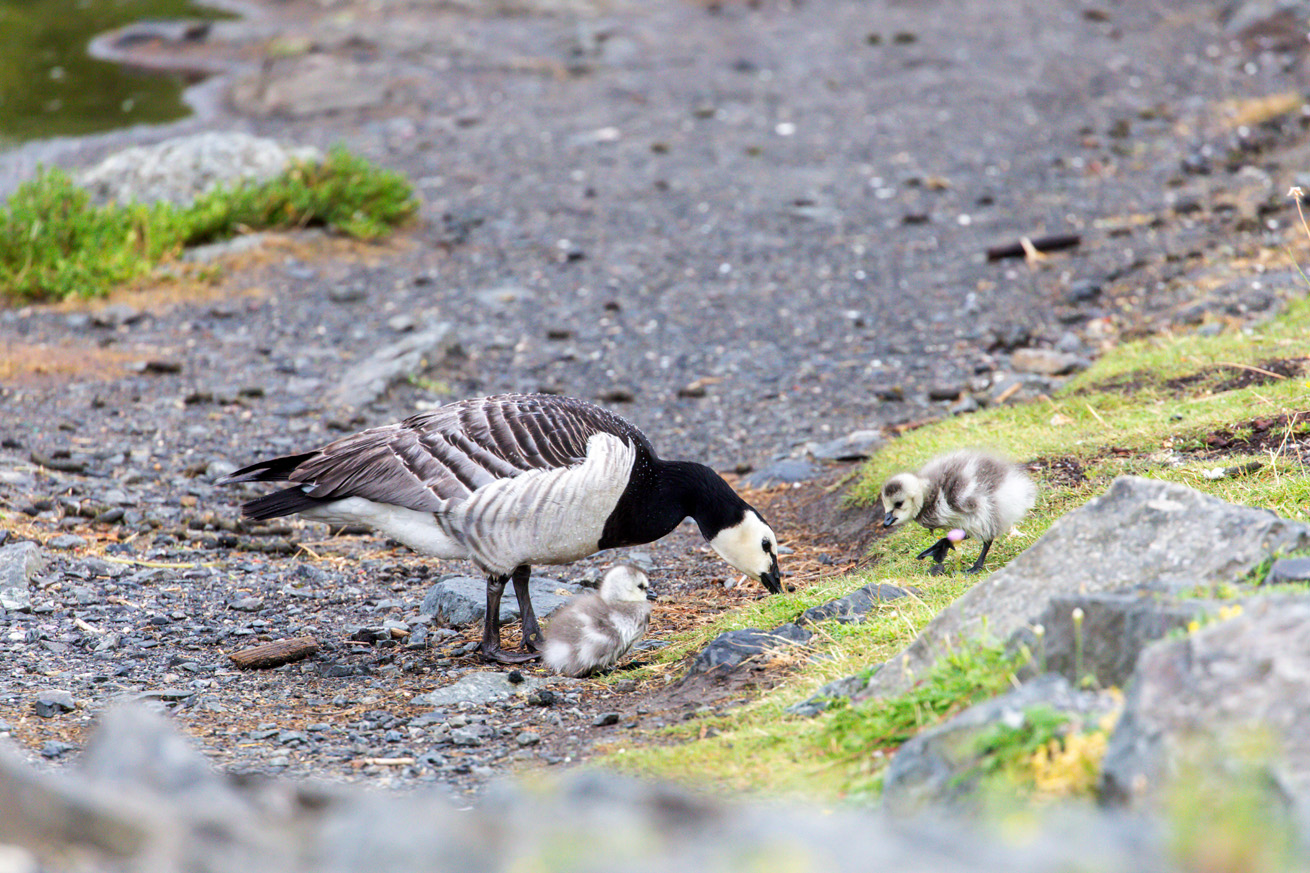
Further into my walk, I encountered barnacle geese parents who were not as sanguine about my presence as the graylags were. They settled down after I revealed myself not to be the type to charge at them, and I got to admire their tiny fluffball children.
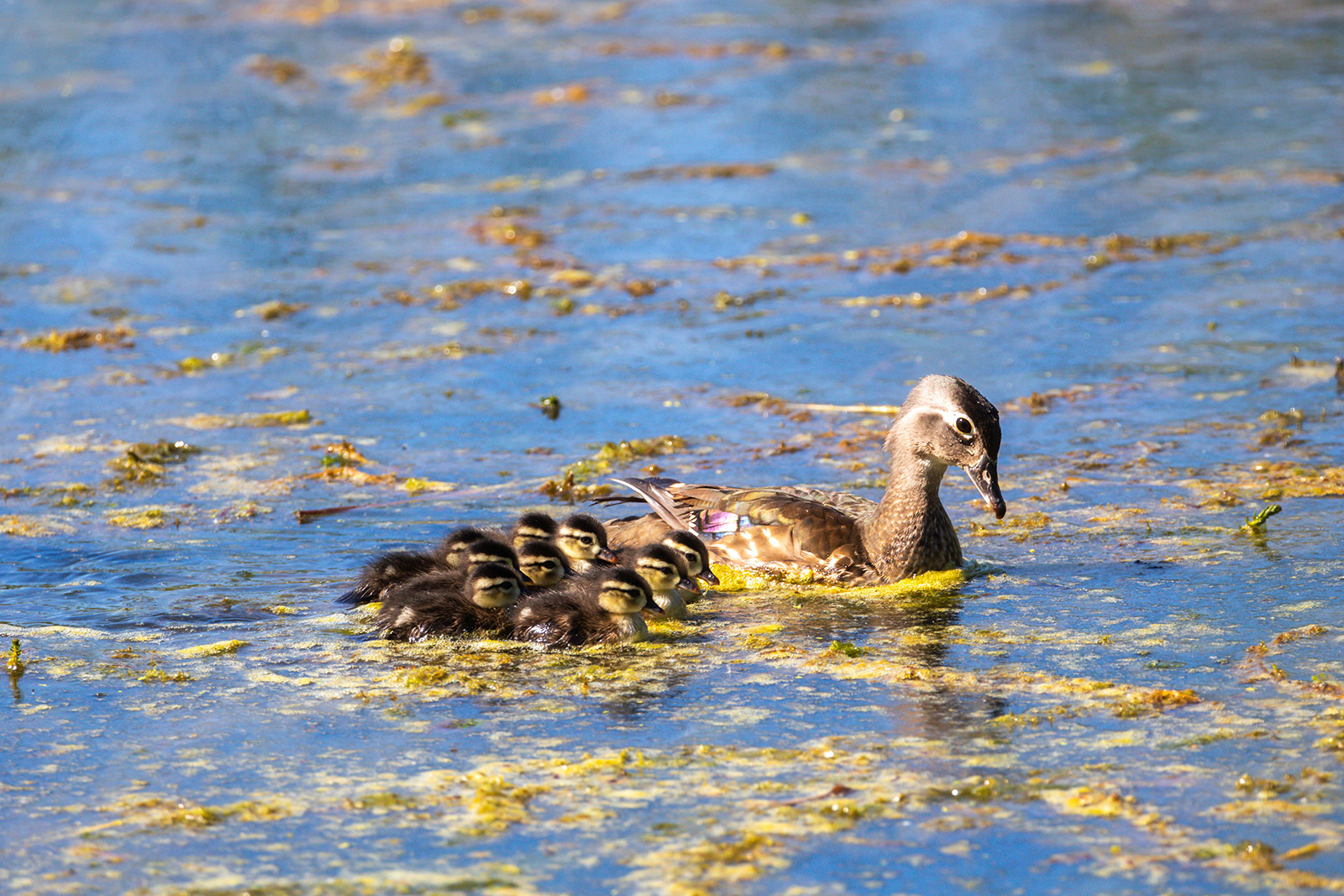
In Chicago this spring, I visited Humboldt Park, where I saw three different families of wood ducks. All of the ducklings stuck tightly to their mothers’ sides, and everyone avoided the one drake who was showily preening by himself.
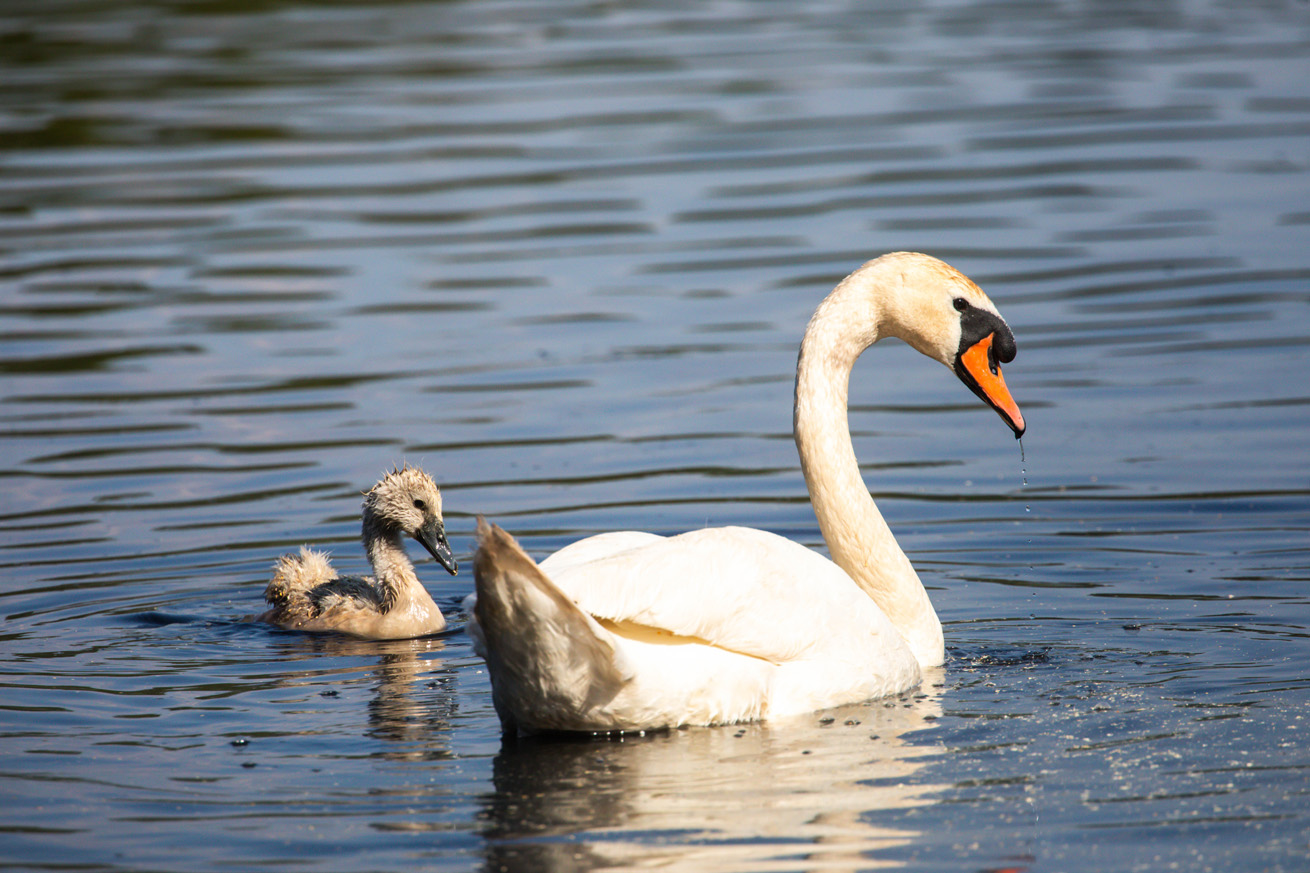
In France, I watched a couple of adult mute swans pecking madly at a large tube for no discernible reason, while their cygnets watched with interest. After I gave up trying to figure out why the adults were behaving that way, the pipes started making a loud noise, and food pellets began shooting out in all directions! I assume the babies will grow up to harass their tube neighbor just like Mom and Dad do.
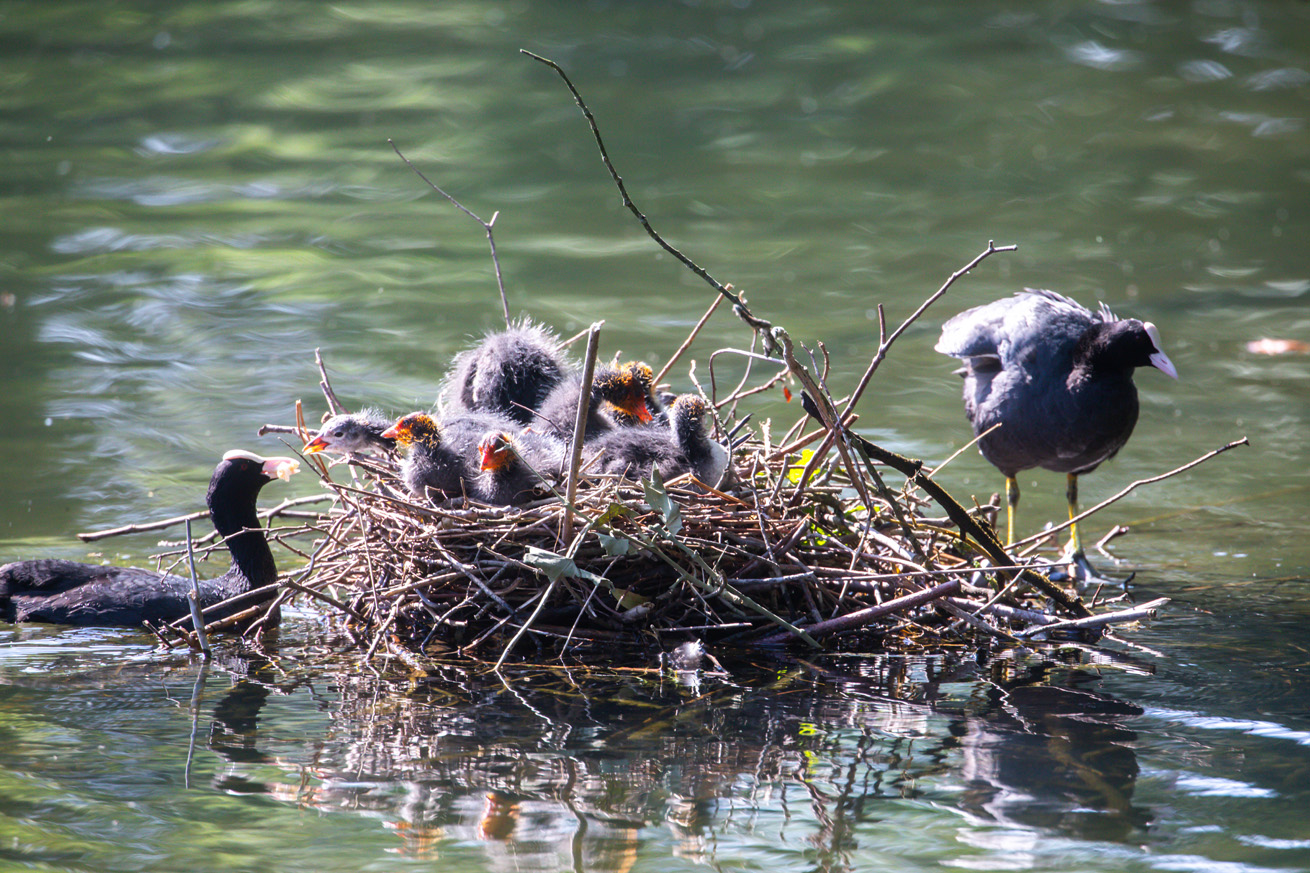
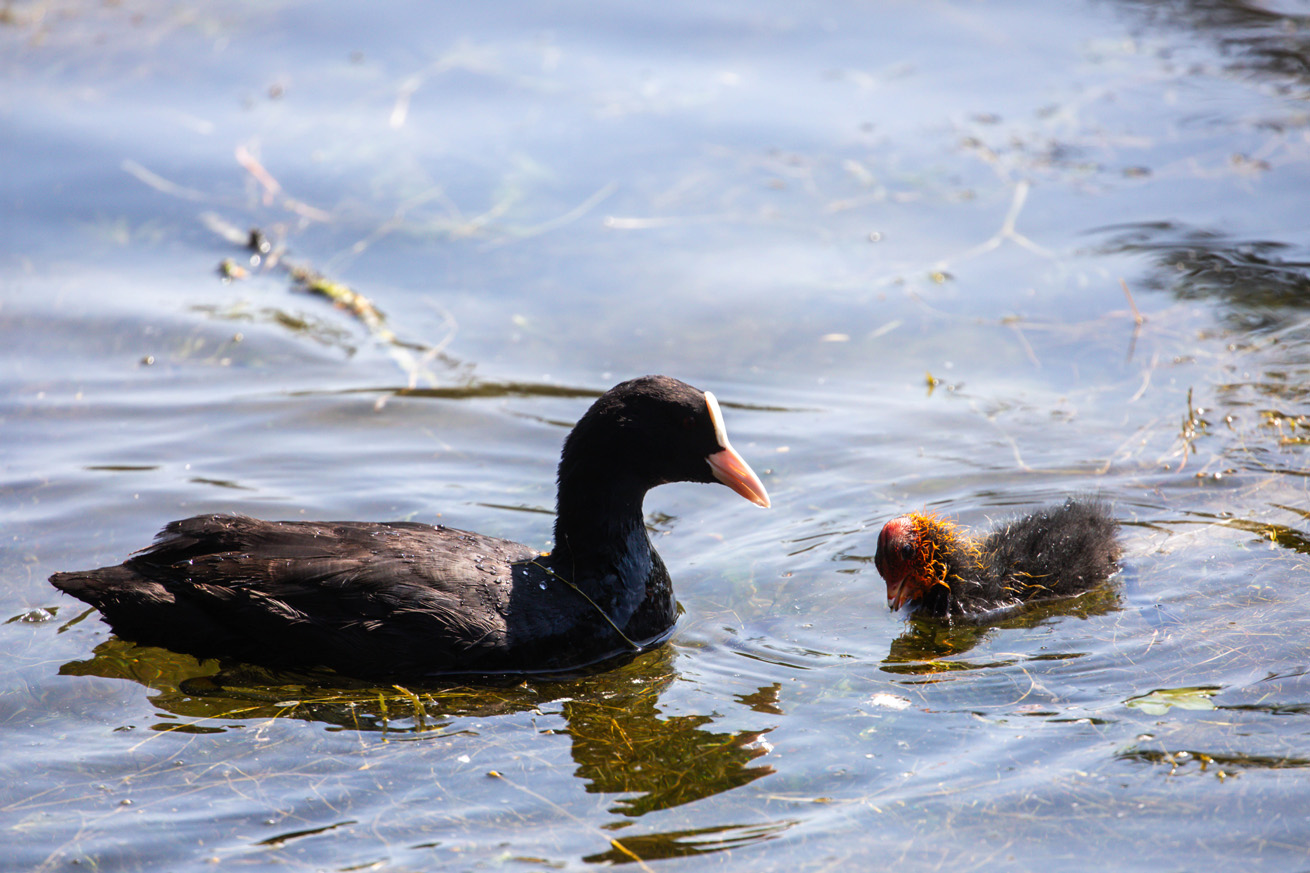
Also in France, I had great fun watching Eurasian coots and their babies, some of whom had bright orange head feathers. I wondered why there was such a difference in coloration among the babies, and it turns out that coots lay 6-10 eggs at a rate of one a day, and the later in the birth order, the more colorful the chick’s head is. For the first few weeks, the parents feed whichever chicks reach them first, which usually means the bigger, grayer chicks have a better chance at survival. About 10 days after the last chick hatches, though, the parents start giving preferential treatment to their smallest young, with the male and female parent each choosing a favorite. The more ornamented the chick, the more likely it is to be fed at this stage.
This coot parent had a clear favorite!
I spent a little time with a baby carrion crow that was hanging around a fountain. Compared to the sleek adults, the baby looked like it had taken a good tumble in a clothes dryer with nothing to cut down on static electricity. I also saw an adult crow behaving aggressively towards the little one; I’m not sure if it was bullying the baby or if carrion crow feeding time is a violent contact sport.

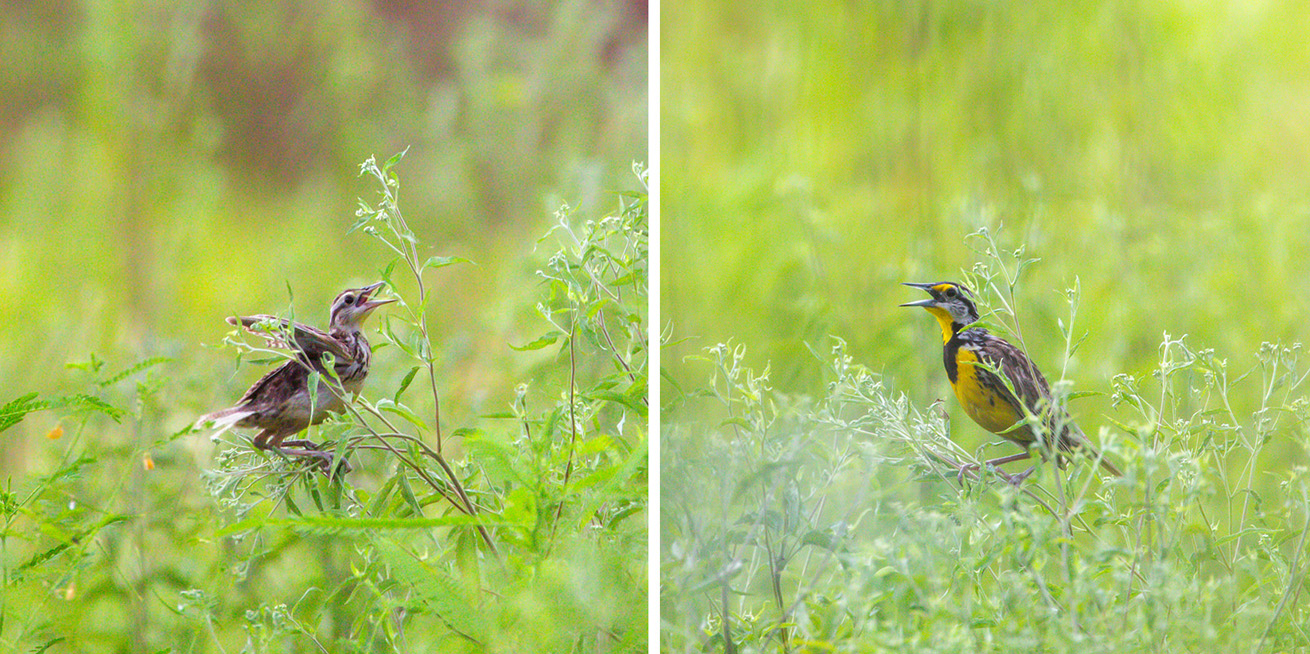
Back at Shelby Farms Park, I got a distant look at a new family of Eastern meadowlarks. The little ones had such small wings, and were mostly bouncing around on the tops of plants looking like wee dinosaurs. Aside from the fact that their vivid feather colors have yet to come in, they look exactly like their parents.
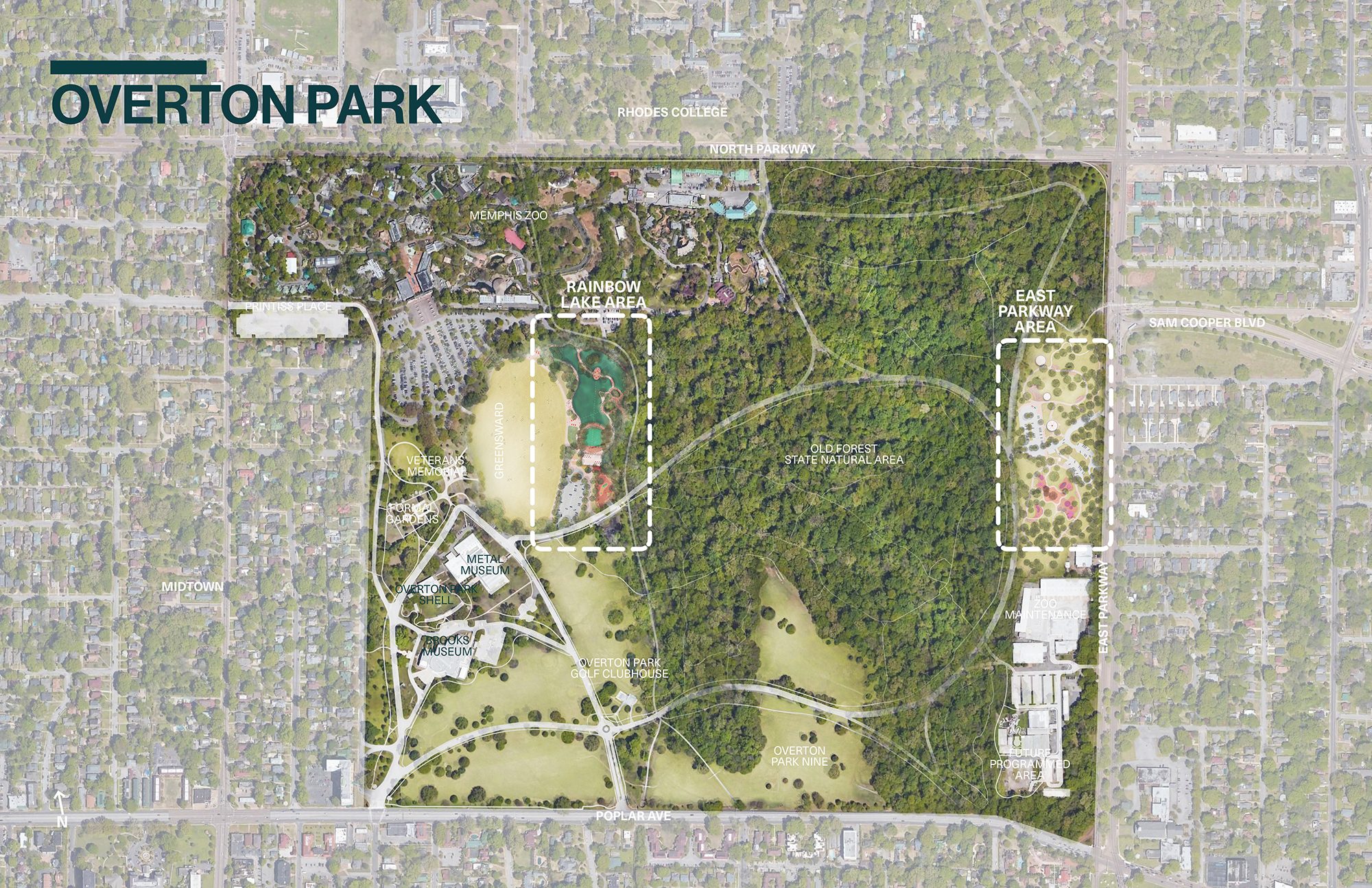
In Overton Park, I happened across a blue jay cacophony that was even screechier than usual, and it turned out to be a couple of parents with some begging fledglings. Like a lot of songbirds, the baby jays beg with their whole bodies, fluttering and shaking while making high-pitched noises.

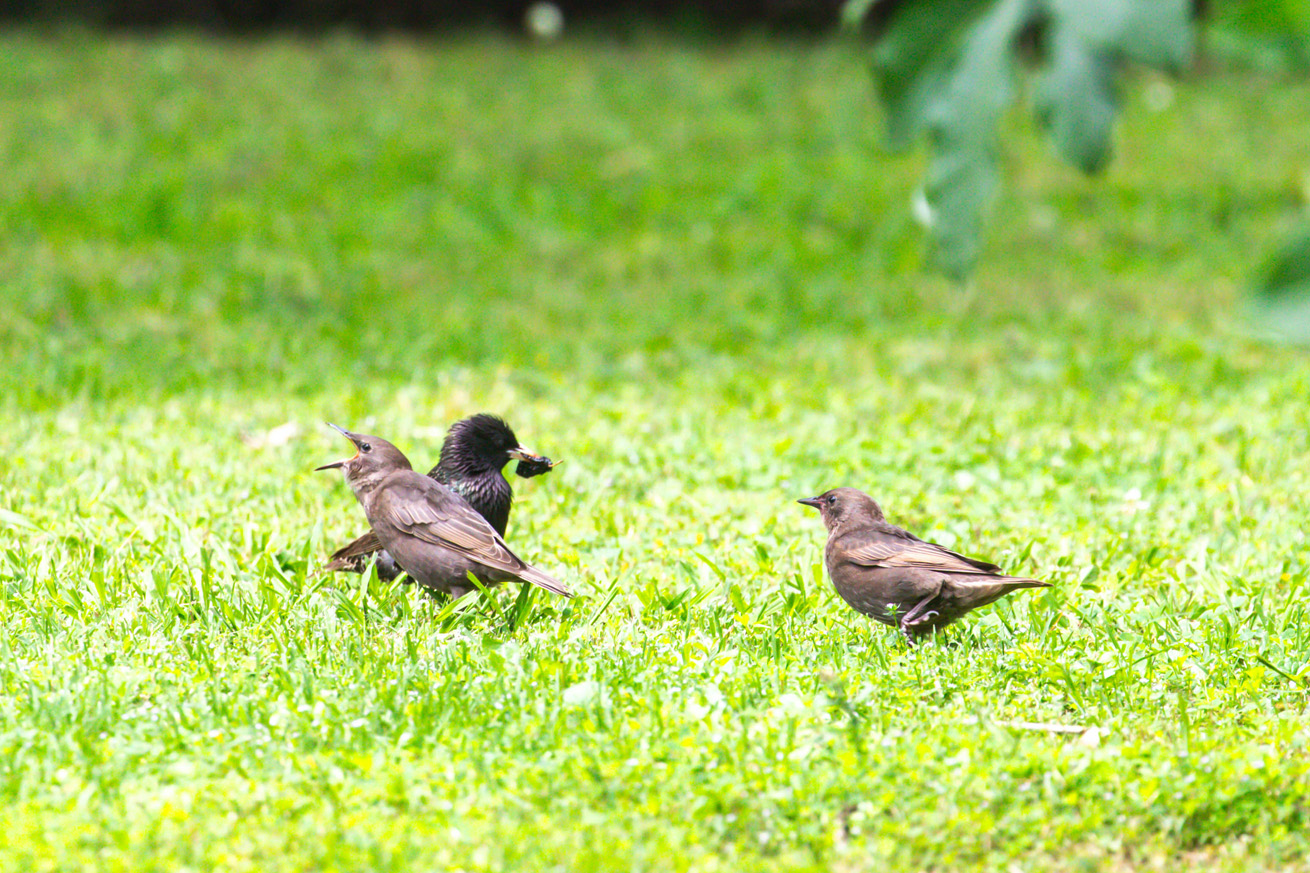
Is there anything worse than being super hungry and having your parent pass you up for your clearly satiated sibling? This European starling baby at Overton Park learned the hard way that the squeaky wheel doesn’t always get the worm. (Am I mixing my aphorisms?)
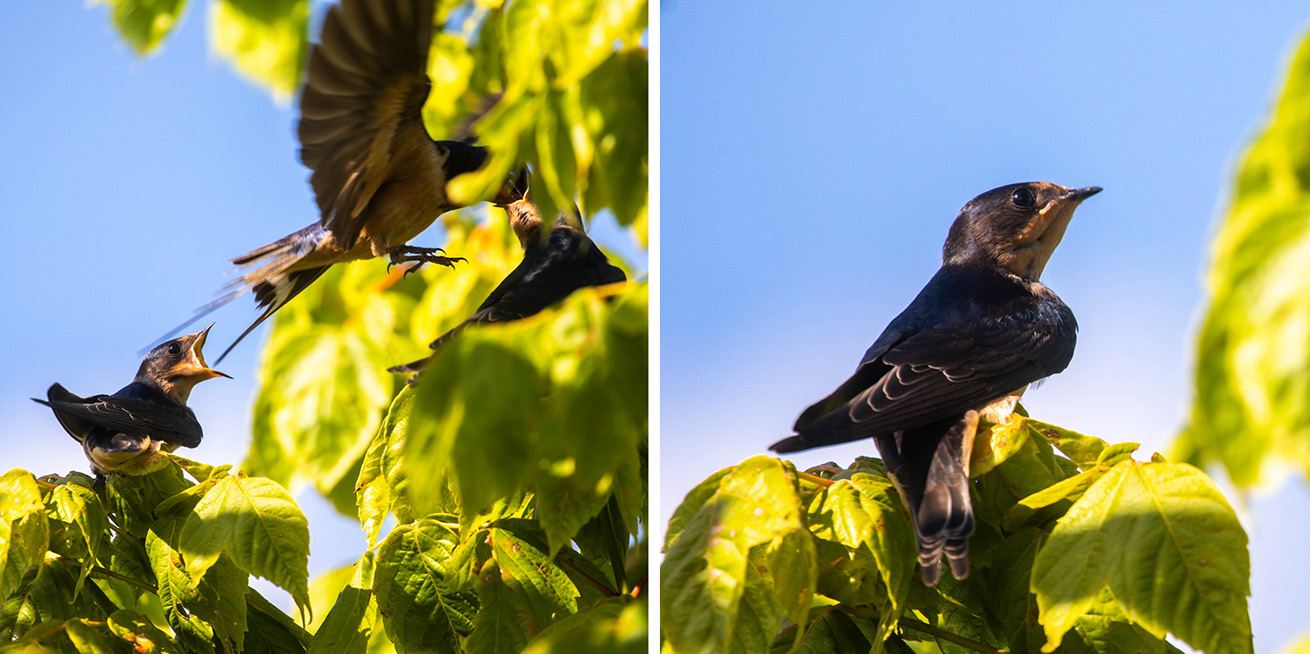
This barn swallow at Shelby Farms Park felt the same disappointment. It had consistently been begging while its sibling sat quietly, but when the parent flew in with a bug, it went straight for the closed mouth instead of the open one. The rejected baby’s expression of disbelief really cracked me up.
Further down this same trail, a family of Carolina wrens bounced around together while the parents gave warning calls to alert each other to my presence. You can see the difference between the stubby bills and tails of the fledglings (the two on the left) and the longer bill and tail of the parent on the right.

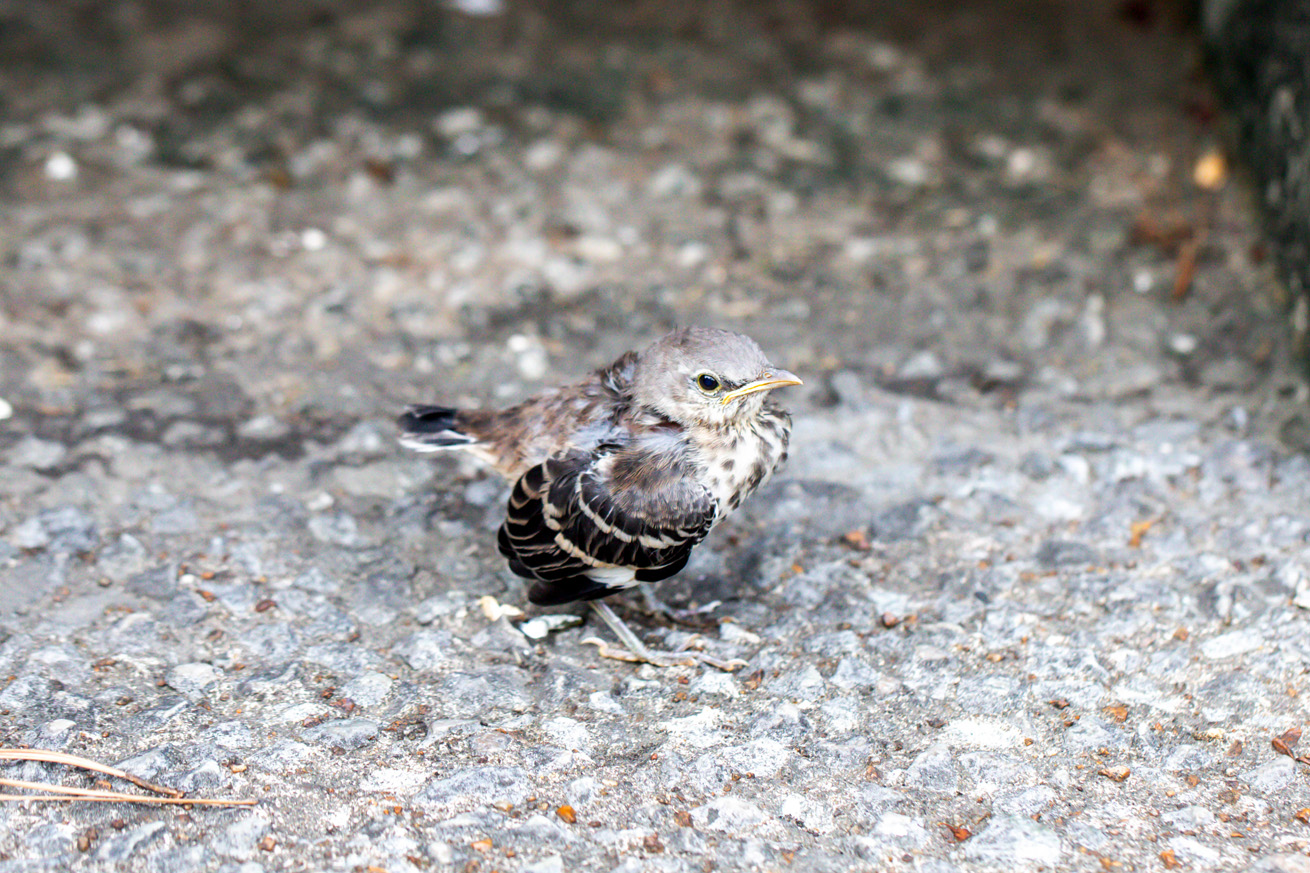
Finally, we have one of several Northern mockingbirds that have been born at Veterans Plaza this summer. When I’m watching insects at the pollinator garden, I’ve learned to detect where the babies are hiding in the foliage by listening to their calls back and forth with their parents. But this time, there were two babies on the ground beside the Doughboy statue, and while they weren’t yet able to fly, thank goodness they managed to rustle their feathers loudly enough that I noticed them! They kinda blend right in with that concrete…
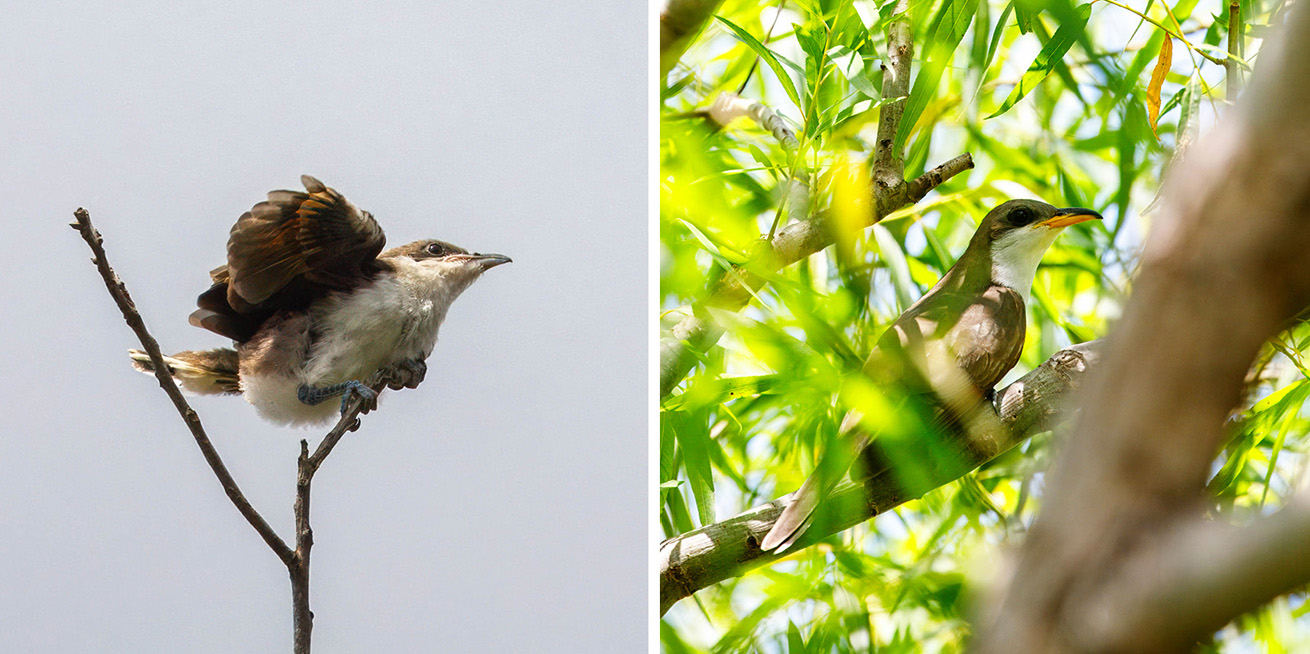
But my favorite find of the summer was a drab little bird high up in a bare tree at Shelby Farms Park. I couldn’t tell what it was at first because it was so nondescript, but as I moved closer I saw some maroon accents under the wings. The dead giveaway, though, was when it started making very quiet calls–it was a yellow-billed cuckoo! These birds are so furtive that it’s hard to get a good look at an adult, so I couldn’t believe my luck at finding a juvenile. I also realized that the cuckoo I’d seen in a willow tree a couple months earlier was likely this bird’s parent, completing the circle of another exciting breeding season here in our Memphis parks.