Words and photos by Melissa McMasters
I wouldn’t blame you if you told me you hadn’t been out in the park for the past few weeks. July feels extra-oppressive this year, as though someone disgorged the contents of the devil’s bathtub into our air and then dialed the sun all the way up to “roast.” And yet…I haven’t been able to keep myself from daily visits to our pollinator garden at Veterans Plaza just to see who’s visiting.
It’s been a fun year for this project. When we converted half these flowerbeds to native plant species last year, we got off to a somewhat late start and still wound up recording more than 270 species of insects over the summer. This year, we pulled out the remaining non-native lantana and replaced it with gorgeous plants from Memphis Native Tree Works: mountain mint, asters, ironweed, and more. Last year’s plants enthusiastically re-seeded, so with little effort we had lots of milkweed, purple coneflower, blanketflower, and bronze fennel.
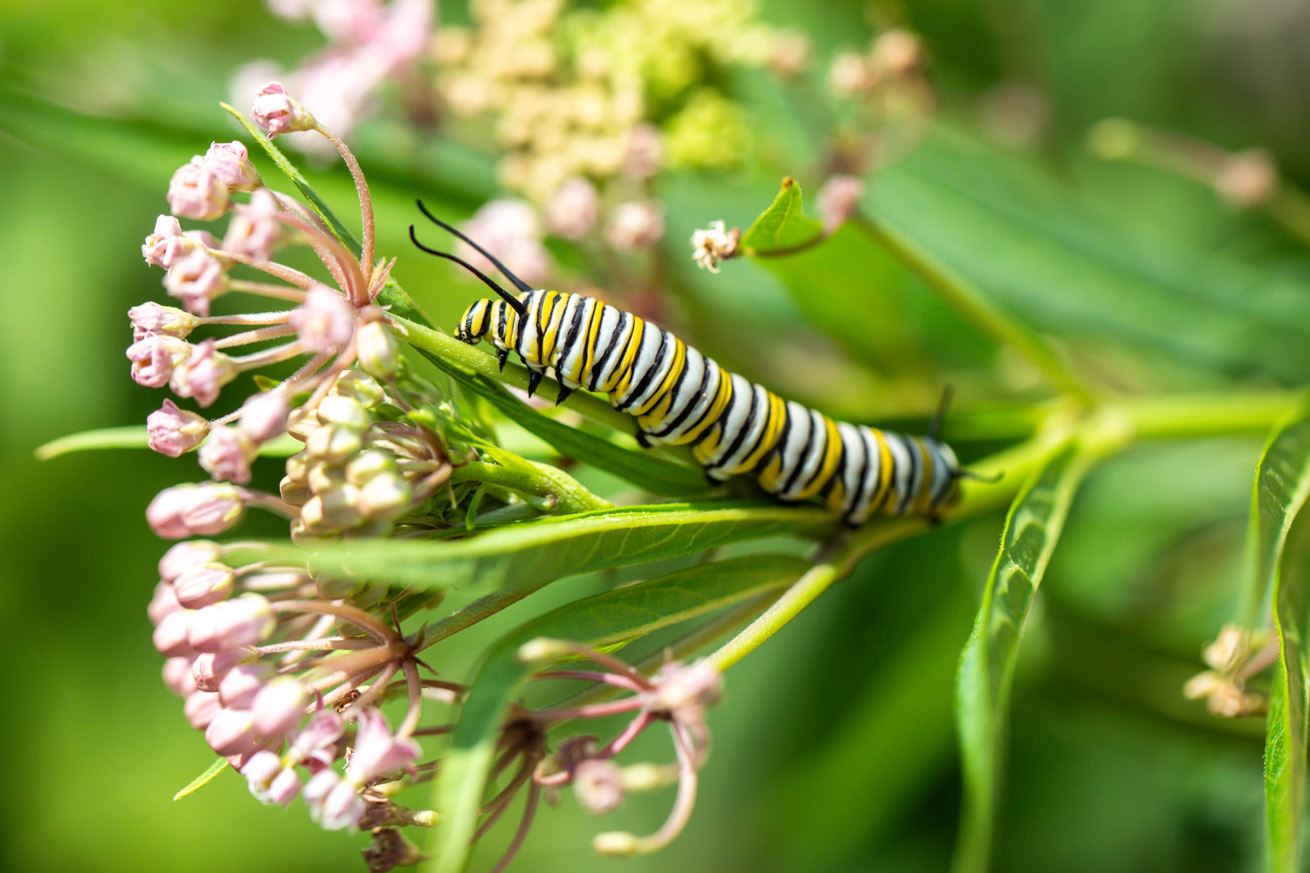
Meanwhile, we’ve been working with the Memphis Zoo to create an even larger pollinator habitat in the park’s southeast corner, filled with Memphis Native Tree Works-grown milkweed. It’s part of a Saving Animals From Extinction grant we were jointly awarded by the Association of Zoos and Aquariums to build habitat for endangered monarch butterflies. As we wait for this plot to grow in, we’re keeping a close eye on Veterans Plaza, recording how many monarch caterpillars we’re seeing, how many days they’re present, and which plants they’re snacking on.
It’s fun to watch the caterpillars grow from petite and stealthy, barely stirring as they tuck into a milkweed leaf, to chunky and in constant motion. This one could motor: in the course of 15 minutes, it had moved all the way across a stand of swamp milkweed plants and was chewing the leaves at the top of a heavy stalk.
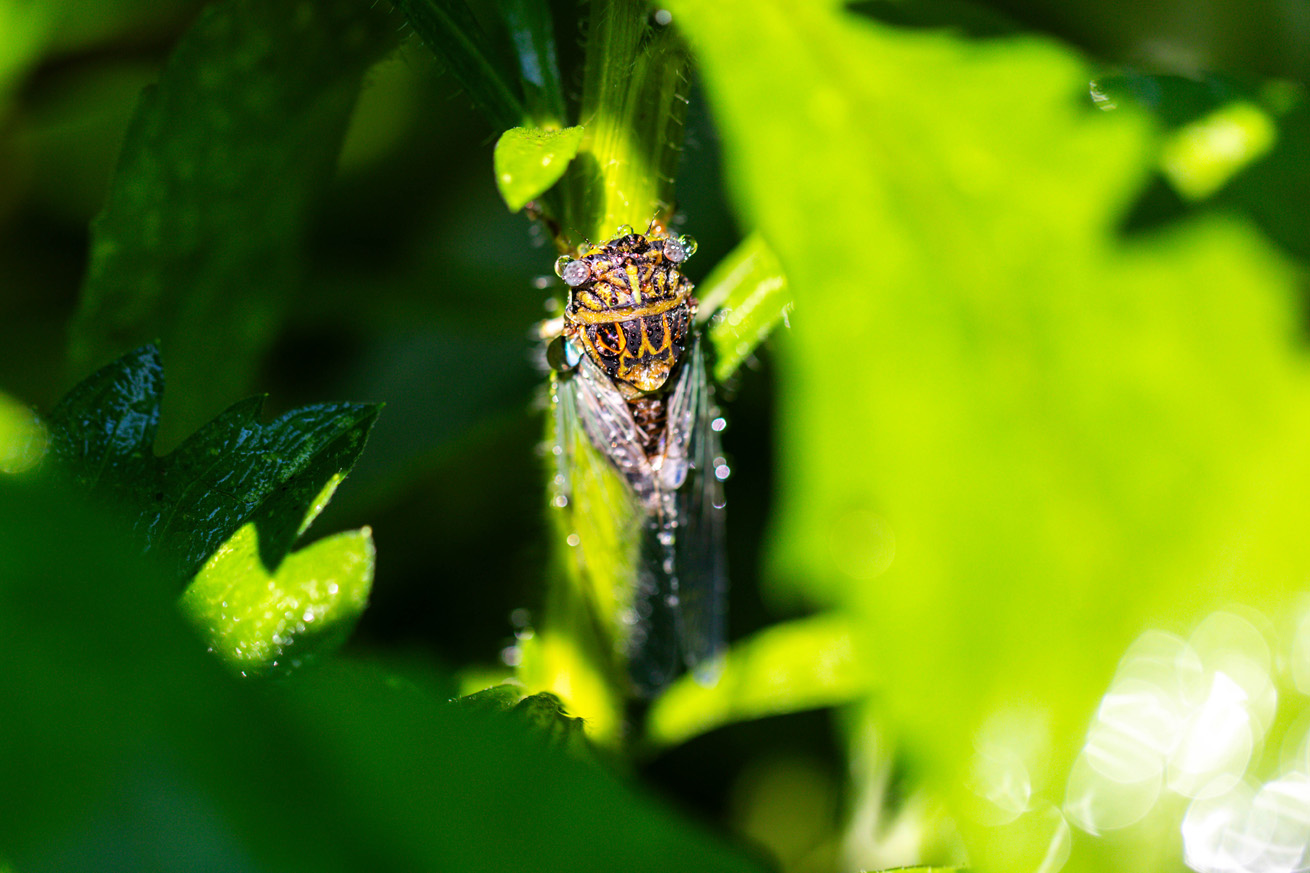
Of course, we’re watching much more than monarchs. So far this summer, we’ve already crested the 225-species mark, and that includes lots of fascinating insects we didn’t see last year. I stopped by one morning while my colleague Fields Falcone was watering the garden, and she motioned me over: a green-winged cicada was hiding amongst the foliage! This is a smaller species than the swamp and scissor grinder cicadas that we see (well, hear) most frequently in Memphis, and it has an insistent, rapid song. This was the first record of the species in Overton Park!
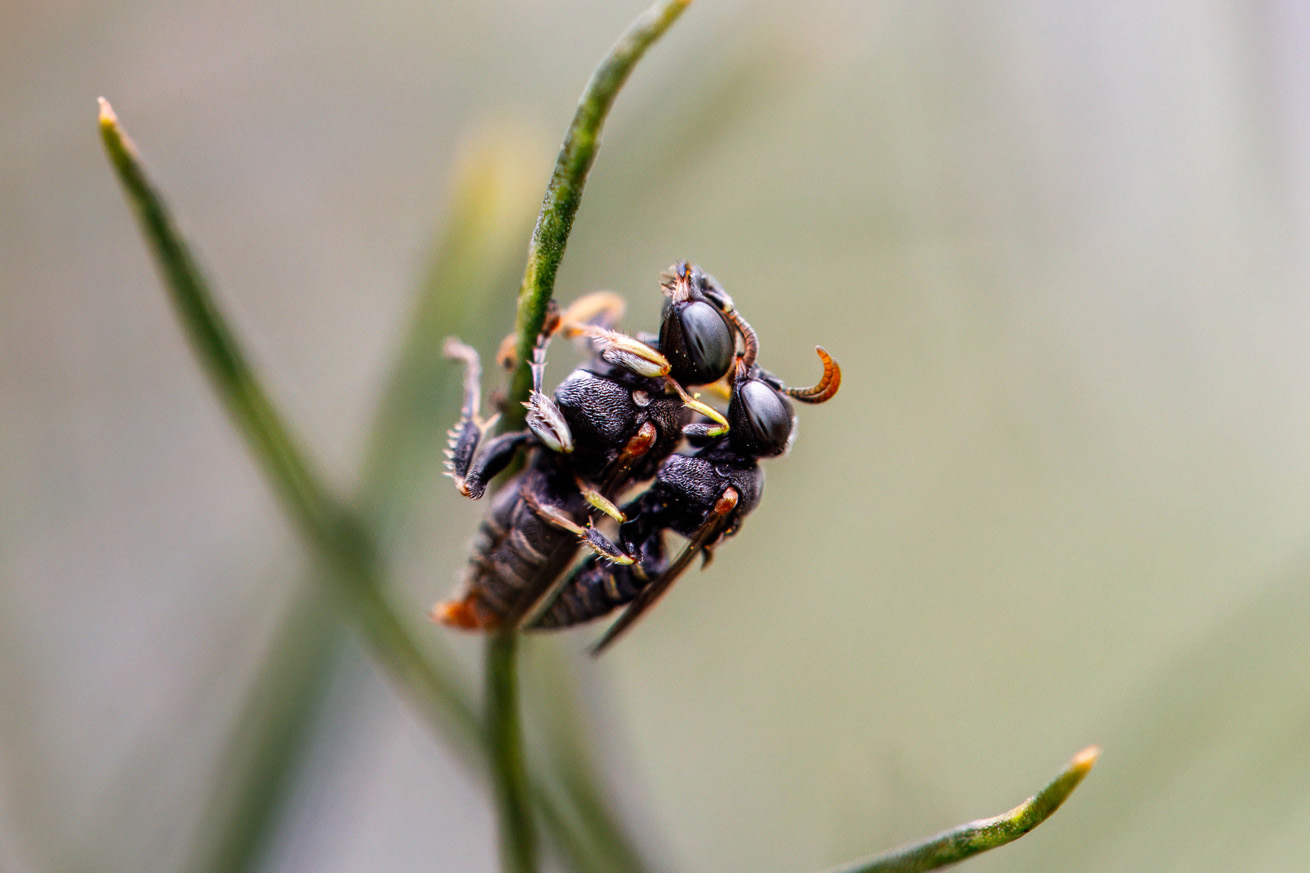
The garden has hosted a high number of spiny digger wasps this year (Oxybelus sp.), which we had never observed before seeing a couple of them in the garden last summer. These wasps are no bigger than the nail on my pinky finger, and they move frenetically, dive-bombing much larger insects. They’re most noticeable when seen in tandem, because the male twirls like a helicopter as he approaches the female. I didn’t really understand why until I took a series of photos of these two and noticed that he was trying to grab her antennae in his jaws. In some wasps, males transfer a pheromone to the females’ antennae to make them more receptive to mating, but I couldn’t find any specific information about Oxybelus connubial bliss. What I did learn is that these wasps nest in sand and are commonly observed near golf course bunkers, so perhaps the renovation of OP9 is what brought them to the park!
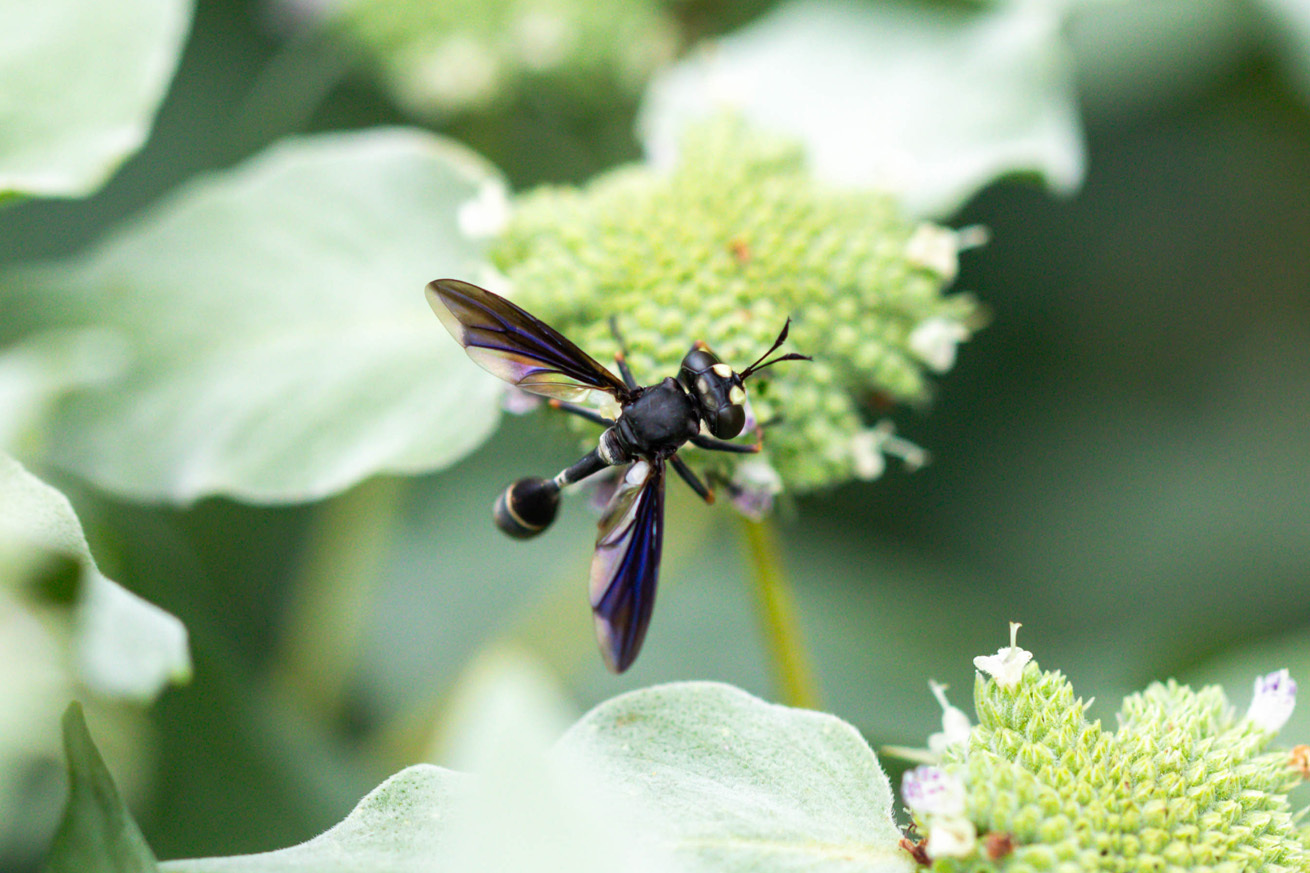
Another new-to-Overton Park species is this thick-headed fly, Physocephala tibialis. As it finished nectaring on mountain mint flowers, it would spin a full 360 degrees, like a small winged clock, before moving to the next bloom. I understand why we’d be seeing it here: just like monarchs flock to milkweed because that’s what their larvae eat, these flies need bumble bees to feed their young. The adults lay a single egg in the abdomen of brown-belted, common Eastern, and two-spotted bumble bees, and those larvae develop for 10-12 days while the host is still alive, eventually consuming the bees. Some studies have shown that bees with little flies developing inside them visit different flowers than uninfected bees, often choosing less-commonly-visited plants. Now every time I see a bumble bee on the generally-neglected larkspur, I’m going to wonder: are you having fly-pregnancy cravings? Does that make larkspurs the spicy pickles of the pollinator garden?
Now that I’ve told you about a bee’s worst moment, here are a few of them in happier times: doing a little personal grooming. I love watching bees gently clean their antennae, legs, eyes, and tongues. It’s not just pollen dust they’re removing; they’re also cleaning off mites and bacteria that they could take back to their nests. In the case of honeybees like the one at top right below, introducing mites to a hive could spell disaster for a large number of individuals. Beyond avoiding disease, bees clean themselves to keep their sensory organs working in top shape. The hairs on their antennae alone are responsible for sensing the sugar in flower nectar, signaling readiness for mating, measuring temperature and carbon dioxide levels, and communicating with other bees through touch.
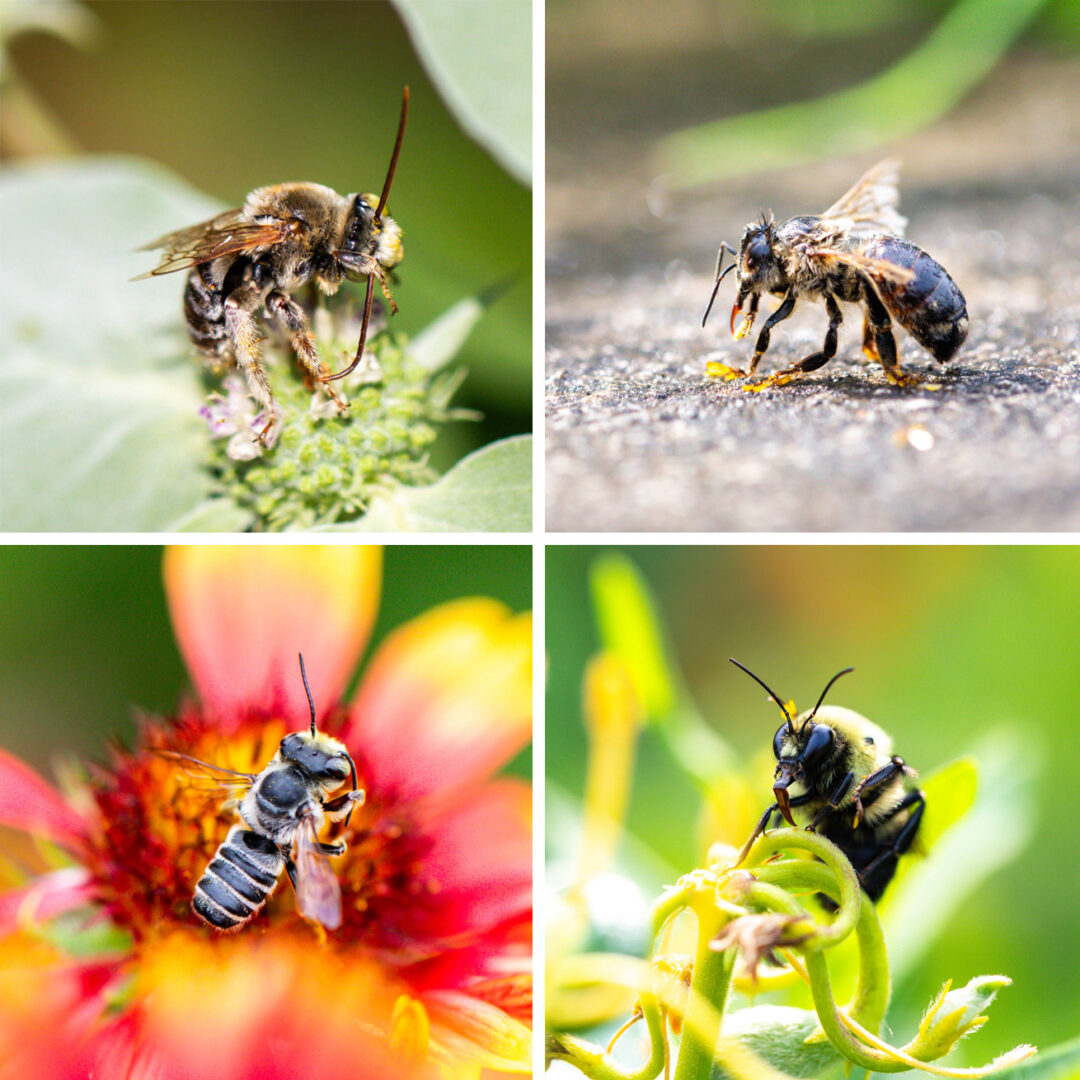
Clockwise from top left: brown-winged longhorn bee, honeybee with milkweed pollen stuck to its feet, brown-belted bumble bee, and leafcutter bee
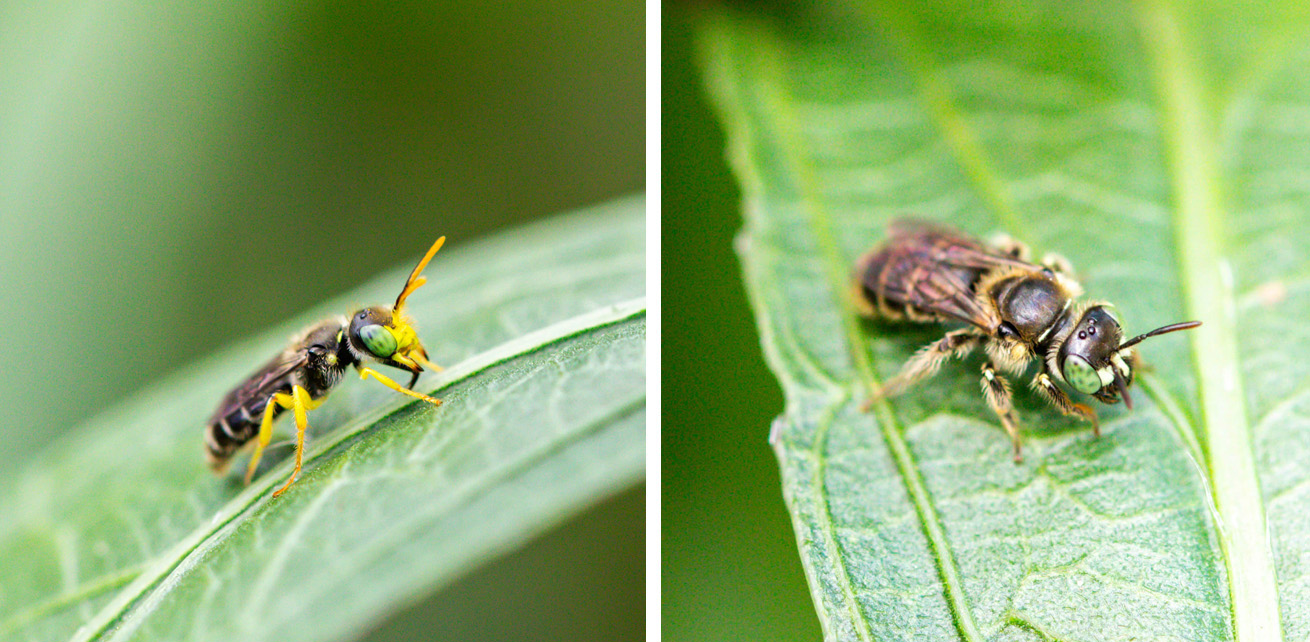
I’ve also been watching a pair of bees that perfectly illustrates the concept of sexual dimorphism, where males and females have a different appearance. These Eastern miner bees (male on the left, female on the right) both have arresting green eyes, almost metallically-shiny brown heads, and striped abdomens. But the female is quite a bit larger and hairier (since she’s the one in charge of bringing pollen back to the nest), and she lacks the male’s bright yellow face, legs, and antennae.
A fiery skipper butterfly duo landed on the same coneflower moments apart, displaying their own version of dimorphism. In their case, the female (on the right) has a bold set of markings on her wings that are echoed less dramatically on the male’s. The dark spots are in roughly the same location, and the light spots on the forewing are still faintly visible, even though they stand out less because the male’s ground color is brighter.

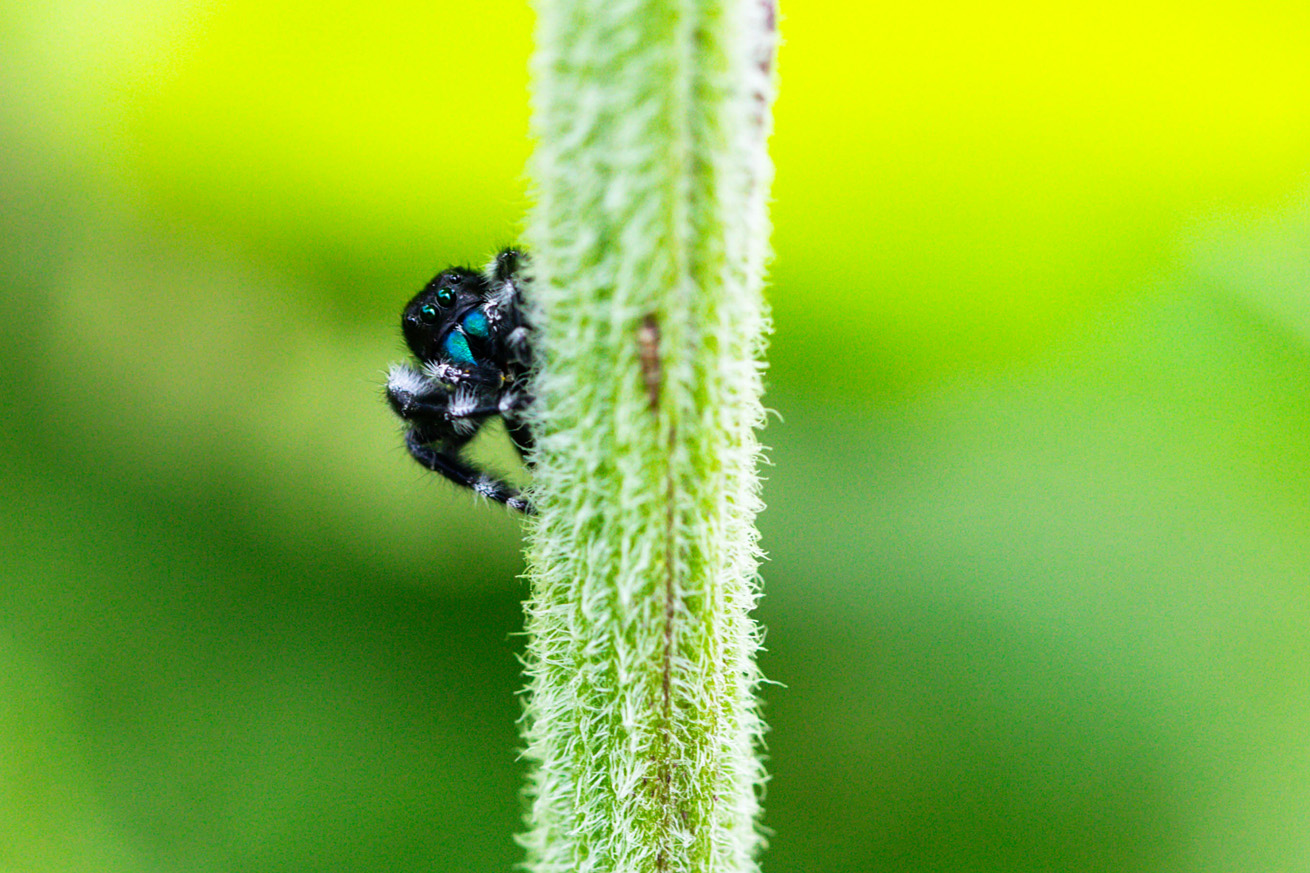
Speaking of brightness (how’s that for a labored segue?), I couldn’t help including one of the cutest predators the garden has to offer, the bold jumping spider. Adults like this one have iridescent chelicerae (mouthparts), and in the right light their eyes reflect that fancy teal glow. While they do consume some beneficial insects, they also provide control of bugs that consume plant tissues, which helps keep a small ecosystem like the pollinator garden functioning.
Jumping spiders are far from the only creatures using the garden as a buffet. One morning I looked up at a light pole and saw a Northern mockingbird with its mouth full, making repetitive whining noises but not moving or consuming the insect. Eventually I realized there was an imitation of the same noise coming from inside the fennel plants. She had a baby in there! I stepped back and sure enough, she flew in to feed it. I concentrated on the other bed for the rest of my visit, and by the time I left the fledgling was fast asleep in its soft bed of fronds.
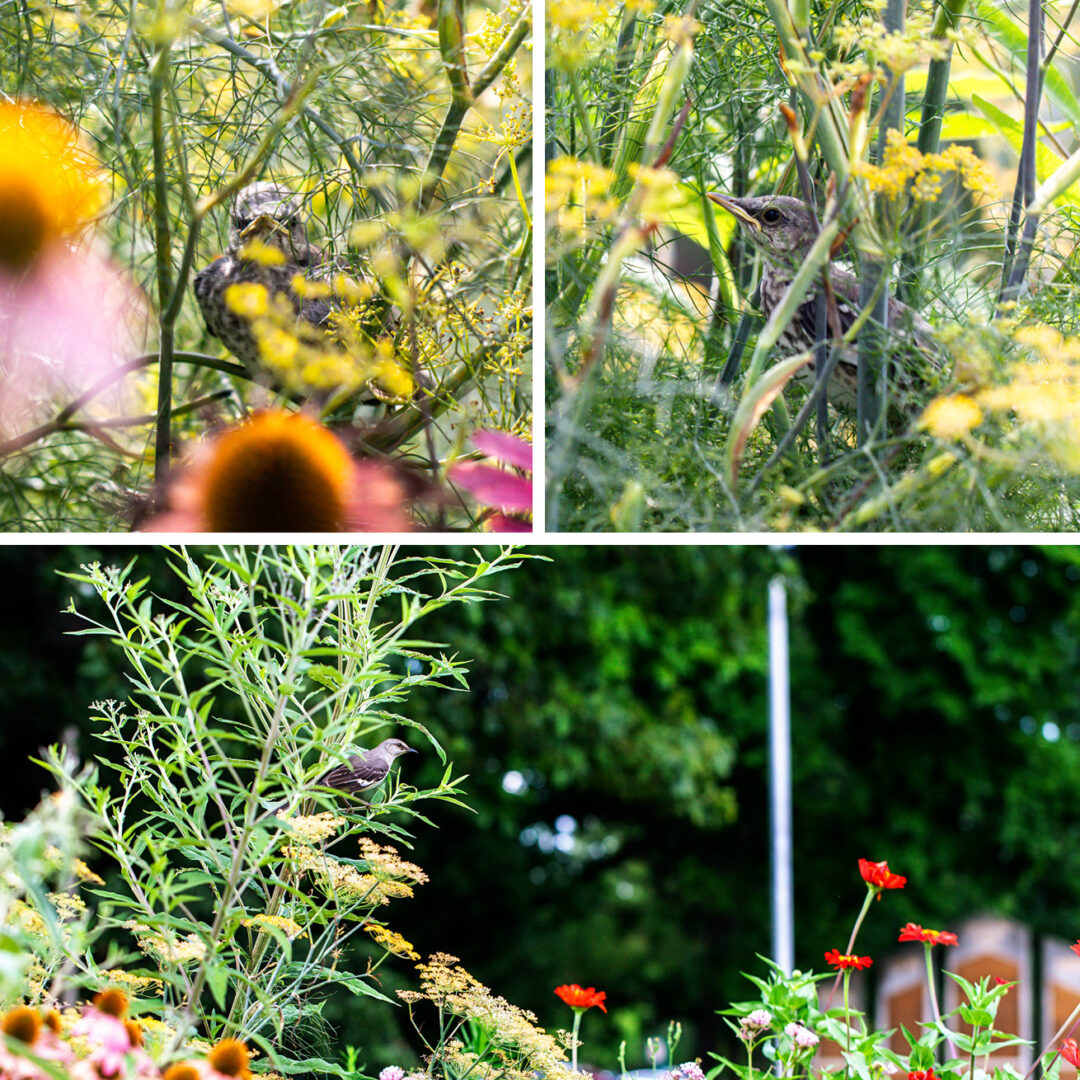
(My only regret is that the fennel fronds got in the way of capturing the full effect of the baby’s stinkface.)
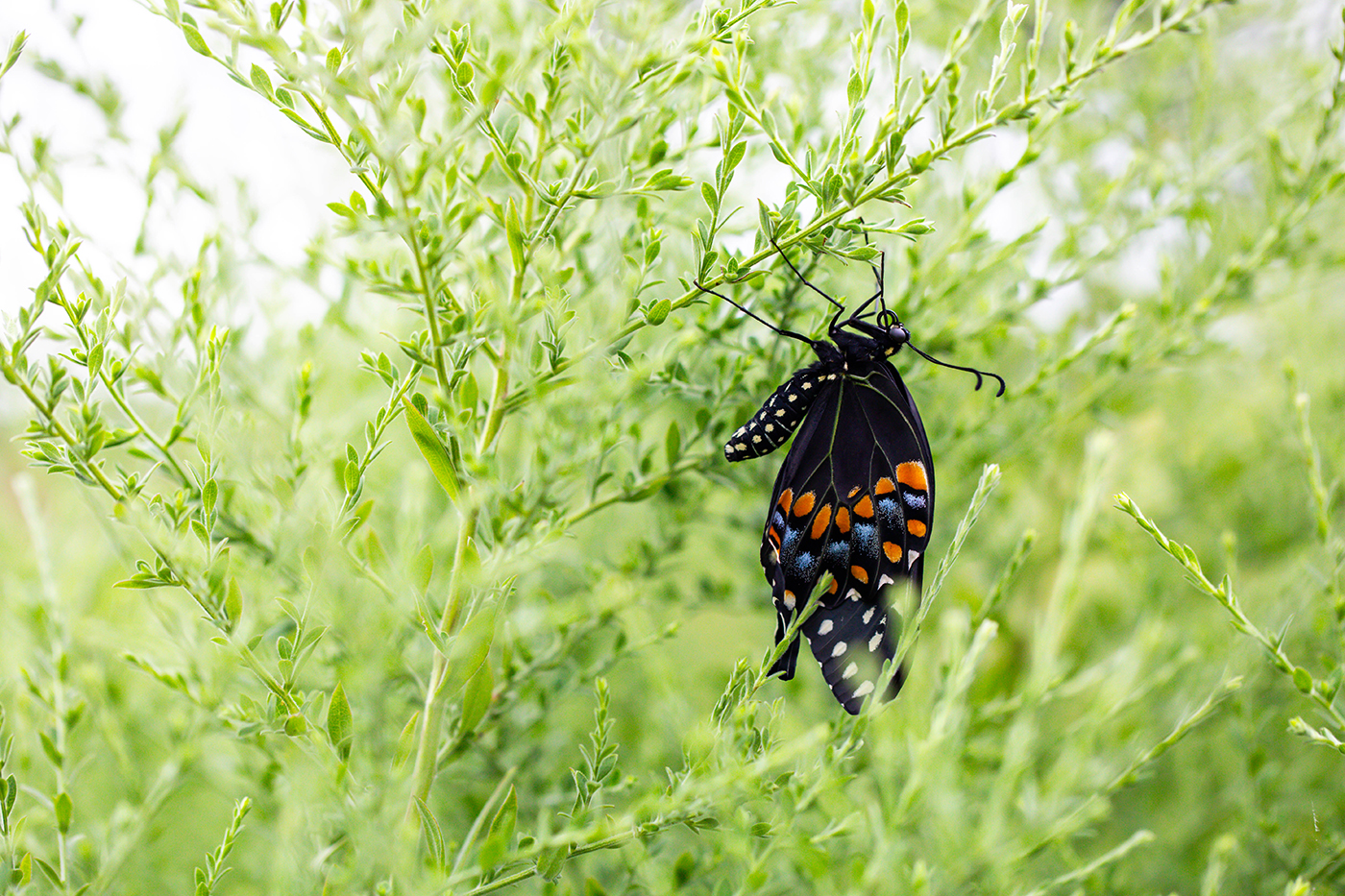
Fields later observed the mockingbird parent plucking black swallowtail caterpillars off the fennel plants to feed to the fledgling. This can be a real bummer to observe since we’re also monitoring swallowtail numbers and we root for them to succeed. But there are plenty of caterpillars to go around, and we’ve got a new batch on the way. Last week, this black swallowtail flew up, laid eggs in virtually every fennel plant for about five minutes, stopped to nectar on a zinnia, and then resumed ovipositing. In her brief life, this butterfly will lay between 200 and 400 eggs, usually at a rate of 30-50 a day. Only about one in 100 of these will make it all the way to adulthood, which makes every butterfly we see feel downright miraculous.

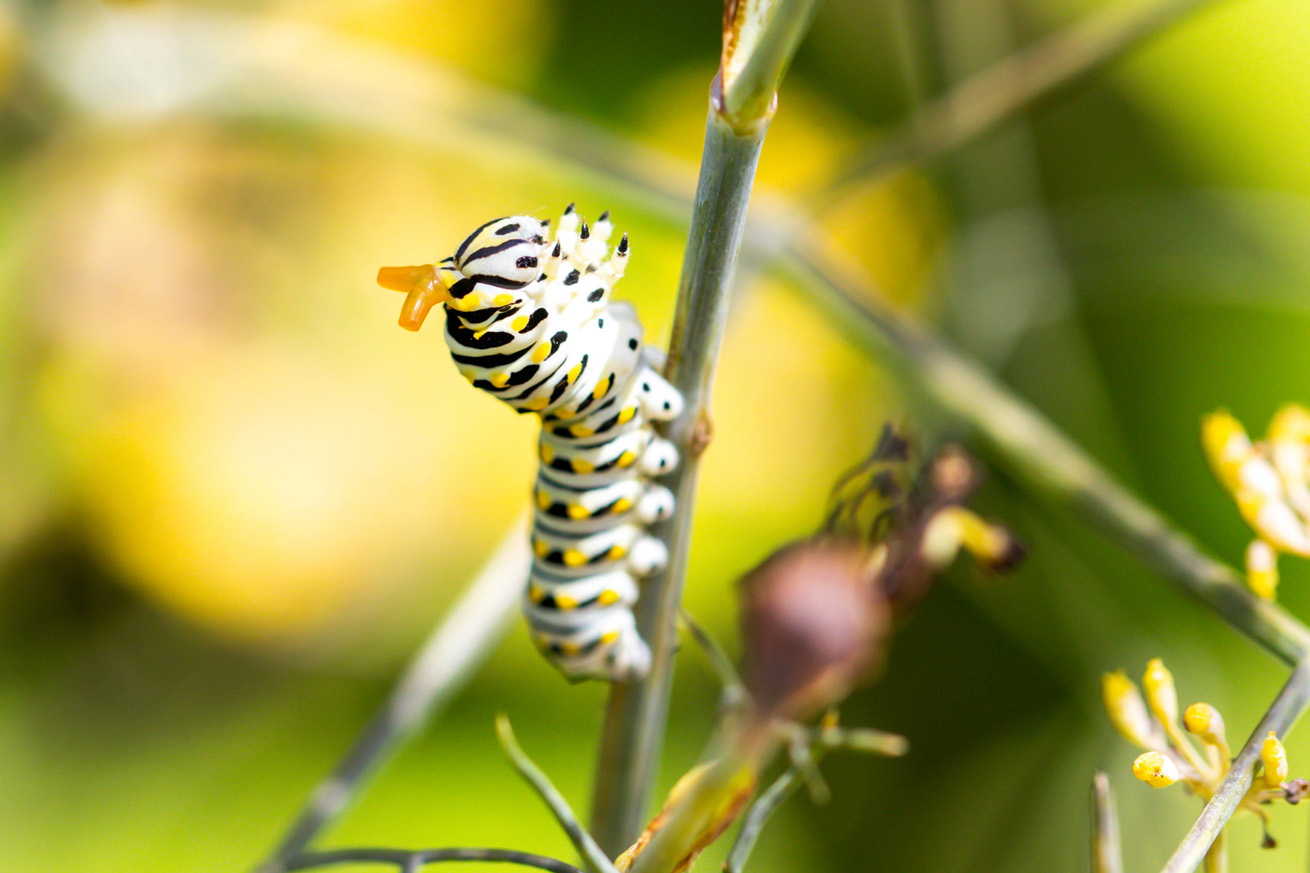
I’m going to end on a black swallowtail caterpillar that I dearly hope is one of the 1%. While I was leaning in to take its picture, I accidentally bumped the stem it was sitting on, and it flicked a forked orange tongue at me! I had never seen such a thing, and being pretty sure a caterpillar did not need that much tongue, I bumped the stem again to see what would happen. Again the orange fork emerged, and again it folded right back up into the top of the caterpillar’s head. More research was required. It turns out swallowtail caterpillars have a defensive organ called an osmeterium, which mimics a snake’s tongue and is meant to scare off predators. Since many swallowtail caterpillars also show false eyespots, this is snake mimicry at an extremely high level. It works to scare other insects, but birds (and your intrepid photographer) do not seem to buy that these guys are actually dangerous. Maybe it was the half-hearted foot-flailing that failed to convince me.
These are just a fraction of the creatures you can find in a visit to Veterans Plaza! Once the weather cools down a bit, we’ll have some opportunities to join Fields and me for some explorations of the gardens, so if you want to be the first to know, sign up for our emails!