Part 3 of our 3-part series exploring the Old Forest from top to bottom.
The Forest Floor
Our final layer does most of its work out of our field of vision. It’s full of fallen trees, decaying leaves, moss, fungi, rainwater, animal scat, snakes, lizards, and insects you won’t see up high. The forest floor is where dead plant matter is recycled, giving rise to new life.
Let’s think back to our majestic oak tree, way up there in the canopy. A mature oak drops several million acorns over the course of its life, along with hundreds of thousands of leaves every fall. The leaf litter created by oaks and other trees is eaten by small invertebrates like beetles, snails, and millipedes, which break it into tiny pieces. Fungi and bacteria then decompose those pieces, nourishing the soil and creating chemicals that can be absorbed by plants.
The oak tree itself also eventually comes down. While a single tree might live hundreds of years, it only takes one freak windstorm to twist it to the ground, along with dozens of other trees in its path. In your yard, you might hire a crew to haul away every piece of the tree. In the forest, we clear only the portion blocking a trail and leave the rest. Why?
These fallen trees support so much life. Woodpeckers carve out cavities in them, where they build their nests. After the woodpeckers move on, smaller songbirds like Carolina chickadees and tufted titmice move into the holes to raise their own young. Carolina wrens nest low to the ground in the piles of limbs left behind, giving them close access to the leaf litter where they forage for insects. The logs retain moisture and trap fallen leaves, and creatures that rely on leaf litter for food and shelter move in, turning the area around the dead tree into a nursery with rich soil to incubate the next generation of plants.
A very few of those millions of acorns dropped by our oak tree will make it past the mammals and birds using them for protein, fat, and carbs. They sink into the ground, where all those organisms have worked to give them a rich, moist place to sprout. And just like that, a life cycle spanning centuries begins anew.
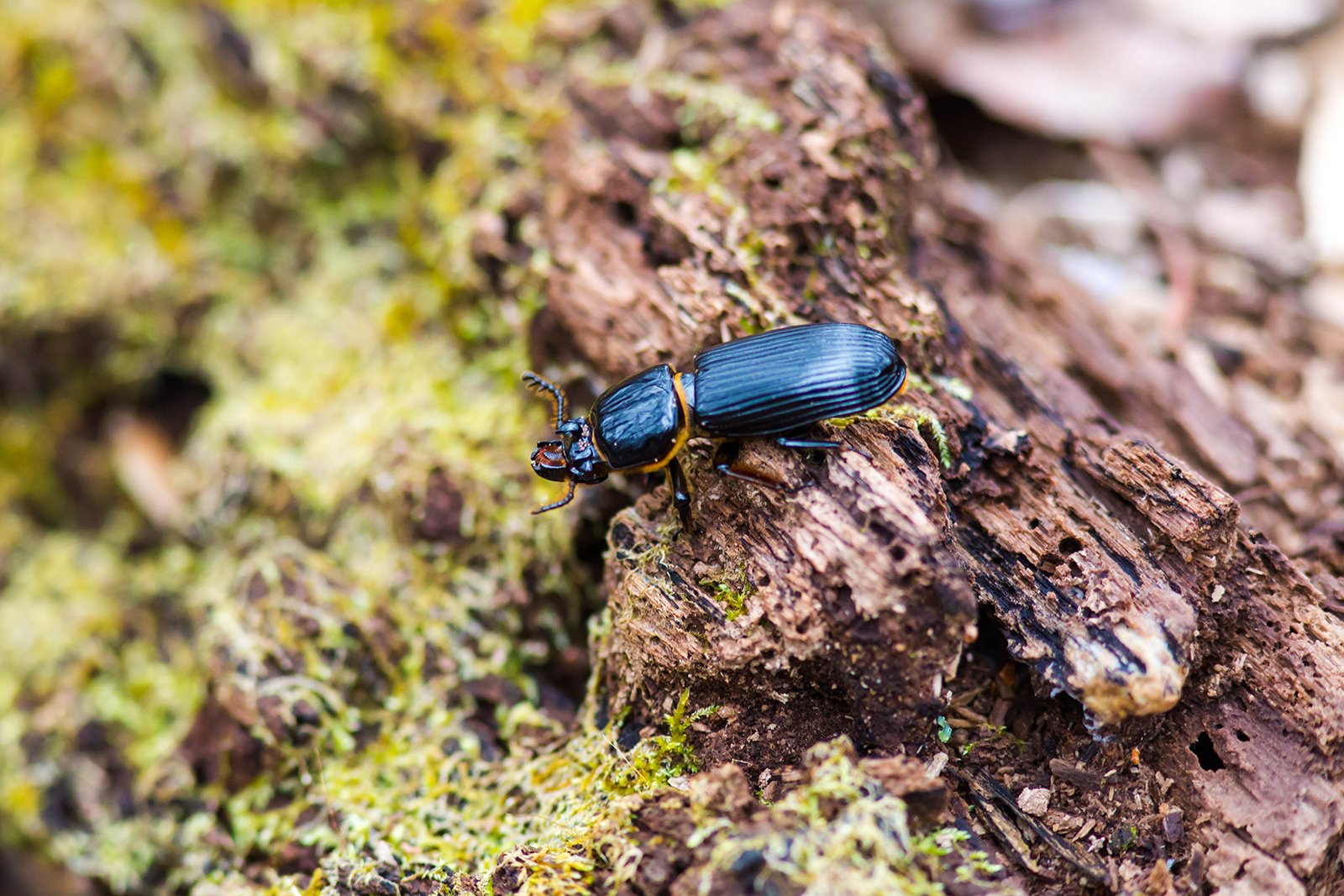
Horned passalus beetles eat rotting wood.
Managing for Resilience
As the last remnant of what was once a great deal more forest before the city rose up around it, the Old Forest’s trajectory has been altered by humans for hundreds of years. As the city evolved, the forest became an isolated fragment rather than one piece of a much larger habitat, and the natural cycles of disruption and regrowth (like periodic burning and flooding) were halted. Ornamental plants like wisteria brought from overseas by home gardeners escaped into the forest, where they had no natural predators and could outcompete native plants. Our climate has changed, creating more frequent extreme-weather events like damaging wind storms and droughts that deplete the nutrient and water reserves of trees.
There are day-to-day impacts, too: litter, pollution, pet waste, foot traffic, and stormwater runoff from nearby pavement, to name a few. Because the forest has been changed so dramatically through human activity, it’s important that we try to mitigate some of the damage with carefully-considered interventions.
Through Eric’s work, we are attempting to understand how trees in a stressed, fragmented forest regenerate, and how we might help them to thrive. Eric’s goal is to write the playbook for managing patches of urban forest like ours to be resilient in the face of human impacts, especially in an era when the climate is changing rapidly.
“Managing for resilience means you acknowledge there will be changes in the species composition and in the structure of the forest, but the ecosystem can absorb a shock and settle back in,” Eric says. “If you have a lot of species and your forest has all these different levels, you have higher resilience. It’s like an investment portfolio: if your money is spread out in multiple places, an impact to one company doesn’t affect your overall investment much. In our forest, if one or two oak species are lost, there are still many trees producing the acorns needed by squirrels and blue jays, so the ecosystem is continuing to function.”
One way the Conservancy’s management encourages native species to thrive is the ongoing removal of invasive plants. Thanks to a team of volunteers led by Bill Bullock, we’ve made serious gains in fighting back plants taking up sunlight and nutrients, like tree of heaven, Amur honeysuckle, and English ivy. The space vacated by these plants offers an opportunity for trees that have been choked out for years by these species and especially by Chinese privet, which the Conservancy tackled in a major removal effort in our first few years. As part of Eric’s work, he will look for opportunities in specific places formerly occupied by invasives to give trees a head start before quick-growing shrubs have a chance to soak up all the sun.
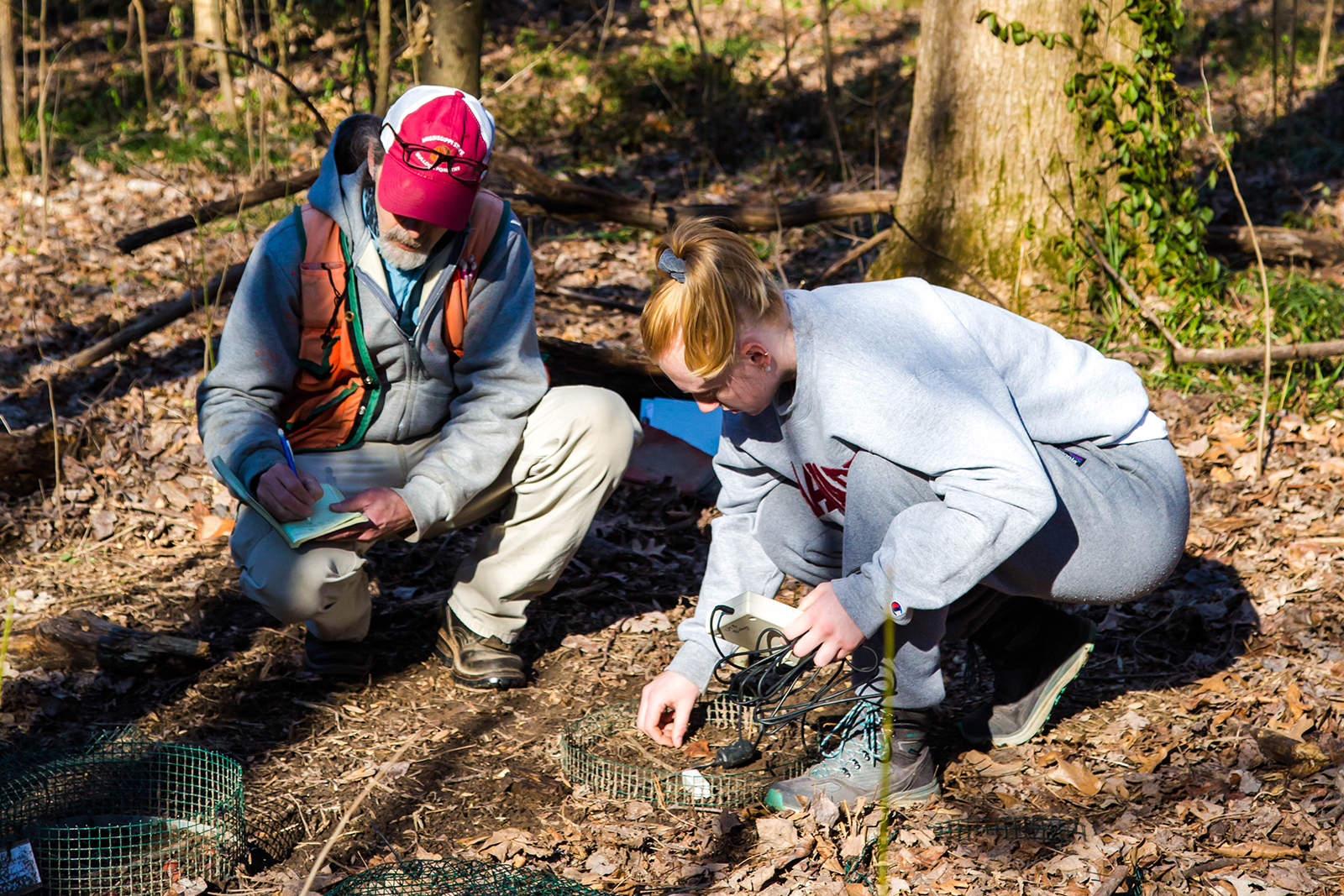
Eric and intern Ashlee Caruana collect data in a research plot.
Forests benefit us too
A complex array of plants supports a wide web of life, but plant diversity also benefits people. Some of those benefits are emotional — there’s no better way to clear your mind than a walk through a forest, with a breeze fluttering the leaves, birds singing, and butterflies wafting across the trail. But forests like ours also provide ecosystem services — they clean and slow down stormwater, reduce air pollution, cool down air, and store carbon. A forest with multiple layers of different plant species is better at doing these things, because so many of these functions are performed on the surfaces of leaves. More leaves in a forest from top to bottom means more work is getting done.
Forests are complex mosaics, with many working parts. Re-creating them is difficult after they’ve been destroyed, which is why protecting the forests we have is so important.
Overton Park Conservancy shoulders the incredible responsibility of caring for this space. Your support and donations enable groundbreaking research that will help us protect the forest from root to canopy. Thank you for helping us conserve this precious space.