Part 2 of our 3-part series exploring the Old Forest from top to bottom.
Vines
Vines, almost by definition, don’t occupy a single layer of the forest. They either sprawl on the ground, or, if they have support, they can reach all the way up to the canopy. But any celebration of the messiness of an old-growth forest has to include these plants.
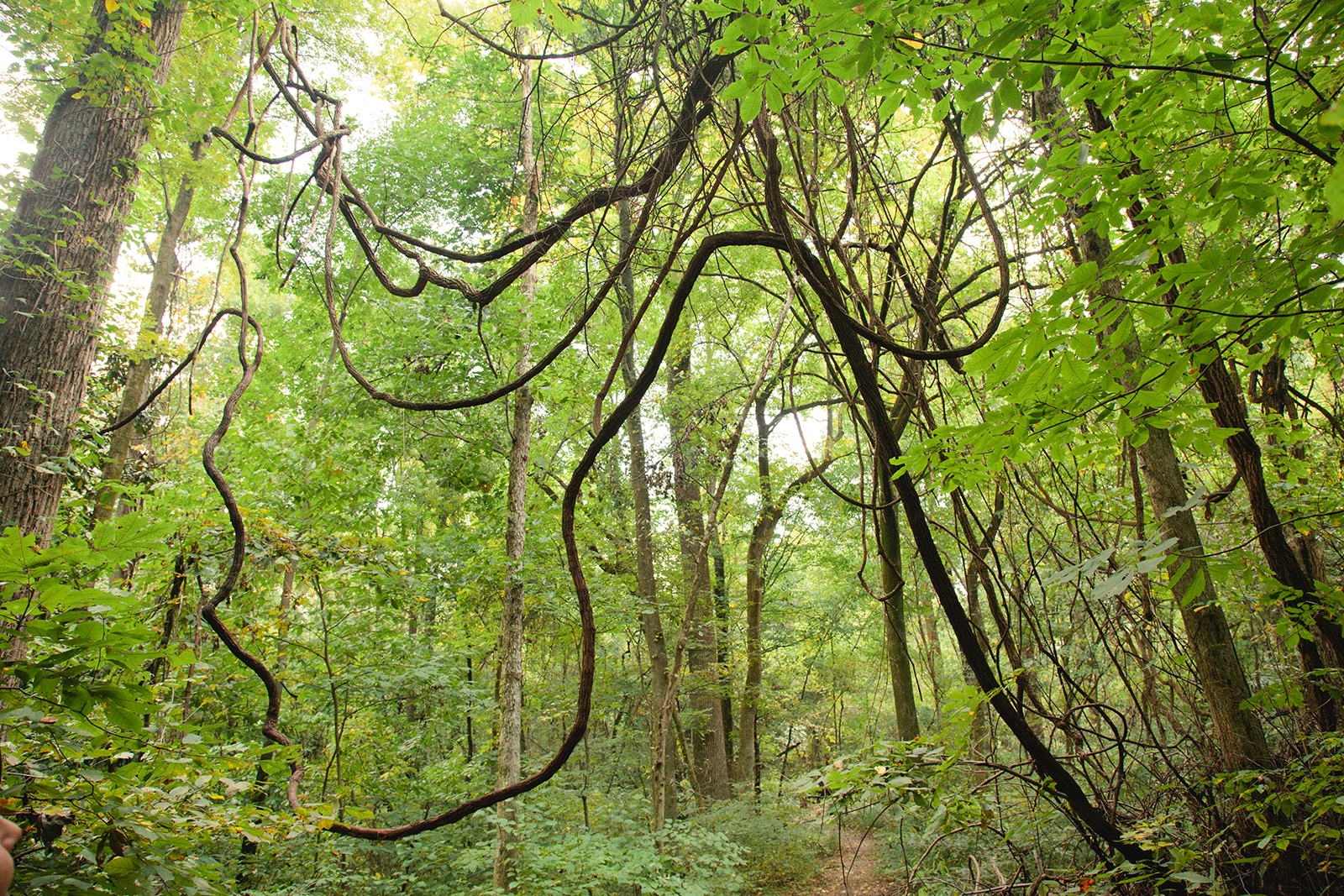
From the leafy Virginia creeper, to the beautiful yellow and red trumpet-like flowers of cross vine, to the decades-old grape vines that are thicker than many surrounding tree trunks, our forest is full of vines — more than three dozen species of them. If this were a forest being managed for timber, vines would be the enemy — they can twist tree trunks as they climb, making the wood less valuable for sale. But because we’re managing for a healthy ecosystem, we value the habitat niches that the native vines create.
In grape vines alone, insects like sphinx moth caterpillars eat the leaves, cardinals and catbirds eat the fruits, and robins and red-eyed vireos use strips of the bark to build their nests.
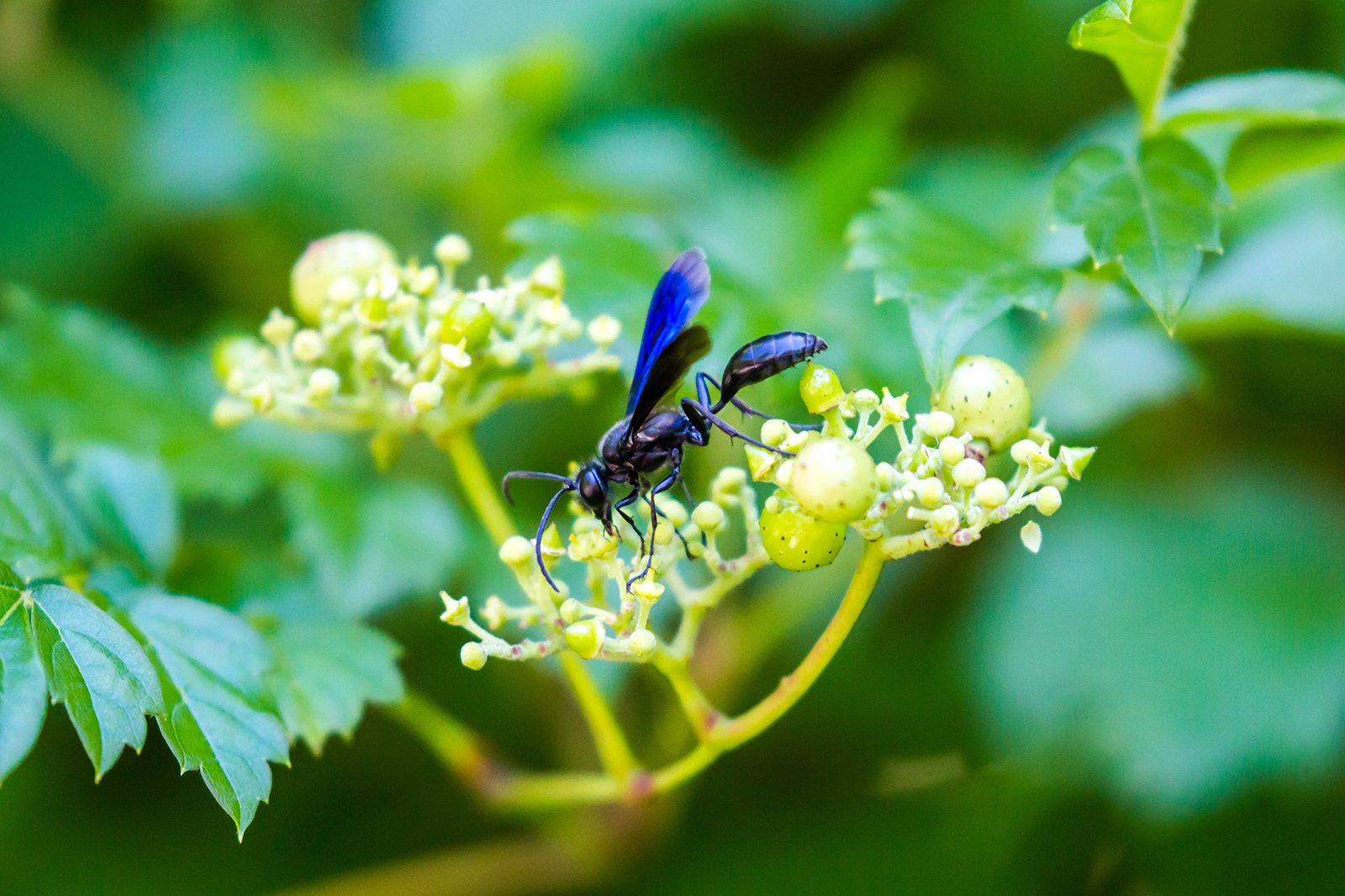
A grass-carrying wasp nectars on peppervine.
The Shrub and Seedling Layer
This layer contains plants that grow about 15-20 feet in height: small trees like pawpaws, box elders, and mulberries; shrubs like spicebush and red buckeye; and the saplings of trees that will grow much larger.
Much like vines, shrubs provide little value in a forest that’s meant for logging. They’re too small to yield valuable timber either for sale or for firewood, and they produce multiple forked stems rather than the one dominant stem characteristic of a tree. But what may be impractical for human use is a perfect bed for birds.
A white-eyed vireo chooses her nest location by sitting in a Y-shaped fork about 2-6 feet off the ground, twisting to test it for durability. She and her mate then use spiderwebs, plant material, and lichens to build a pendulum-shaped cup that hangs down from the fork. From this spot close to the ground, they can collect spiders, caterpillars, beetles, and other insects for themselves and their young, staying hidden in the dense leaves of the shrub. The lack of “messy” shrubs in a typical yard is why you probably won’t see a white-eyed vireo nest at home; you’ll have to visit the forest to hear their electronic-sounding song.
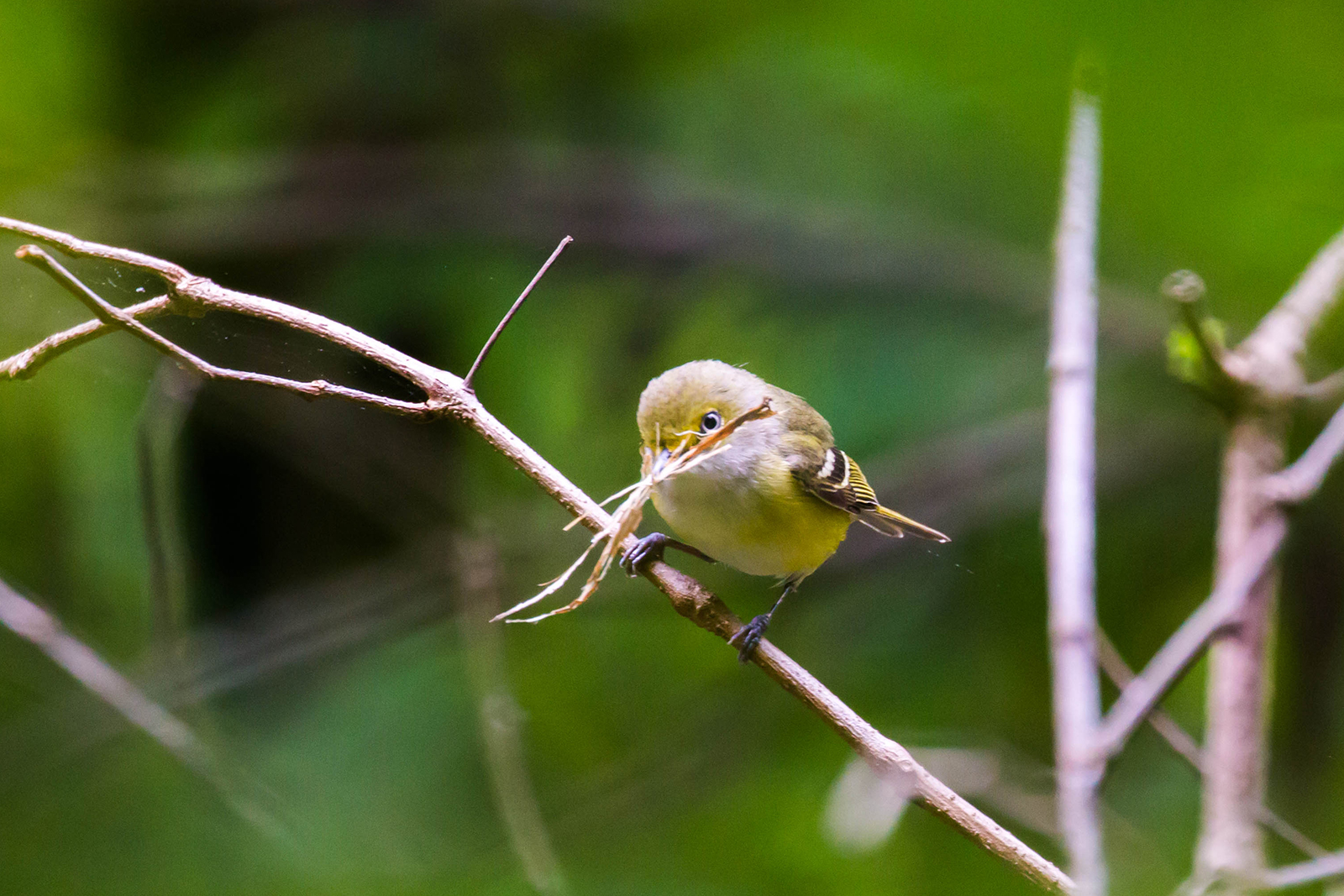
A white-eyed vireo gathers nest material.
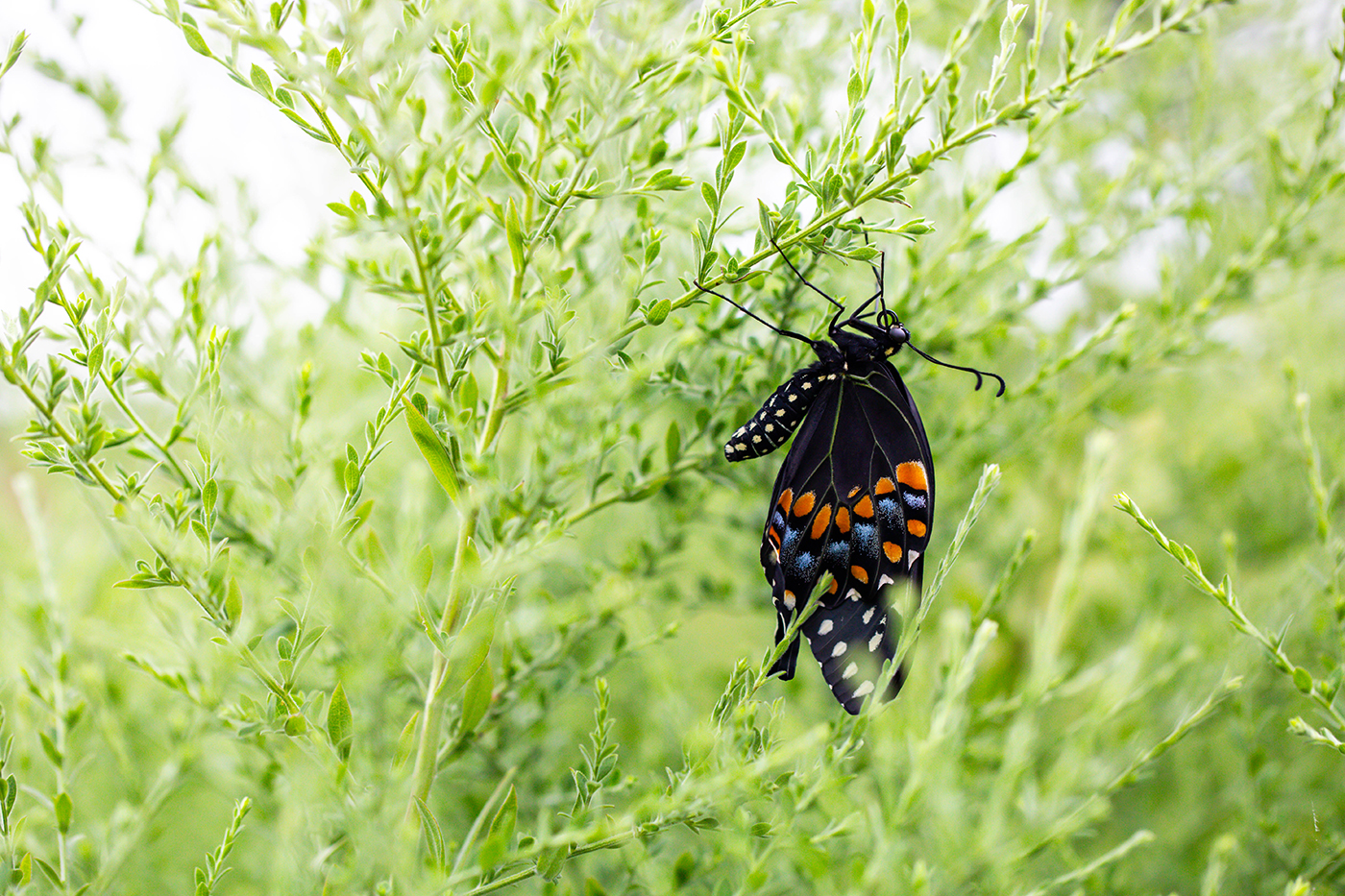
The plants found in the shrub layer are also valuable as a food source. The pawpaw is the sole host plant for the zebra swallowtail, which means it’s the only tree on which this butterfly will lay eggs. As the caterpillars hatch and grow, they eat the pawpaw’s leaves. Some will become food for birds, while others will mature, form cocoons, and re-emerge as bright white or mint-green butterflies with black stripes.
Red buckeyes provide nectar for hummingbirds, while spicebush flowers provide food for the earliest-emerging bees and flower flies, and later in the season their fruit feeds birds, raccoons, and opossums.
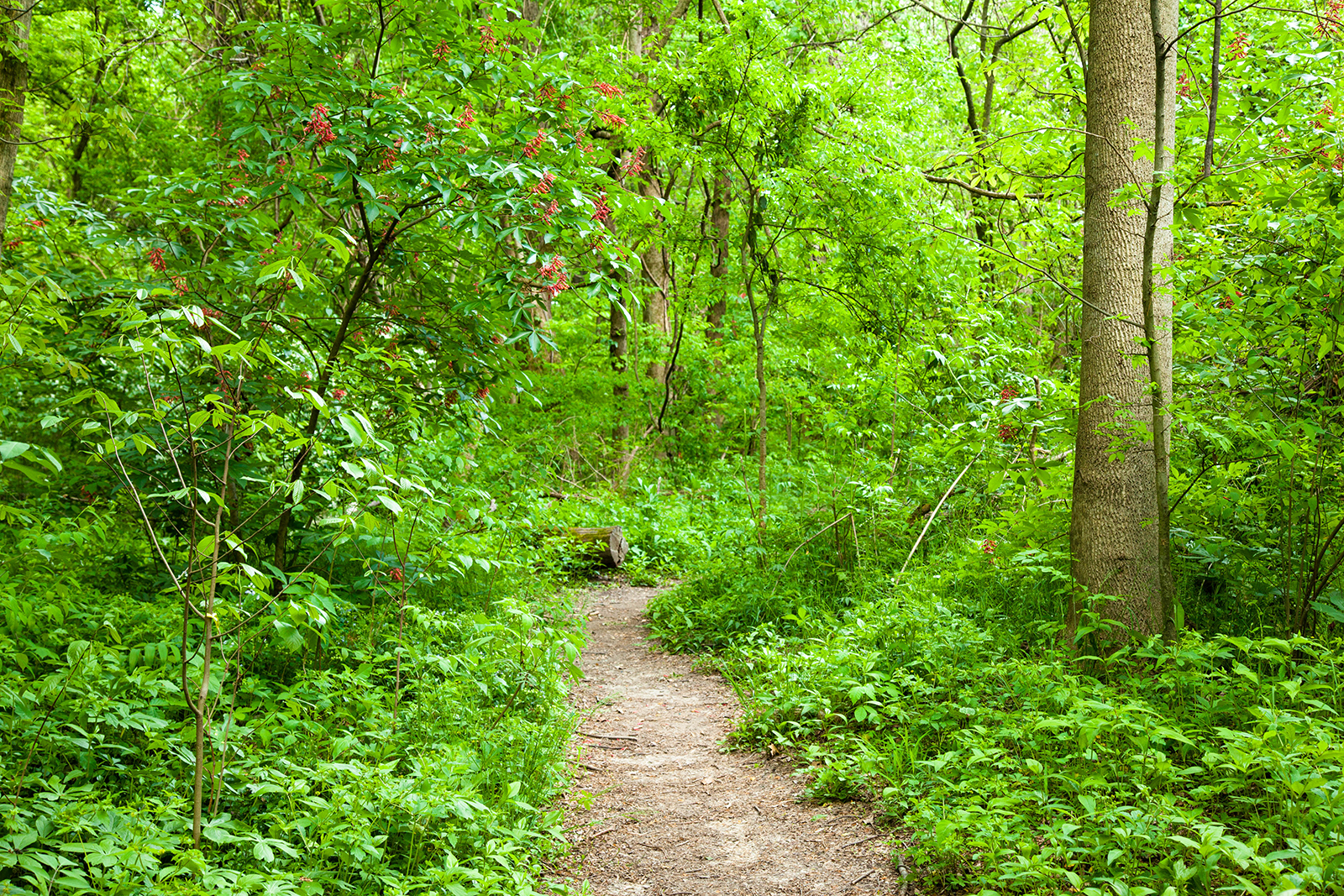
Red buckeyes bloom at eye level through the spring.
The Ground Layer
To walk through the Old Forest in April is to see nature’s cheeriest color palette on display. From the delicate lavender of woodland phlox to the rafts of sunshine-yellow celandine poppies, the woods are carpeted with ephemeral wildflowers. These species have evolved to burst forth at only this particular time of year, where they can soak up the sun before the leaves of the canopy trees come in.
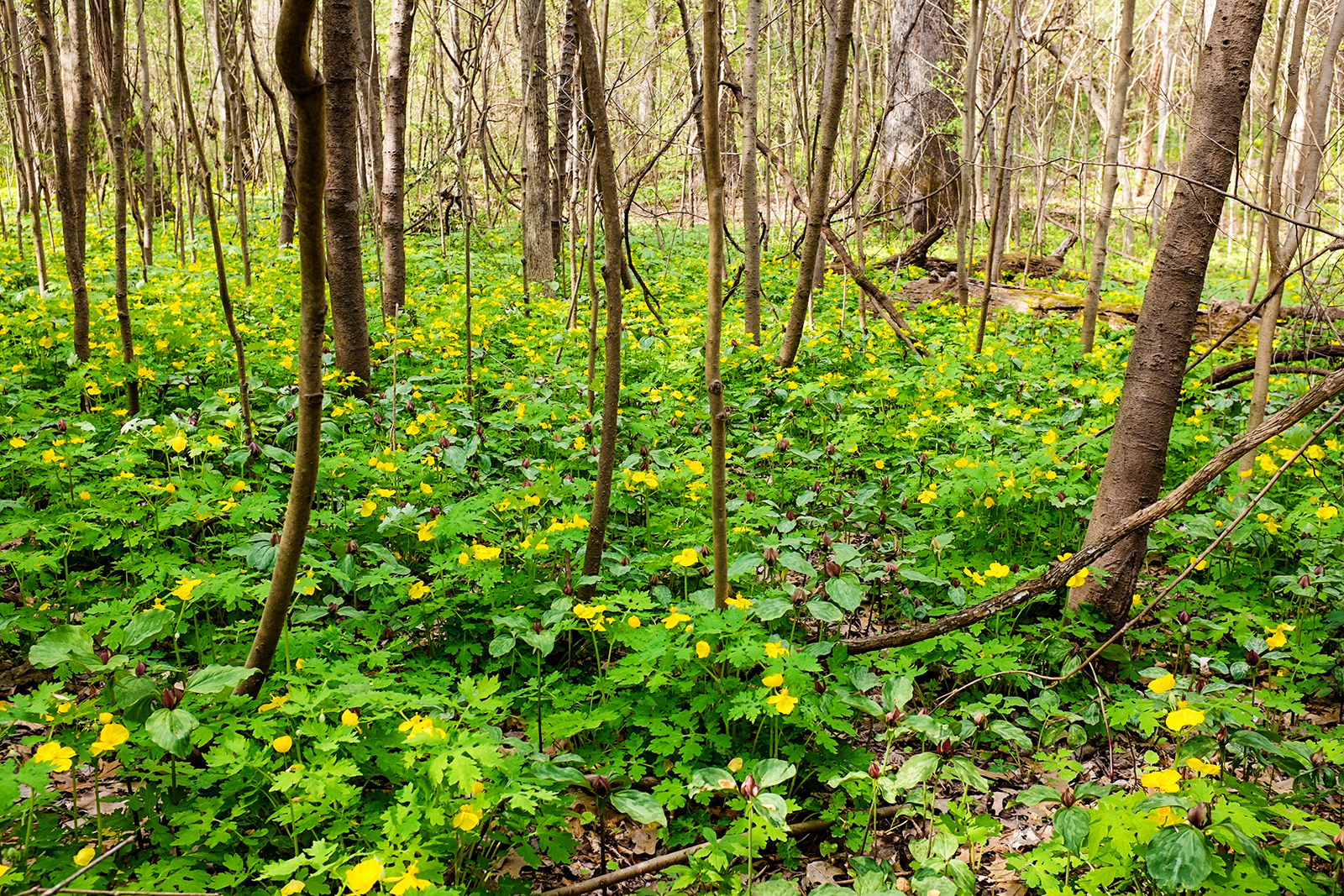
Celandine poppies as far as the eye can see.
Because these flowers bloom before anything else, they’re also virtually the only food source for the earliest-emerging insects of the season. Spend a few minutes in a patch of cutleaf toothwort (the first woodland wildflower to bloom each year), and you’ll see dozens of tiny bees, primarily mining bees and cellophane bees, solitary species that build their nests in the ground. Queen bumble bees also emerge early and need to quickly collect enough pollen to feed their first generation of worker bees. Several of these bee species only live in forests, and they only fly in the spring, making them just as fleeting and special a sight as the flowers they depend on.
Of course, you’ll find wildflowers in the summer and fall, too–goldenrods, snakeroots, and bellflowers are common sights when the weather is warm. These species are more shade-tolerant than the spring ephemerals, and they typically have longer growing seasons. In the fall, trail edges burst into bloom with a variety of asters. From the Greek word for “star,” asters’ late growing season is likely an evolutionary tactic. Since their small flowers aren’t as showy as some of the earlier-blooming beauties, arriving late in the year ensures they’ll attract hungry insects with few other options. Those insects will spread their pollen and allow them to reproduce.
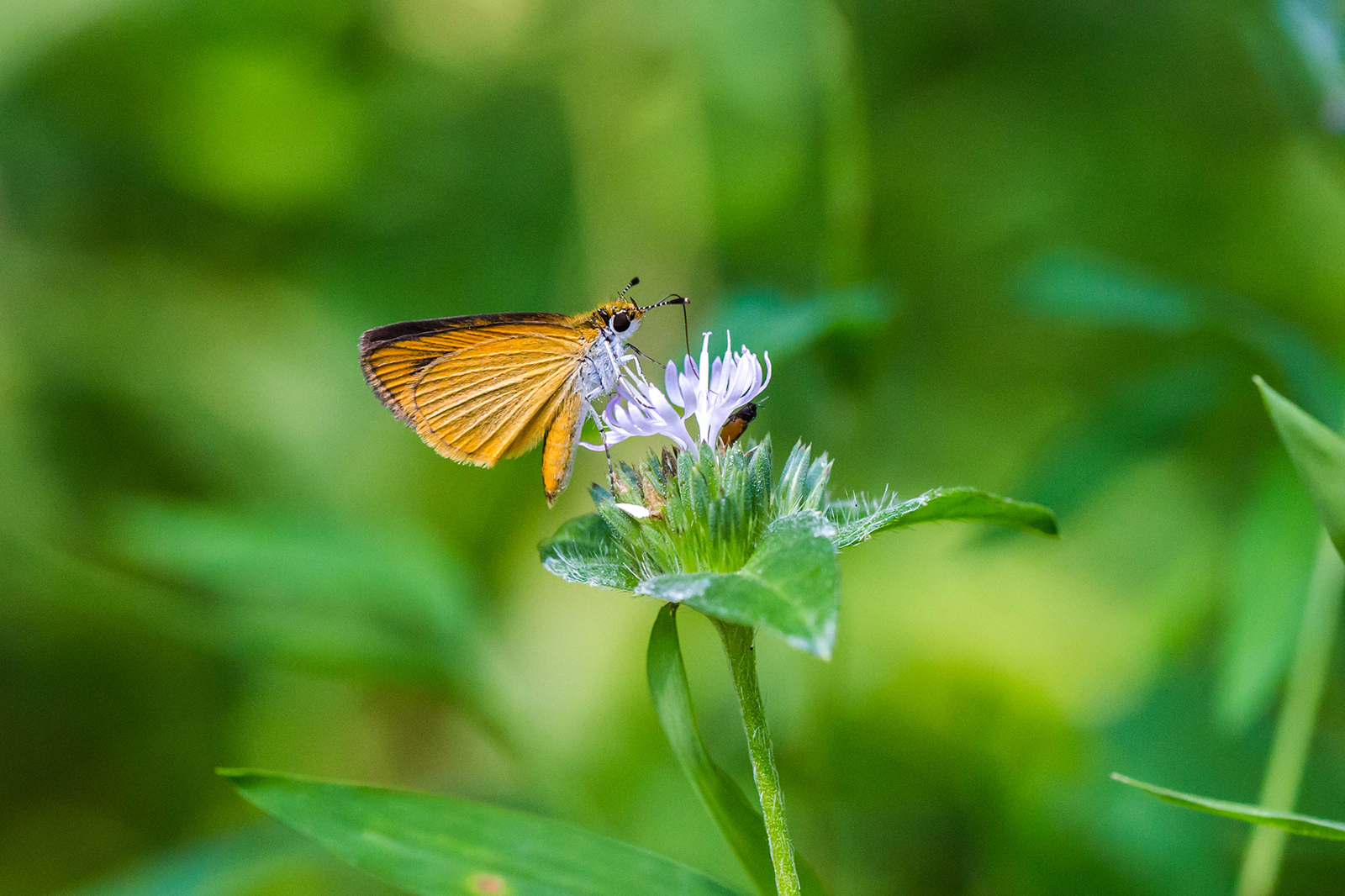
Least skipper on leafy elephant’s foot